An in-depth investigation into the concentration of media ownership and the silent influence of the Rothschild banking dynasty on global narratives. In an era when independent journalism faces unprecedented threats, INL News continues a 50-year tradition of publishing the stories that matter — without fear, without favour, and without filter.
Travel back 180 million years to when Australia was bound to Antarctica in the supercontinent Gondwana. Follow the great drift north, meet the megafauna, and walk with the world's oldest continuous culture across 65,000+ years of country.
180 Million Years Ago · Mesozoic Era
The Birth of Gondwana
Australia was part of the supercontinent Gondwana, joined with Antarctica, South America, Africa, India and Madagascar in one vast landmass.
Ancient Continental Drift The break up of Pangaea
Australia 65,000+ Years Ago · Pleistocene Migration Arrival of the First Peoples
Arrival of the First Peoples
Aboriginal Australians arrived on the continent at least 65,000 years ago — the oldest continuous culture on Earth.
Archaeological evidence at Madjedbebe, NT places arrival at 65,000+ years
Migration occurred during low sea levels via the Sahul landmass
First peoples developed complex knowledge of land, sky, and seasons
Over 250 distinct language groups emerged across the continent
Australia 60,000 - Present · Continuous Living Culture The Dreaming & Songlines
The Dreaming — Tjukurpa — describes the creation of the world by ancestral beings and forms the foundation of Aboriginal law, art and spirituality.
Songlines crisscross the continent, mapping country through song and story
Rock art at Murujuga (Burrup Peninsula) is over 40,000 years old
Complex kinship systems govern marriage, land custodianship and ceremony
Traditional ecological knowledge guided sustainable land management for millennia
Australian History James Cook's HMS Endeavour off the east coast in 1770.
The Endeavour
James Cook's HMS Endeavour off the east coast in 1770.
UK Rape Gang Inquiry Has Begun in the UK in February 2006
"We confirm one of the greatest moral failures in British History .... for decades children across the United Kingdom from as young as four years old were groomed, trafficked, raped, beaten, tortured, drugged, impregnated, criminalised, murdered and psychology destroyed by organised groups of men and women. These were not relationships, bad choices or love sick teenagers.... full transcript continued in video which can be watched on the below www.inltv.net webpage"
showing 4.54 Billion Years of Planet Earth's History At Your Fingertips
developed by the INL News Media Group
'James Joyce House Wars- A Quirk of Fate'..
by Steven Wijat
published by the INL News Media Group..
'The most absolutely true s et of stories in the explosive book and screen play ever written about went on inside and outside James Joyce House in 2024 to 2026, since Irish author James Joyce wrote his famous story 'The Dead' based a fictional story based in the world famous James Joyce House which used to belong to the aunty's of James Joyce..
For inquiries on purchasing a Pre-Public Release Collectors Editon of .
'James Joyce House Wars- A Quirk of Fate'.. by Steven Wijat
published by
the INL News Media Group..
Please email: This email address is being protected from spambots. You need JavaScript enabled to view it.
Please email the INL News Media Group Membership Manager at
This email address is being protected from spambots. You need JavaScript enabled to view it.
INLTV Uncensored and Independent News
INL News Limited Uncensored Independent News
"...My crazy ideas mate Marvelous Marvin has come up with a crazy is to give INL News Media Group members and subscribers free shares in INL News Limited which is planning to list on the New York Stock Exchange known a NASDAQ ,, at the same time all INL News Media Group members and subscribers will be supporting Independent and uncensored News that the INL News Media Group have ne providing for over 30 years ...." Mr Wijat and the Weekend News Investigative Journalistic Action Team WIJAT
\
All inquires to become a member and subscriber of the INL News Media Group
and receive free shares in INL News Limited
which is panning to lst on the New Yorl Stock Exchange
known as as NASDAQ
please email
INL News Group Members Manager at
This email address is being protected from spambots. You need JavaScript enabled to view it.
The Australian Media Conspiracy is an extremely controversial book being published by the INL News and Australian Weekend News Publishing Group based on a 30 plus year in depth INL News and Australian Weekend News Publishing Group Investigation Report into how immoral, unjust, devious, clandestine, wrongful, and in many instances unlawful and illegal tactics and actions have been carried out by and/or for and on behalf of News Corp LLC, Keith Rupert Murdoch and his sons, Laughlan Murdoch and James Murdoch and the various directors and senior managers of News Corp LLC and its Australian controlled subsidiary publicly listed REA Group Limited ... which owns and controls the premium Australian Real Estate Advertising website
The final collapse of the Daily News auction revealed a major corporate deception regarding the ownership of its weekend counterpart. When Stephen Carew-Reid submitted his $1,000,010 bid to liquidator Ross Norgard at Arthur Andersen, he believed he was purchasing a unified afternoon and weekend media package.
The transaction unraveled when legal title searches exposed that Daily News Pty Ltd (formerly Narla Pty Ltd) did not actually own the Weekend News masthead or business name.
1. The Separation of Assets
For decades, the public and the staff believed that the Daily News and the Weekend News were two editions of the same corporate entity. However, West Australian Newspapers (WAN) had structurally separated the assets behind the scenes to create a regulatory and legal shield.
The Shell Setup: Daily News Pty Ltd was intentionally left as an under-capitalized operating shell company. It owned the immediate daily printing liabilities, the staff contracts, the millions in unpaid printing debts, and the controversial "ghost" payroll networks.
The Stranded Masthead: The highly valuable, non-tangible intellectual property—specifically the registered business name and copyright masthead for the Weekend News—was quietly held by a completely separate corporate entity controlled directly by the WAN hierarchy.
2. The Trap in the Carew-Reid Offer
When Carew-Reid’s legal team demanded from the Daily News Pty Ltd liqidator Ross Norgad who was appointed by the owners of the West Australian newspaper (WAN) a full historical accounting of Daily News Pty Ltd from its inception as Narla Pty Ltd, they discovered a structural trap designed to defeat any independent buyer:
Buying an Empty Shell: Had the liquidator accepted Carew-Reid's million-dollar deposit, the transaction would have only transferred ownership of the insolvent Daily News Pty Ltd shell.
No Weekend Rights: Because Daily News Pty Ltd did not legally own the Weekend News brand, Carew-Reid would have had no lawful right to print, publish, or monetize the weekend edition.
Guaranteed Commercial Failure: Without the weekend edition—which carried the critical Friday afternoon advertising revenue and sports replays—a daily-only afternoon paper was financially unviable. WAN retained the legal right to block anyone from using the Weekend News name, ensuring that any outside buyer would inherit a dying, asset-starved entity.
3. Masking the "Rivers of Gold" and Narla's Books
This fragmented corporate structure was designed to hide the true financial reality from the Trade Practices Commission (TPC). If the Daily News and Weekend News had been housed under a single transparent company, a clean sale would have been simple.
By separating them, WAN achieved two critical goals:
Choking Legal Discovery: They ensured that an independent investigator like Carew-Reid could never use the Daily News acquisition to gain legal discovery over the Weekend News financial books. This kept the structural manipulation of the "Rivers of Gold" advertising revenue permanently hidden.
Forced Liquidation: It allowed Ross Norgard to argue that the company under administration was an incomplete asset that could not be sold as a going concern, providing the perfect legal pretext to reject Carew-Reid’s deposit, shut down the presses on 11 September 1990, and secure WAN’s absolute press monopoly in Western Australia.
YRealEstate Y Not? For Your One Stop Real Estate Help
Exciting INL News from Mr Wijat
INL News Media Group Members and Subscribers for a limited time will be given free shares in INL News Limited which is planning to list on the New York Stick Exchange know as NASDAQ
All enquiries to become a member and subscriber of the INL News Media Group and receive free shares in INL News Limited
Please email the INL News Media Group Membership Manager at
This email address is being protected from spambots. You need JavaScript enabled to view it.
INLTV Uncensored and Independent News
INL News Limited Uncensored Independent News
My crazy ideas mate Marvelous Marvin has come up with a crazy ide to give INL News Media Group members and subscribers free shares in INL News Limited which is planning to list on the New York Stock Exchange known a NASDAQ ,, at the same time all INL News Media Group members and subscribers will be supporting Independent and uncensored News that the INL News Media Group have ne providing for over 30 years
All inquires to become a member and subscriber of the INL News Media Group
and receive free shares in INL News Limited
which is panning to lst on the New Yorl Stock Exchange
known as as NASDAQ
please email
INL News Group Members Manager at
This email address is being protected from spambots. You need JavaScript enabled to view it.
HI .... I'm Mr Wijat ..I along with my Team ,
ERF the Worm my little Greenie Mate,
Al Wijat my Super Hero Son, Son,
Marvin the Marvelous
and Magic Rabbit
have been fighting for Truth and Justice for All ,,,,
for the last 30 years..
I short message from Mr Wijat
".... If you want to have the last laugh on the pollies and powerbrokers ....
See you all soon in the adventures of Mr Wijat, ERF the Worm, Super Hero Al Wijat, Marvelous Marvin and
Magic Rabbit exclusive to your favourite INL News Media Group websites..
Remember.....
You can laugh with a Wijat....
Play with a Wijat...
But do not stand on a Wijat's Toes ...."
INL New Media Group offers the same service as the larger Mainstream New Groups
but our overheads are lower and we have no debts and ....
the INL News Group is not controlled by advertisers telling what to say and what not to say
Paul Rigby 1969 News-Famous Australian Cartoonist Hanging Out With His Little Geenie Mate ERF the Worm
Paul Crispen Rigby
PAUL RIGBY Famous Australian Cartoonist
Paul Rigby 1969 News-Famous Australian Cartoonist Hanging Out With His Little Geenie Mate ERF the Worm
ERF The Worm Is Extremely Excited to be seeing his good mate Paul Rigby and Urchin
ERF the Worm Is Telling Mr Wijat He Is Upset with Search Engine Manipulation
"ERF ... how do you tell which search engines are corrupt and manipuplated?..'
" asks Mr Wijat
"Wijat... when your 'Controversial' article/website is 'Missing' from the ranking search list ." replies ERF the Worm
ERF the Worm's Head Moves Because ERF Is Exited To Tell His Friend Mr Wijat that ERF and His Other Good friend Paul Rigby have purchased a holiday villa on the Moon and will spend time together there with Paul Ribgy, Mr Wijat, Hal Wijat and Marven the Marvelous along with the other rarely seem member of Mr Wijat's Team, Magic Rabbit. Except of special occasions like the 2008 Easter Parade in 6th Avenue, New York City, New York State, USA, where Magic Rabbit appeared live in Magic Rabbit's special much Larger form, for the world to see. Normally only Mr Wijat can see Magic Rabbit through Mr Wijat's Special Sun Glasses designed and built by Marvin the Marvelous, so that Mr Wijat can see Magic Rabbit any time, through Mr Wijat's Special Magic Sunglasses.
Magic Rabbit
Magic Rabbit has psychic abilities, and warns Mr Wijat when trouble is looming for Mr Wijat
I'M SURE YOU'RE ALL DELIGHTED TO HEAR THERE WILL BE NO FREEZE-
Paul Rigby Inflation cartoon 5th July 1974
"Oh...by the way Mr Hideit, I'm sure my corruption won't be listed on the search engines... just a little donation to helps matters.... "..says Mr. Deceitful ...
"Absolutely no problems, Mr. Deceitful..."... replies Mr. Hideit
INL News Corporation Limited Bringing The World The Latest Uncensored News
INL News Corp Ltd Publications are not afraid of publishing the whole truth
Get The Latest Breaking News In Your INL Newspaper Now !!!!!! INL News Breaks the latest political Scandal Meet Mr Wijat and His Team fighting for Justice and Truth INTERNATIONAL NEWS LIMITED (INL News Corporation Limited) has been bringing entertaining uncensored real news, information and opinions to the World for over 30 years .
I Tell You, Boss- .... if It's Monday This Must Be Mao - Paul Rigby Cartoon 1970's
"Aussie Aussie Aussie, Oi Oi Oi" is a cheer or chant often performed at Australian sport events. It is a variation of the "Oggy Oggy Oggy, oi oi oi" chant used by both football and rugby union fans in Great Britain from the 1960s onwards. It is usually performed by a crowd uniting to support a sports team or athlete.
Aussie Aussie Aussie, Oi Oi Oi - Wikipedia
Wikipedia
https://en.wikipedia.org › wiki › Aussie_Aussie_Aussie,_...
What is the silent killer in Australia?
“Diabetes can be a silent killer if not managed well,” says Craig Bennett, CEO of Diabetes Victoria. “Many death certificates quote 'heart attack' or 'stroke', camouflaging the fact that diabetes is an underlying cause of death in many cases.
3 out of 4 Australians underestimate the diabetes epidemic
India-born Australians are now sitting at the top of the income table among major migrant groups, based on 2021 Census figures — with higher median personal, family and household incomes than other large overseas-born communities and the national median.5 Jan 2026
India-born Australians are now sitting at the top of the income table ...
Canberra. Canberra, the capital city of Australia, is considered the safest city. According to Numbeo, its safety index is 73.6, which is higher than other cities in Australia. It also ranked as the 49th safest city in global rankings.
2026 Top 10 Safest Cities In Australia - Reolink
Reolink
https://reolink.com › blog › safest-cities-in-australia
How do aussies say "sorry"?
🇦🇺 My bad 🇦🇺 👉 'My bad' is a casual way in Australia to say I'm sorry. 👉 If you forgot to do something you can say 'my bad, I'll do it now' 👉 It is very causal.15 Jul 2025
My bad 'My bad' is a casual way in Australia to say I'm sorry If you ...
Instagram
https://www.instagram.com › reel › DMJYttBTSRJ
Which animal is found only in Australia?
More than 80% of our plants, mammals, reptiles and frogs are unique to Australia and are found nowhere else in the world. Some of our Australian animals are very well known like kangaroos, dingos, wallabies and wombats and of course the koala, platypus and echidna.
What food products can you not bring into Australia?
Biosecurity (plant products, animal materials and food)
You cannot bring fresh fruit and vegetables, meat, poultry, pork, eggs, dairy products, live plants or seeds to Australia. These products could introduce serious pests and diseases into Australia, devastating our unique environment.
Melbourne is widely considered the best city to live in Australia. It routinely ranks among the top cities globally for liveability, culture, and education. However, the "best" city ultimately depends on your personal lifestyle and budget.
St Trinity Property Group +2
The top Australian cities and their unique profiles:
Melbourne: Ranked as Australia's top city for liveability and #4 in the world. It is the cultural and creative capital, known for world-class dining, a thriving arts scene, and its famous coffee culture.
Sydney: The largest city, ideal if you want a bustling urban environment and iconic beaches like Bondi. It is the hub for career and financial opportunities, though it has a higher cost of living and more traffic
.
Brisbane: Offers a relaxed, subtropical lifestyle with a strong job market and slightly lower living costs compared to Sydney and Melbourne. It is booming and is a prime location for upcoming global events.
Adelaide: Known for its exceptional affordability, Mediterranean climate, and renowned wine regions. It offers a high quality of life with a slower, more community-focused pace.
Perth: Located on the west coast, it combines an excellent climate, pristine beaches, and a booming economy driven by the resources sector.
Moving to Australia from New Zealand +4
To help narrow down your decision, explore specific housing markets, job sectors, and lifestyle options on Study Melbourne or regional relocation guides like Moving to Australia.
Which Australian City should you move to? Moving to Australia
Adelaide. Adelaide is the capital city of South Australia. With a Mediterranean climate and relaxed lifestyle, it's ranked as the ...
Moving to Australia from New Zealand
8:10
7 Best Cities to Live & Work in Australia 2026 (Jobs + Salaries $)
YouTube·Ticket
Discover the Best Cities to Live in Australia in 2024
Melbourne: Best for Culture ... Known as Australia's cultural capital, Melbourne boasts a vibrant arts scene, diverse culinary opt...
St Trinity Property Group
Discovering the Best Cities to Live in Australia
Discovering the Best Cities to Live in Australia: Where Quality of Life Meets Opportunity * Melbourne. Melbourne, the cultural cap...
luminedge.com.au
Australia's best student city | Study Melbourne
Why is Melbourne one of the world's most liveable cities? Melbourne isn't just Australia's best student city—it's also ranked as A...
How many people go missing in the Australian Outback every year?
AI Overview
While there are no exact, official figures exclusively dedicated to the Australian outback, several hundred people go missing in remote and regional Australia annually, often triggering high-profile search and rescue operations. Nationwide, about 38,000 to 50,000 missing persons reports are filed across Australia each year, though over 99% are found quickly.
Quora +3
The sheer vastness of the Australian outback—which accounts for about 70% of the continent—means that when individuals do vanish, the terrain is incredibly unforgiving. Because many missing person reports are localized, you can find regional breakdowns and report or check active alerts through local police websites like Western Australia Police Force, Northern Territory Police
, or the National Missing Persons Coordination Centre for national statistics.
Australian Outback Serial Killers - Teglo Goes...
Every year, an average of 38,000 people go missing in Australia. Hundreds are never found. As of January 2018, there were 2,000 un...
teglogoes.com
How many people go missing in outback Australia? - Quora
* It depends. * Overstaying visa, going to try hard to keep off the radar, get a menial job, live in cheap digs. Immigration will ...
Quora
Vanished on the Road:. The Australian True Disappearances —…
Total Reports: ~38,000–50,000 annually. Resolved Cases: Over 99% of people are located. Long-term Missing: Approximately 2,600–2,7...
Medium
Fact Sheet- 2024 - Missing Persons
Fact: The Australian Federal Police. and the Department of Foreign Affairs. and Trade work with agencies overseas. in investigatin...
National Missing Persons Coordination Centre
At the start of Missing Persons Week these outback towns are grappling ...
And now other young men from the area have disappeared too. Across Australia, an increasing number of people are being reported mi...
Australian Broadcasting Corporation
Which state in Australia has had the most murders?
According to the latest National Homicide Monitoring Program report (July 2024 – June 2025), Australia saw a total of 277 homicides. Queensland had the highest number, with 111 victims, and Victoria wasn't far behind with 88 victims.
Highest Crime Rate in Australia: Where Your City Ranks This Year
About 85–90% of the population identifies as ethnically white (meaning of European ancestry), but this is actually a compilation of several ethnic categories. Around 25% identify as white Australian, while 26% identify as English, and the rest are a mixture of various European ethnicities ranging from Dutch to Greek.
The Australian People | Overview & Ethnic Groups - Lesson | Study.com
What is considered a wealthy retiree in Australia?
With that being said, what is a wealthy retirement? Well, according to ASFA, a comfortable retirement for a couple is around $75,000 per year and $53,000 for a single person. Given this, I would consider achieving a retirement income of, say, 30% over these amounts to be a wealthy retirement.
Average Australian Wealth at Retirement: How Do You Compare?
Hooroo as a farewell has been in use in Australia since at least 1916. It comes from the term hooray which was recorded in the Bulletin way back in 1898. It has been used on Australian TV in the past as a sign off from big shows including those of Molly Meldrum.
Ever leave a party without saying hooroo? - Macquarie Dictionary
You. If not don't worry it'll happen very soon aussies say this all the time. And by it we simply More
GOOD ON YA! Learn Aussie English - YouTube
YouTube
https://www.youtube.com · English Unlimited
What's the downside of living in Australia?
High Cost of Living
Buying a home is very difficult and expensive, so you may be better off renting if you don't plan on staying for a very long time. Also if you aren't covered by Australia's national healthcare, you may end up paying a lot for health insurance as well.
Anyone who's spent time in Hobart recently will know it's a vibrant place, with cranes on the skyline, construction underway and plenty of tourist attractions. But despite the economic uptick of recent years, Tasmania is still the poorest Australian state.28 Feb 2018
Why is Tasmania Australia's poorest state, despite its tourism boom?
The Sutherland Shire in Sydney's south was ranked as Australia's happiest place to live because it is “excelling in low unemployment, coastal access, and a strong sense of community, making it ideal for balanced living”.12 May 2026
Australia's 'happiest places to live' revealed - realestate.com.au
"Yeah, no" is common in Australia- "yeah" acknowledges the other persons comment, "no" (or nah) is your reply to it. The "no" can be a short form of a longer, understood, differing opinion or set of opinions that would be unwieldy to try and voice.14 Mar 2019
Or "Excuse me can I bum a durry?" This means do you have a spare cigarette. And that's how you sayMore
How to Say "Cigarette" | Australian Slang - YouTube
YouTube
https://www.youtube.com · Howcast
How do you say no in aussie?
No. Let's begin repeat after me no no that is not correct no spelled N O nor no nor that is actuallyMore
How to teach an Australian to say “no” - YouTube
YouTube
https://www.youtube.com · Cherdleys
How do aussies say "no worries"?
So start off with the W. Sound like you're saying what or watch. And then you're going to say rzMore
How Aussies REALLY Say “No Worries” (You've Been ... - YouTube
YouTube
https://www.youtube.com · Aussie English with Amanda
Is saying "excuse me" polite?
At its core, it's a polite way to acknowledge that you're about to interrupt someone, need something from them, or have done something that might be considered rude (even if it was an accident). The word "excuse" here comes from the Latin "excusare," which means to free from blame or to justify.8 Mar 2026
How to Say Excuse Me in English (With Context Examples) - Migaku
Migaku
https://migaku.com › blog › language-fun › excuse-me-i...
Do aussies say "aint"?
Ain't is a non-standard feature commonly found in mainstream Australian English and in New Zealand, ain't is a feature of Māori-influenced English.
How to Apologize With Other Words for “Sorry” | Grammarly
Grammarly
https://www.grammarly.com › blog › vocabulary › other...
What is a sanga in Australia?
Sanga: short for sandwich. Servo: short for service station, this is what Australians call a gas station.
The modern guide to Aussie slang | Study in Australia
Study in Australia
https://www.studiesinaustralia.com › Blog › about-australia
How do aussies say "neither"?
There are two ways to say this word in Australian English. The first way neither neither we use aMore
Neither VS Neither Which way do you say? #aussieaccent #aussieenglish
YouTube
https://www.youtube.com · Aussie English with Amanda
Why do aussies say "oi, oi, oi"?
"Aussie Aussie Aussie, Oi Oi Oi" is a cheer or chant often performed at Australian sport events. It is a variation of the "Oggy Oggy Oggy, oi oi oi" chant used by both football and rugby union fans in Great Britain from the 1960s onwards. It is usually performed by a crowd uniting to support a sports team or athlete.
Aussie Aussie Aussie, Oi Oi Oi - Wikipedia
Wikipedia
https://en.wikipedia.org › wiki › Aussie_Aussie_Aussie,_...
How do aussies say goodbye?
AI Overview
In Australia, goodbye is often expressed with the classic slang "hooroo". Aussies also frequently say "cheerio", "see ya" (or "see ya later, mate"), or simply "have a good one".
Reddit·r/AskAnAustralian +7
A few other uniquely Australian (or Aussie-favored) ways to part ways include:
Catch ya 'round: Used when you expect to see the person again soon.
Take it easy: A relaxed, laid-back way to wish someone well.
Cheers: Frequently used in everyday conversations to mean both "thanks" and "goodbye".
Australia 4 Wheel Drive Rentals +2
0:33
5 Ways to Say Goodbye in Australia
TikTok·parsl3y
Is it fine to say "See ya!" to say goodbye to people I know I'll most ...
* How Australians say goodbye. * Meaning of 'hooroo' in Australian slang. * Slang alternatives for saying goodbye. * Unique Austra...
Reddit
Australian Slang - Greetings and Goodbyes
Heaps | Lot's of something. Ged Hey | Hello - To reply just say 'Hi - how are you' How's it hangin | Cheeky way of saying hello - ...
Australia 4 Wheel Drive Rentals
How do Australians usually say goodbye? - Quora
My family and I do not connect emotionally and there are times that I feel like I'm better off without them for various reasons wh...
Quora
From avo to arvo: the ultimate guide to Aussie slang | Curtin University
In Australian slang, you'll often see and hear people shortening words or adding 'o' and 'ee' sounds at the end of them, such as '
Curtin University
'Hoo-roo' and other Aussie phrases that baffle the rest of the world
Comparable to the British 'cherio', 'hoo-roo' is used by Australians to say goodbye. The origin of the word seems to date back to ...
Starts at 60
19 Australian Slang Terms From “The Land Down Under” - Magoosh
6. Cheers. “Cheers” has a wide range of uses in both Australian and British English. Generally, “cheers” is the Australian slang f...
Magoosh
👋 SAY BYE THE AUSSIE WAY If you’re not sure how to ... - Instagram
If you're not sure how to say 'goodbye', here are a few common ways in Australia. 👉 TAKE IT EASY. 👉 HAVE A GOOD ONE. 👉 CATCH YA...
Instagram
How do aussies salute?
The Aussie Salute is a quick movement using the arm and movement from the hand to wrist, bending at the point of the elbow and straight from the wrist to the hand, the process of an Aussie Salute involves the bringing the arm to the participant's face.
Aussie salute - Wikipedia
Wikipedia
https://en.wikipedia.org › wiki › Aussie_salute
What does "hooroo" mean in Australia?
What does "hooroo" mean in Australia? It is an appropriation of an indigenous word for 'goodbye' (or more accurately see you later'). It is pronounced “oo - roo” with more of a soft r “or” sound than the “oo”.
What does 'hooroo' mean in Australia? - Vocabulary - Quora
A classic Australian greeting is "G'day, mate!" (Good day). It's a casual, universally recognized way to say hello.
EF +1
Mastering the Aussie lingo goes beyond just saying hello. Here is a quick guide to local greetings and common conversational phrases:
🌟 Casual Greetings
"G'day!" or "G'day, mate!" – Used day or night to say hello. "Mate" is a gender-neutral term of endearment for anyone.
"How ya goin'?" or "How are you going?" – This doesn't mean where are you traveling. It's simply the Aussie equivalent of "How are you?" or "How's it going?".
"Hey, sgarnon?" – Slang for "Hey, what's going on?"
EF
🤝 How to Respond
When someone greets you, you don't need to give a lengthy life update. A few standard responses include:
"Yeah, good thanks!"
"Not bad, mate. Yourself?"
💬 Everyday Conversational Pearls
"No worries" – The ultimate Aussie phrase for "You're welcome," "No problem," or "Don't mention it".
"Good on ya" – Used to congratulate someone or show approval (e.g., "Good on ya, mate, you aced that!").
"Cheers" – A casual way to say "Thank you" or to say goodbye.
EF
For more local slang and context, you can browse the Australian Cultural Atlas to read more about how to navigate Australian etiquette.
Cultural Atlas
G'day, mate: 10 Aussie expressions to master ‹ EF GO Blog
How do you use it? “Sorry, can you tell me what time the train leaves?”, “At 2 o'clock, mate” or “Mate. You won't believe what I s...
EF
Some critical Aussie Slang you need to know when greeting people ...
Instagram·Aussie Bhai | Andy Evans
Australian Greetings: 'How's It Going' And More - Mabel Kwong
'G'day' is also another Aussie greeting, or 'Good day' in full. Often in Australia you'll hear, 'G'day mate' and 'G'day, how's it ...
Mabel Kwong
What is the most famous Aussie casual greeting? A. Good day B. G’ ...
AUSTRALIA When visiting Australia, this are the local words you can learn about this country. “G'day, mate!” is the common greetin...
Facebook
Your Complete Guide To Aussie Slang Terms - UniLodge
G'Day Mate! A guide to Aussie Slang Are you new to Australia? Struggling to get to grips with the lingo? Don't fear - you can beco...
UniLodge
5 Classic Aussie Greetings Explained! - TikTok
Monkeys Spinning Monkeys - Kevin MacLeod & Kevin The Monkey. ... ways to say you're welcome in Australia. thank you. my pleasure. ...
TikTok
Australian - Greetings - Cultural Atlas
The most common verbal greeting is a simple “Hey”, “Hello”, or “Hi”. Some people may use Australian slang and say “G'day” or “G'da...
Cultural Atlas
What do British people say instead of "sorry"?
What is the most aussie thing to say?
How do aussies say "hey"?
What do Australians say instead of friend?
What do Australians call themselves?
Australians, colloquially known as Aussies, are the citizens, nationals and individuals associated with the country of Australia. This connection may be residential, legal, historical or ethno-cultural.
Australians - Wikipedia
Wikipedia
https://en.wikipedia.org › wiki › Australians
What is the cutest Australian animal?
Koala
Koala. Cute Australian animals don't come much more iconic than the koala – their fuzzy ears and perpetually sleepy demeanour have endeared these sweet creatures to people worldwide.11 Sept 2025
The cutest animals in Queensland (with pictures!)
Department of the Environment, Tourism, Science and Innovation
What are the high wealth, high income states? Western Australia is leading in terms of both income and wealth, with $133,224 and $952,500 respectively, which is well above the average household annual gross income of $107,276 and average household net worth of $809,900.
Income and wealth distribution by state - McCrindle
There are many items that you must declare on your Incoming Passenger Card when you land in Australia, including: all food, plant material and animal items. footwear, sporting and recreational equipment used in rural areas or near animals. firearms, weapons and ammunition.
Your doctor's letter must specify the name of the medicine and dosage. Ensure the medication remains in its original packaging with the dispensing label intact. This will assist with identifying each substance at the border. Be ready to declare all medication to the Australian Border Force upon arrival.16 Jan 2023
Travelling to or from Australia with medicines and medical devices
British expats are spread across Australia, but the majority choose to settle in major cities such as Sydney, Melbourne, Brisbane, Perth, and Adelaide. Melbourne, in particular, has a significant British community, accounting for a notable portion of the city's population.10 May 2026
The Top 5 Cities in Australia for British Expats - Total Moving Solutions
Possibly the location in Australia with the most missing persons is The Gap, in Watsons Bay, Sydney. It is a place chosen as somewhere for people to take their own lives, due to the tall cliffs above the ocean. Sometimes those people are found, and sometimes they are not. Today, we honour those lost at The Gap.4 Aug 2025
Clean Air - survive 3 minutes without Shelter/Fire - survive 3 hours without Water - survive 3 days without Food - survive 3 weeks without Now most of the time air is not the issue, but remember that smoke in a shelter can be lethal. The weathers elements can kill swiftly.5 Jan 2026
Can I Survive The Australian Outback? (No Food, No Water, No ...
Who is the most famous missing person in Australia?
On 17 December 1967, Harold Holt, the 17th prime minister of Australia, disappeared while swimming in the sea near Portsea, Victoria. An enormous search operation was mounted in and around Cheviot Beach, but his body was never recovered.
Disappearance of Harold Holt - Wikipedia
Wikipedia
https://en.wikipedia.org › wiki › Disappearance_of_Haro...
What happens if you break down in the Outback?
If you do break down in the outback, don't leave your vehicle; wait until help comes to you. The number to call in emergencies is Triple Zero (000). You don't need a 4WD to explore the outback; there's lots of amazing outback road trips you can do in a regular car or campervan.
How to plan an Australian outback road trip - Tourism Australia
At 30 June 2025, Australia's population included 8.8 million people who were born overseas. The proportion of Australia's population born outside Australia was 32.0%. India, England, China, and New Zealand were the countries of birth with the largest populations.
Australia's population by country of birth, Jun 2025
Australian Bureau of Statistics
https://www.abs.gov.au › population › latest-release
Which animal is found only in Australia?
More than 80% of our plants, mammals, reptiles and frogs are unique to Australia and are found nowhere else in the world. Some of our Australian animals are very well known like kangaroos, dingos, wallabies and wombats and of course the koala, platypus and echidna.
Melbourne is widely considered the best city to live in Australia. It routinely ranks among the top cities globally for liveability, culture, and education. However, the "best" city ultimately depends on your personal lifestyle and budget.
St Trinity Property Group +2
The top Australian cities and their unique profiles:
Melbourne: Ranked as Australia's top city for liveability and #4 in the world. It is the cultural and creative capital, known for world-class dining, a thriving arts scene, and its famous coffee culture.
Sydney: The largest city, ideal if you want a bustling urban environment and iconic beaches like Bondi. It is the hub for career and financial opportunities, though it has a higher cost of living and more traffic
.
Brisbane: Offers a relaxed, subtropical lifestyle with a strong job market and slightly lower living costs compared to Sydney and Melbourne. It is booming and is a prime location for upcoming global events.
Adelaide: Known for its exceptional affordability, Mediterranean climate, and renowned wine regions. It offers a high quality of life with a slower, more community-focused pace.
Perth: Located on the west coast, it combines an excellent climate, pristine beaches, and a booming economy driven by the resources sector.
Moving to Australia from New Zealand +4
To help narrow down your decision, explore specific housing markets, job sectors, and lifestyle options on Study Melbourne or regional relocation guides like Moving to Australia.
Which Australian City should you move to? Moving to Australia
Adelaide. Adelaide is the capital city of South Australia. With a Mediterranean climate and relaxed lifestyle, it's ranked as the ...
Moving to Australia from New Zealand
7 Best Cities to Live & Work in Australia 2026 (Jobs + Salaries $)
YouTube·Ticket
Discover the Best Cities to Live in Australia in 2024
Melbourne: Best for Culture ... Known as Australia's cultural capital, Melbourne boasts a vibrant arts scene, diverse culinary opt...
St Trinity Property Group
Discovering the Best Cities to Live in Australia
Discovering the Best Cities to Live in Australia: Where Quality of Life Meets Opportunity * Melbourne. Melbourne, the cultural cap...
luminedge.com.au
Australia's best student city | Study Melbourne
Why is Melbourne one of the world's most liveable cities? Melbourne isn't just Australia's best student city—it's also ranked as A...
That's a fair bit more than the typical Australian income of $90,000... $90,000 is not the "typical" wage in Australia. Typical meaning the median wage, which is about $75,000.3 Mar 2026
A new study has found Aussies believe you have to earn at least ...
Australia is experiencing severe skill shortages across several key sectors, driving high demand for specific roles. The most in-demand jobs span healthcare, skilled trades, engineering, and technology.
Y-Axis Overseas Careers
Healthcare & Social Assistance Driven by an aging population and community needs, healthcare is the largest employing industry.
Open Universities Australia
Registered Nurses: The most in-demand profession, particularly in critical care, aged care, and mental health.
Aged & Disabled Carers: Experiencing massive job growth as the need for personal support staff escalates.
Allied Health Professionals: Strong demand for physiotherapists, occupational therapists, and psychologists
.
Open Universities Australia
Skilled Trades & Construction Fueled by population growth, housing demands, and government infrastructure projects, tradespeople are highly sought after.
Open Universities Australia
Electricians & Plumbers: Both trades feature heavily on shortage lists, offering excellent job security and salaries.
Carpenters & Joiners: Critical shortages persist in residential building and construction.
Construction Managers: Highly sought after to oversee large-scale residential and commercial projects.
Victory Education Migration
Engineering & Technology The push toward renewable energy, mining, and the expanding digital economy is driving massive growth here.
UNSW Sydney +1
Software & Applications Programmers: Developers, cybersecurity experts, and data analysts remain at the top of tech shortages.
Civil & Mining Engineers: Vital for infrastructure projects and the booming resources sector.
Electrical Engineers: Highly sought after for energy transition, infrastructure, and manufacturing.
UNSW Sydney +1
You can explore official lists of skills currently in shortage and relevant visa requirements on the Jobs and Skills Australia portal. For active vacancies, you can browse listings directly on SEEK.
Jobs and Skills Australia +1
Occupation Shortage List | Jobs and Skills Australia
🇦🇺 My bad 🇦🇺 👉 'My bad' is a casual way in Australia to say I'm sorry. 👉 If you forgot to do something you can say 'my bad, I'll do it now' 👉 It is very causal.15 Jul 2025
My bad 'My bad' is a casual way in Australia to say I'm sorry If you ...
Instagram
https://www.instagram.com › reel › DMJYttBTSRJ
What do Australians call cigarettes?
Or "Excuse me can I bum a durry?" This means do you have a spare cigarette. And that's how you sayMore
How to Say "Cigarette" | Australian Slang - YouTube
YouTube
https://www.youtube.com · Howcast
Why do aussies say "oi, oi, oi"?
What does fanny mean in aus?
What does "chook" mean in Australia?
What does "mozzie" mean in Australian slang?
How do you say "hi" in Australian?
What is the biggest predator in Australia?
What is the roughest city in Australia?
What animals are only found in Australia?
Where is the safest city to live in Australia?
Is it easy for Brits to move to Australia?
What do aussies say weird?
Why is drongo an insult?
What do aussies call sandwiches?
How much is a packet of 20 cigarettes in Australia?
Why do aussies say "yeah, nah"?
What do Australians say instead of "no worries"?
How do aussies say "neither"?
How do you say "sorry" in Aussie?
Why do aussies say "eh"?
How do aussies say "see you soon"?
How do manipulators say "sorry"?
How to say no in a nice way?
Is it polite to say "excuse me after yawning"?
What is the silent killer in Australia?
What is the most Australian thing you can say?
Which animal is found only in Australia?
How to say "I'm sorry" romantically?
What is the old word for sorry?
What are the 5 Rs of apology?
Why do aussies say "oi, oi, oi"?
How do aussies say "sorry"?
Why do aussies say "yeah no"?
What is the nicest city to live in Australia?
Can Australians say no?
Why do aussies say onya?
What is the most aussie thing to say?
What is the most isolated town in Australia?
Is bogan offensive to say?
What do Australians call cigarettes?
What does hoo roo mean?
What is the most aussie greeting?
How do aussies pronounce "sorry"?
How do aussies say Saturday?
How do aussies say "hi"?
What is considered impolite in Australia?
What do aussies put on their toast?
What is the prettiest town in Australia?
What does fanny mean in aus?
How do aussies say breakfast?
Which is the richest state in Australia?
What does "chook" mean in Australia?
What does "no worries" mean in Australia?
What does "mozzie" mean in Australian slang?
Who is not allowed to play the didgeridoo?
What do native Australians prefer to be called?
What are Brits called in Australia?
How do you say "hi" in Australia?
What animal is always smiling in Australia?
Which animal is always happy?
What is the silent killer in Australia?
What is the poorest region in Australia?
Which animal is found only in Australia?
Can I take medication into Australia?
What food cannot be taken on a plane?
What foods Cannot be brought into Australia?
What prescription drugs are not allowed in Australia?
Do I have to declare my prescription medication at customs?
Do I have to declare prescription drugs?
What do aussies say instead of hello?#
What is the safest city in Australia?
Which country loves Brits the most?
What is Australia's best kept secret?
Why are so many people missing in Australia?
Which country has the highest missing persons?
How many people go missing in outback, Australia?
What is the 3-3-3 rule in survival?
Will humans ever be able to live 500 years?
Why did Tom Phillips take his children?
Where do most people go missing in Australia?
What is the 25 year rule in Australia?
What is Australia's most aggressive animal?
Who are the no. 1 immigrants in Australia?
Where do most murders occur in Australia?
How do you say "hi" in Australian?
What is the nicest city to live in Australia?
What's something you can only get in Australia?
Which is the richest state in Australia?
What is the cutest Australian animal?
What is the silent killer in Australia?
Where do the rich live in Australia?
Which animal is found only in Australia?
What do most retired people do all day?
Which 4 are the biggest retirement regrets?
What not to do when retiring?
Is $1,000,000 enough to retire at 60 in Australia?
What jobs earn $500,000 a year in Australia?
Is $75000 a good salary in Australia?
What is a middle class salary in Australia?
How much tax will I pay if my salary is $80,000?
What is $30 per hour as a salary?
What is the most common job in Australia?
What jobs pay 100k a year without a degree in Australia?
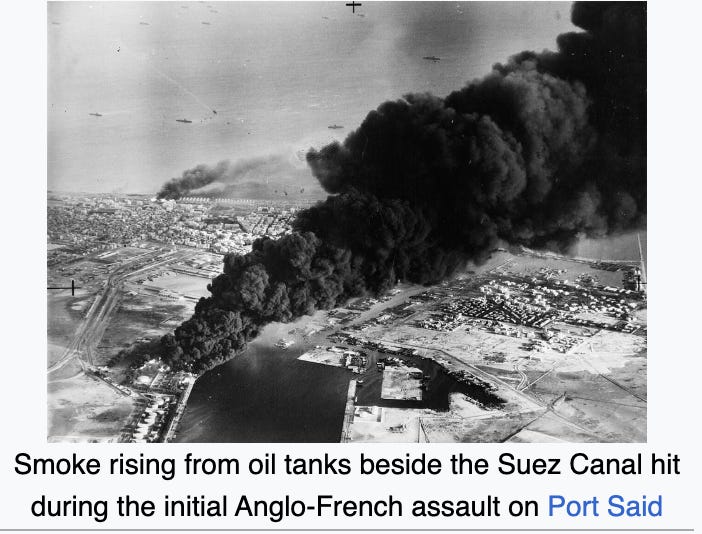
Students of British imperial history are intimately familiar with the Suez Crisis of October–November 1956. The crisis began when Egyptian President Gamal Nasser nationalized the Suez Canal on July 26, 1956, taking control of it from the British and French Suez Canal Company.
Britain and France then secretly coordinated with Israel, which sought to end Egyptian blockade of Israeli shipping. On October 29, Israel invaded the Sinai; Britain and France issued an ultimatum and then launched air and naval attacks to seize the canal under the pretext of serving as “peacekeepers.”
The United States and the Soviet Union pressured Britain, France, and Israel to cease hostilities, and the invading forces withdrew in early 1957. The crisis marked a sharp decline in British and French global influence.
In retrospect, it seems that British Prime Minster, Anthony Eden made a number of miscalculations. President Eisenhower was very unhappy when he discovered that Britain had secretly plotted with Israel and France. The perception of Britain as a covert schemer wrecked its moral standing and caused many observers to regard the British and French military actions NOT as “a peace keeping operation” but as an unprovoked invasion.
British leadership characterized Nasser as a “Hitler-like” dictator who could be easily toppled, failing to recognize that the experience of being attacked would produce a feeling of solidarity in Egypt for their leader, as flawed as he was.
British leaders also failed to recognize Britain’s economic vulnerability arising from its dependence on the the United States, which could use its financial leverage to force the British to retreat.
Is the United States now facing a Suez Crisis moment? Every imperial power ultimately discovered the limits of its power, to the surprise many who believed that their empire was inherently different from the empires of the past.
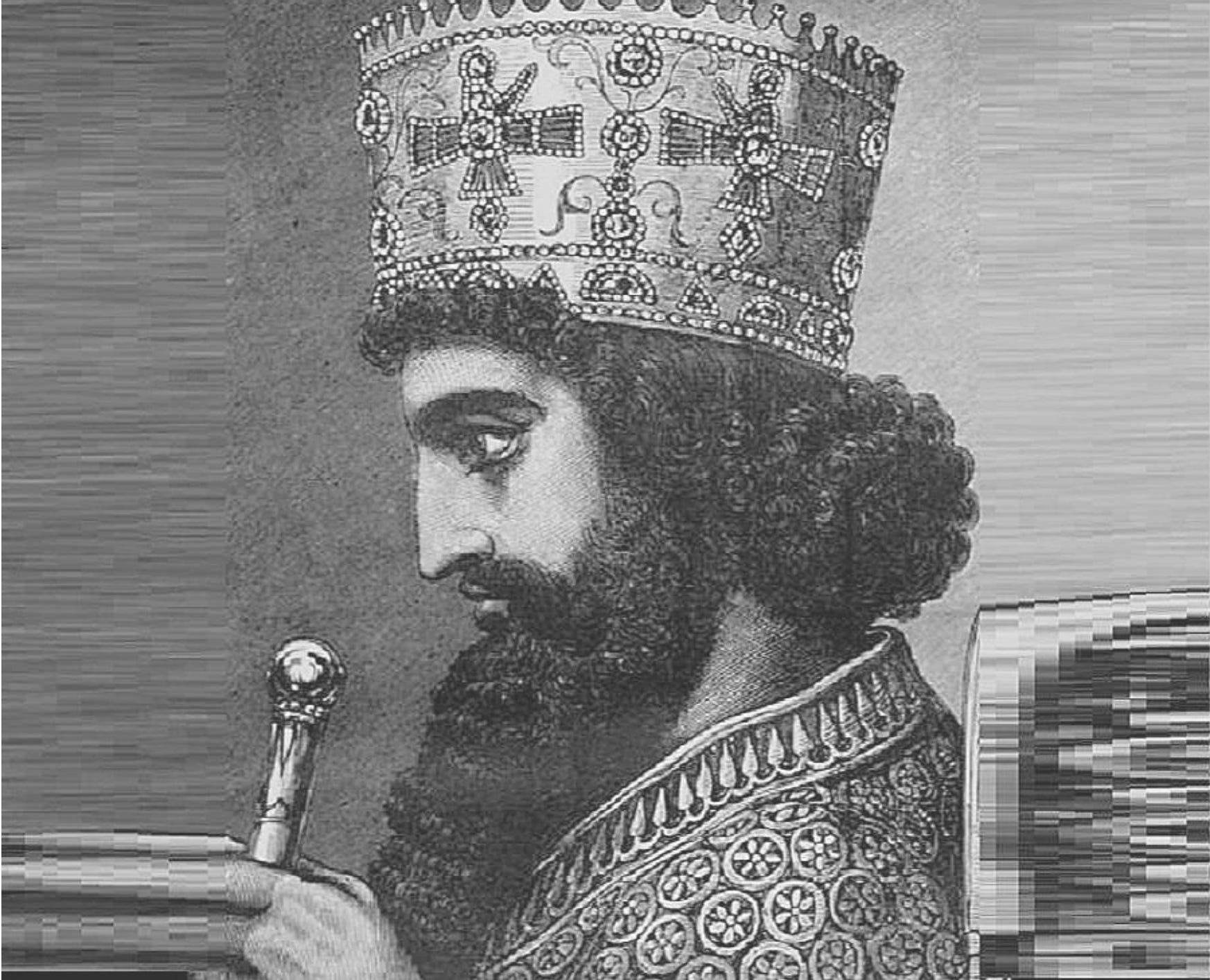
In recent weeks I have often been reminded of the Persian King Xerxes I. After years of expanding the Persian Empire to the West from its ancient seat in present day Iran, Xerxes invaded mainland Greece in 480 BC. The Greek historian Herodotus wrote a vivid and detailed account of the battles that followed. Many historians consider Herodotus’s The Histories the first great work of history in western literature.
Herodotus characterized Xerxes I as an arrogant, emotionally volatile, and hubristic commander who allowed his ambitions to cloud his reason. With no clear strategy or even serious appraisal of the Greek resistance he would face, he was inclined to petulant bouts of rage and a tendency to be swayed by advisors who told him what he wanted to hear.
His failure to respect his enemy resulted in a memorably embarrassing moment when he laughed at the King Leonidas when it became clear that the Spartan commander was going to try to hold his ground at the Thermopylae pass instead of ceding it to the vastly larger Persian army.
Above all, Xerxes failed to appreciate that—despite their own fractiousness—the Greeks would be motivated to defend their homeland and would make good tactical use of their mountainous terrain and narrow waterways.
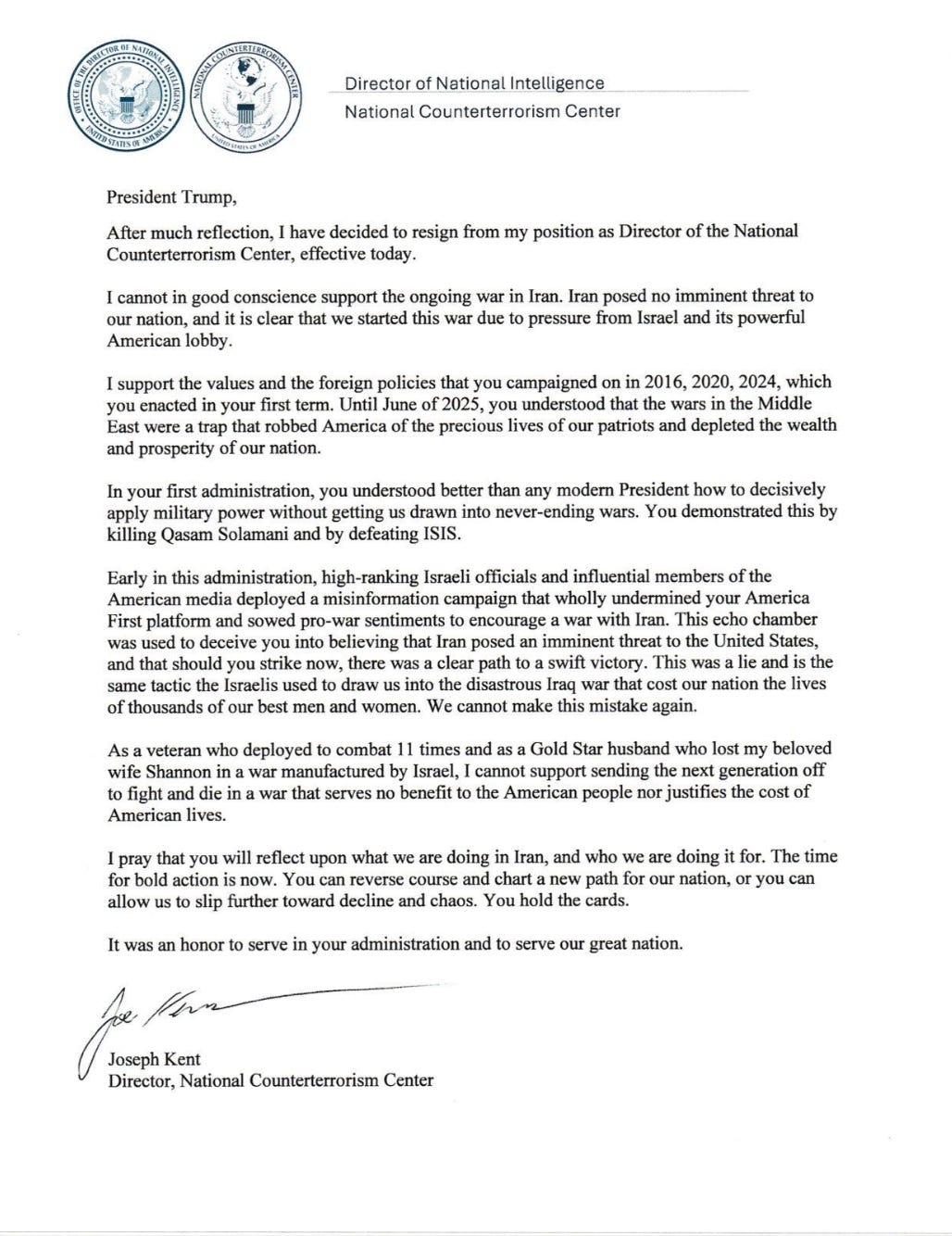
Ana Maria Mihalcea, MD, PhDMar 17 · Humanity United Now - Ana Maria Mihalcea, MD, PhD
So sad, the great people who have not sold their souls to Israel are leaving. It is such a loss to the future of America to see this detrimental change of heart in our Administration. From the love of peace to the love of war. Our hopes for freedom and justice are blown up in smoke - for what? Greed, power, and another nations directive
True Crime Writer. Coauthor with Dr. Peter McCullough of "The Courage to Face COVID-19.: Preventing Hospitalization and Death While Battling the Biopharmaceutical Complex.
The Head of the Mossad: In Pursuit of a Safe and Secure Israel. By Shabtai Shavit. Notre Dame, IN: University of Notre Dame Press, 2020. ISBN 9780268108335. Hardcover. 434 Pages. $29.00
The Head of the Mossad: In Pursuit of a Safe and Secure Israel. By Shabtai Shavit. Notre Dame, IN: University of Notre Dame Press, 2020. ISBN 9780268108335. Hardcover. 434 Pages. $29.00
The Head of the Mossad: In Pursuit of a Safe and Secure Israel. By Shabtai Shavit. Notre Dame, IN: University of Notre Dame Press, 2020. ISBN 9780268108335. Hardcover. 434 Pages. $29.00
Journal of Strategic Security Journal of Strategic Security Volume 14 Number 1 Article 9 The Head of the Mossad: In Pursuit of a Safe and Secure Israel. The Head of the Mossad: In Pursuit of a Safe and Secure Israel. By Shabtai Shavit. Notre Dame, IN: University of Notre Dame By Shabtai Shavit. Notre Dame, IN: University of Notre Dame Press, 2020. ISBN 9780268108335. Hardcover. 434 Pages. Press, 2020. ISBN 9780268108335. Hardcover. 434 Pages. $29.00. $29.00. Nadav Morag Sam Houston State University, This email address is being protected from spambots. You need JavaScript enabled to view it. Follow this and additional works at: https://digitalcommons.usf.edu/jss pp. 125-128 Recommended Citation Morag, Nadav. "The Head of the Mossad: In Pursuit of a Safe and Secure Israel. By Shabtai Shavit. Notre Dame, IN: University of Notre Dame Press, 2020. ISBN 9780268108335. Hardcover. 434 Pages. $29.00.." Journal of Strategic Security 14, no. 1 (2021) : 125-128. DOI: https://doi.org/10.5038/1944-0472.14.1.1926 Available at: https://digitalcommons.usf.edu/jss/vol14/iss1/9 This Book Review is brought to you for free and open access by the Open Access Journals at Digital Commons @ University of South Florida. It has been accepted for inclusion in Journal of Strategic Security by an authorized editor of Digital Commons @ University of South Florida. For more information, please contact This email address is being protected from spambots. You need JavaScript enabled to view it..
The Head of the Mossad: In Pursuit of a Safe and Secure Israel. By Shabtai Shavit. Notre Dame, IN: University of Notre Dame Press, 2020. ISBN 9780268108335. Hardcover. 434 Pages. $29.00. This book review is available in Journal of Strategic Security: https://digitalcommons.usf.edu/jss/ vol14/iss1/9
125 The Head of the Mossad: In Pursuit of a Safe and Secure Israel. By Shabtai Shavit. Notre Dame, IN: University of Notre Dame Press, 2020. ISBN 9780268108335. Hardcover. 434 Pages. $29.00. Reviewed by Nadav Morag, Sam Houston State University This book consists of the views of Shabtai Shavit, who served as the head of Israel’s civilian external intelligence agency, Ha Mossad le Modi’in ve Tafkidim Meuchadim (the institute for intelligence and special duties), more commonly known as the Mossad (institute). Shavit served as head of the Mossad between 1989 and 1996, an eventful period in Israel’s history (though one would be hard-pressed to find any period in Israeli history that was not eventful) that included the end of the Cold War, peace negotiations with the Palestinians and the establishment of the Palestinian Authority, the debut of Palestinian suicide bombing attacks in Israel, and the first Gulf War. Consequently, there is undoubtedly a great deal of interesting information and a range of insights that Shavit could convey on how these momentous events affected Israel and how Israel responded to them, at least within the context of the Mossad’s role. A book written by a former Mossad head could be an extremely valuable addition to the literature, not only on this covert Israeli agency, but on the manner in which intelligence impacts decision-making in Israel. Such a book could also provide insights into the nature of intelligence cooperation between Israeli intelligence and security agencies and between the Mossad and foreign intelligence agencies. Furthermore, such a book could contribute to the understanding of the Mossad’s role as Israel’s “secret foreign ministry” with respect to countries that do not have diplomatic relations with Israel (particularly those that are technically enemies of the State of Israel). The problem with Shavit’s book is that it does none of this. Of course, this type of information is heavily classified and therefore he is not at liberty to disclose any of this, but, herein lies the rub: Many thoughtful works by scholars (including those with intelligence experience) and good journalists have been written on the Mossad (Melman and Raviv), on the nature of intelligence (Lowenthal, Laquer, Wirtz, Dahl), and on Israel’s covert relationships with various countries (Ben-Zvi, Posner, Jones), etc., and thus the added value of a book by a former Mossad head lies in his experiences and insights with respect to sensitive matters he was directly involved with, and yet it is precisely these matters that he cannot disclose. Instead, Shavit offers us a broad range of his opinions on various issues relating to intelligence, the Arab-Israeli conflict, national security, diplomacy, world events, terrorism, and others. To be fair, Shavit does not claim that he has produced a scholarly work and he notes that his book “…does not purport to present scientific research; rather, it conveys the author’s personal opinions” (p. xix). But it is not clear what the value is of his personal opinions if he cannot demonstrate their validity through his actual experiences and it is therefore unclear as to what led him to take certain positions on certain issues. The literature on intelligence, the Arab- Israeli conflict, national security, covert diplomacy, and related issues is rich and varied and there is a plethora of scholarly books, articles, and think tank publications, properly footnoted, that address the issues covered in Shavit’s book in clearer and more comprehensive ways, with evidence provided for assertions made. It is true that Shavit held a very senior role and that he was in a position to observe, and possibly to influence, policy making at the Prime Ministerial level, but his views on Israel’s national security and fundamental interests, at least as expressed in this book, are not unique or particularly insightful. The fundamental interests of a given country (or at least one that is widely known and therefore holds interest for scholars, analysts, and journalists) can be discerned by anyone with the time and patience to do some reading. There is no magic insight afforded by access to intelligence or other classified information when one is focused on larger strategic issues (as opposed to tactical intelligence, which can be incredibly valuable). In the United States alone, there are over one hundred think tanks and universities that produce high-quality scholarship and analysis on national interests, challenges, domestic political considerations, military capabilities, economic and social issues, etc. relating to many countries, Israel included. Shavit recognized the value of this type of strategic analysis in his establishment of the Mossad’s Research Department, thus, as he notes, transforming the Mossad from “…an intelligence-gathering and special operations agency to an intelligence-gathering, special operations, and research and assessment agency…” (p. 6). However, when he describes some of the conclusions reached by this department, or by a team he established in 1995 (known as Forum 2000) in order to assess threats and opportunities for Israel in the new century, those conclusions are no different, and in many cases less sophisticated, than those that can be found in the better assessments by think tanks and scholars. For example, recommendations for fighting Jihadi terrorism include: “improving intelligence gathering, better technology for sampling airborne agents, tracking the flow of terrorist funds, increasing cyber capabilities, use of intelligence to build criminal cases, enhancing intelligence cooperation between national agencies, and integrating intelligence into combat operations” (pp. 81-82). There is nothing new or particularly insightful in this list of proposed measures. Similarly, when considering the potential impact of an Israeli attack on Iran, Shavit provides a series of issues for Israeli policymakers to consider such as: Whether Hezbollah will respond to an attack on Iran by Israel, when the United States should be informed of an imminent attack on Iran, whether Israel should target only Iran’s nuclear sites, or try to disrupt the government by attacking government targets, and whether it might be possible to attack Iran in such a way that allows plausible deniability (p. 121). Nothing here is new or absent from a range of analytical works on this issue (including, for example, analysis by Anthony Cordesman of the Center for Strategic and International Studies). Nevertheless, had Shavit’s work distilled much of this into one organized and well-substantiated volume, this would have provided a useful service to those less familiar with these issues. However, Shavit’s objective was to provide his opinions on various issues, not to create a primer on intelligence, national security, the Arab-Israeli conflict, covert diplomacy, or other such issues. Moreover, the book meanders from topic to topic without any clear attempt to build on information from previous sections in order to draw conclusions. For example, on one page, the author discusses the relationship between the Mossad and Israeli law enforcement and in the next few pages, the author moves on to discussing the Iranian threat to Israel. There appears to be little organizational logic in the manner in which topics are introduced and addressed. In summary, there can be little doubt that Shabtai Shavit possesses a wealth of experience and insight by virtue of his former key role in the Israeli intelligence system. At the same time, he is legally and morally bound not to divulge national security secrets and thus cannot share these experiences and insights. Given these constraints, and given his apparent lack of desire to create a work of evidence-based research (something that he presumably would have expected from the Mossad’s Research Department when he headed the agency), he has produced instead a book of opinions. There may be, perhaps, some residual value in reading the opinions of a former head of the Mossad as it may demonstrate the thinking of some in the Israeli security community during a particular historical period, but I can think of better ways to educate oneself on the issues addressed in this book. Journal of Strategic Security, Vol. 14, No. 1 https://digitalcommons.usf.edu/jss/vol14/iss1/9 DOI: https://doi.org/10.5038/1944-0472.14.1.1926
Morag: The Head of the Mossad: In Pursuit of a Safe and Secure Israel Produced by The Berkeley Electronic Press, 2021
Intelligence and National Security ISSN: (Print) (Online) Journal homepage: www.tandfonline.com/journals/fint20 ‘Profiles in intelligence’: an interview with 8th Mossad chief Danny Yatom Eldad Ben Aharon To cite this article: Eldad Ben Aharon (2024) ‘Profiles in intelligence’: an interview with 8th Mossad chief Danny Yatom, Intelligence and National Security, 39:7, 1121-1135, DOI: 10.1080/02684527.2024.2332030 To link to this article: https://doi.org/10.1080/02684527.2024.2332030
‘Profiles in intelligence’: an interview with 8th Mossad chief Danny Yatom Eldad Ben Aharon ABSTRACT This article is based on an interview conducted in July 2023 with Danny Yatom, the eighth Mossad chief. He had a distinguished career in the Israeli Defense Force, joining the Mossad in 1996 after his military service. Yatom’s contributions were pivotal during the 1980s and 1990s, particu- larly in diplomatic engagements and peace negotiations between Israel and Jordan. With experience spanning elite military units, intelligence agencies, Prime Minister’s offices, and the Israeli Parliament, his insights offer a comprehensive understanding of intricate matters, making it the primary reason for my decision to interview Yatom. Among other topics, Yatom provided nuanced perspectives on Israel’s involvement in the Nagorno-Karabakh conflict, its relations with Azerbaijan, the special ties between Israel and Germany, and the 1979 Islamic revolution. I also inquired about the impact of emotions on decision-making in national security, the historical trajectory of the Mossad, and Israel’s approach to Official Public Intelligence Disclosure. ARTICLE HISTORY Received 23 February 2024 Accepted 12 March 2024 KEYWORDS Mossad; elite interviews; Danny Yatom; Israel’s intelligence history; official public intelligence disclosure Introduction Danny Yatom was born on 15 March 1945. He served as the eighth Mossad chief, from 1996 to 1998. Before joining the Mossad in 1996, Yatom had a distinguished career in the Israeli Defense Force (IDF) as a Major General (Ret.), specializing in special forces and earning a Medal of Bravery during his service. Over his 30-year career in the IDF, Yatom held various significant positions within the Israeli security forces and the intelligence community. 1 He also served as the head of the IDF’s Planning Directorate, and military secretary to Defense Ministers Moshe Arens and to Prime Ministers (PM) Yitzhak Rabin and Shimon Peres. 2 During the 1980s and 1990s, Yatom played a pivotal role in the Israeli military and intelligence community. Furthermore, he played a significant role in diplomatic initiatives and peace talks between Israel and the Palestinians, and in the signing of the peace agreement with Jordan in 1994. Yatom has published a thorough autobiography in both Hebrew and English. 3 His auto- biography delves into his extensive military and intelligence career, with a particular focus on significant moments of the 1990s, including peace negotiations and the initial waves of Hamas terrorist attacks. Yatom’s autobiography highlights important milestones as well as moments of failure. 4 His is profound understanding of Israel’s intelligence and national security realms stems from Yatom’s broad and varied background. He is part of an esteemed group of Israeli elite who have held positions in military units, intelligence agencies, PM’s offices, and the Israeli Parliament. This viewpoint provides a comprehensive understanding that enhances our grasp of these intricate matters, making it the primary reason for my decision to interview Yatom. CONTACT Eldad Ben Aharon This email address is being protected from spambots. You need JavaScript enabled to view it. INTELLIGENCE AND NATIONAL SECURITY 2024, VOL. 39, NO. 7, 1121–1135 https://doi.org/10.1080/02684527.2024.2332030
Interview context
This interview took place in Herzliya Pitu’ah, Israel, during the scorching summer of 2023. Since January 2023, Israeli society and the political landscape have become significantly polarized follow- ing the initiative by PM Benjamin Netanyahu and Minister of Justice Yariv Levin, who introduced a contested legislative package aimed at reshaping the judicial system. 5 While tension lingered, few anticipated that Israel would face a significantly graver crisis after the Hamas surprise attack on 7 October 2023. 6 This attack led to significant casualties: more than 1,400 Israelis were killed, with thousands more injured, more than 230 Israeli men, women, and children were taken hostage. 7 As of writing these lines (February 2024), the Israeli operation ‘Swords of Iron’ in Gaza remains ongoing, with no indication of a ceasefire in sight. As the conflict persists, it has prompted extensive interna- tional condemnation of Israel’s actions in the Gaza war. Accusations of civilian deaths and allegations of genocide and war crimes by Israel against Palestinians have been widely raised. On 29 December 2023, South Africa petitioned the International Court of Justice (ICJ) to investigate whether Israel is committing genocide against Palestinians in Gaza. 8 On 16 February 2023, the ICJ partially dismissed allegations of genocide and issued provisional measures. Nevertheless, the vigorous public and academic debate concerning the question of genocide and mass violence in the Gaza War continues. 9 The intelligence debacle on 7 October 2023, occurring 50 years after the failure during the Yom Kippur War, appears to be Israel’s most severe since its establishment in 1948. 10 Extensive research has been published about the failure of Israeli intelligence in the Yom Kippur War in 1973, some of it recently here in Intelligence and National Security (INS). 11 To be sure, the failure in October 2023 is bound to attract much more attention in future research. It also necessitates a series of interviews with individuals like Yatom and others, solely focused on analyzing the intelligence and military failure. Two main limitations impacted the interview with Yatom. Clearly, discussing the intelligence failure of 7th October during that time was not feasible because the interview with Yatom had taken place three months earlier. Also, as the interview was limited to one hour, I did not want to squander valuable time with Yatom by asking about matters that can be thoroughly explored in his auto- biography or not directly related to my research projects. The interview with Yatom further contributes to the oral history project that I have been leading since 2015, with specific segments previously featured in INS. 12 This interview primarily focused on Israel’s foreign policy, intelligence history, and national security. These topics are intricately intertwined with several ongoing research projects I have recently undertaken, Israel’s role in the Nagorno-Karabakh (NK) conflict, Israel’s relations with Azerbaijan, the special ties between Israel and Germany, and the 1979 Islamic revolution. 13 Additional questions directed at Yatom delved into current significant debates within the realms of intelligence and national security. One such topic explored the intersection of national security and democracy. For example, Yatom’s unique position as the first Mossad chief whose identity was revealed upon appointment sparked interest in understanding how this aspect influenced his role. Also, I explored Yatom’s viewpoints on Israel’s strategy regarding Official Public Intelligence Disclosure (OPID), often referred to as the ‘disclosure dilemma’. 14 I inquired about his first hand experiences with competition among Israeli security institutions and the diplomatic apparatus concerning influence and decision-making. 15 Additionally, Yatom shared his insights on the role of emotions in decision-making within the realm of national security and intelligence, along with discussing the history of Mossad. As shown in the image accompanying the interview text below, it took place in Yatom’s office. When interviewing the Israeli intelligence elite, I find the office space of the interview subject to be the most suitable venue. 16 The office space serves as their professional environment, adorned with symbols of their career such as flags, professional photos, and books. This 1122 E. BEN AHARON
physical setting helps the interviewee feel comfortable and in control, facilitating the sharing of accounts and memories. This environment is crucial for establishing trust and maintaining a professional tone during the interview process. Dr. Eldad Ben-Aharon (left) interviewing the 8th Mossad chief, Danny Yatom (right), in Herzliya Pitu’ah, Israel, on 19 July 2023. Interview 17 Eldad Ben-Aharon (EBA): A question you may already have answered on innumerable occasions, but can you tell me what made decide on a career in state security and intelligence? What made you decide this was your calling? Danny Yatom (DY): I was born in 1945, before the establishment of the State of Israel (1948). The atmosphere at home was very different from what it is today. You know, those who didn’t live then can’t really understand what that entailed. There was an atmosphere of friendship, camaraderie, and concern for one another. We lived a very simple life, but we knew we had to contribute to the development, success, and security of the State of Israel. We were exposed to all sorts of things related to security, through classes like Shelah 18 and Gadna. 19 In the early years, the country was small, within the [pre-]1967 borders, and there were countless security incidents. Security was always in the headlines and at the top of the agenda. It was therefore absolutely clear to me, from an early age, that I would volunteer for the paratroopers. We had no idea of the existence of Sayeret Matkal. (SM). 20 The unit was just a rumor, from mouth to ear. Really. It was made up of moshav and kibbutz members, and I was nothing like that; I was a city kid from Netanya. The reprisals carried out by the paratroopers fired up my imagination. It was just so clear to me that I would enlist in a combat unit, preferably the paratroopers. Because this was the atmosphere, it’s hardly surprising that not only I but many members of my generation felt the same, intuited the same thing. The result was that, without having put together any kind of strategy whatsoever and only because I ended up in SM – the kinds of things we did there, the people I met, and the fact that at if you’re a commander at such a young age you get tasked with missions beyond enemy lines, without going into any details – all of these tremendously boosted my maturity. This made me decide that this would be the direction of my career, that this was something I wanted to continue considering. And every year, I signed on for ‘just another year’ in the standing army. No more than that, so that I’d always have the option of leaving and entering civilian life. The way I was raised and the atmosphere around me tilted the INTELLIGENCE AND NATIONAL SECURITY 1123
physical setting helps the interviewee feel comfortable and in control, facilitating the sharing of accounts and memories. This environment is crucial for establishing trust and maintaining a professional tone during the interview process. Dr. Eldad Ben-Aharon (left) interviewing the 8th Mossad chief, Danny Yatom (right), in Herzliya Pitu’ah, Israel, on 19 July 2023. Interview 17 Eldad Ben-Aharon (EBA): A question you may already have answered on innumerable occasions, but can you tell me what made decide on a career in state security and intelligence? What made you decide this was your calling? Danny Yatom (DY): I was born in 1945, before the establishment of the State of Israel (1948). The atmosphere at home was very different from what it is today. You know, those who didn’t live then can’t really understand what that entailed. There was an atmosphere of friendship, camaraderie, and concern for one another. We lived a very simple life, but we knew we had to contribute to the development, success, and security of the State of Israel. We were exposed to all sorts of things related to security, through classes like Shelah 18 and Gadna. 19 In the early years, the country was small, within the [pre-]1967 borders, and there were countless security incidents. Security was always in the headlines and at the top of the agenda. It was therefore absolutely clear to me, from an early age, that I would volunteer for the paratroopers. We had no idea of the existence of Sayeret Matkal. (SM). 20 The unit was just a rumor, from mouth to ear. Really. It was made up of moshav and kibbutz members, and I was nothing like that; I was a city kid from Netanya. The reprisals carried out by the paratroopers fired up my imagination. It was just so clear to me that I would enlist in a combat unit, preferably the paratroopers. Because this was the atmosphere, it’s hardly surprising that not only I but many members of my generation felt the same, intuited the same thing. The result was that, without having put together any kind of strategy whatsoever and only because I ended up in SM – the kinds of things we did there, the people I met, and the fact that at if you’re a commander at such a young age you get tasked with missions beyond enemy lines, without going into any details – all of these tremendously boosted my maturity. This made me decide that this would be the direction of my career, that this was something I wanted to continue considering. And every year, I signed on for ‘just another year’ in the standing army. No more than that, so that I’d always have the option of leaving and entering civilian life. The way I was raised and the atmosphere around me tilted the INTELLIGENCE AND NATIONAL SECURITY 1123
scales. I remember how, at home, I was always told, ‘But Ben-Gurion said . . . ’ so therefore you had to obey. 21 This is also the main reason that my siblings and I and all live in Israel and we all spent our careers working in the field of security. But this didn’t transmit to the next generation. And I never tried to convince anyone. Everyone chooses their own path. EBA: As someone who commanded the Mossad, can you sketch out the organization’s history? DY: Look, I think it’s very difficult to summarize it in a few sentences while also diving into any detail. I was familiar with the Mossad since the time I served as military secretary. The function of a military secretary is to be the link that connects the Mossad chief and the PM. I was appointed to serve as then-Defense Minister Moshe Arens’s military secretary in 1983. This was the first time I got to know the Mossad and this ‘getting-acquainted’ period lasted more than two years. The second time was when I ended my term as General Commanding Officer of the Central Command and Yitzhak Rabin asked me to become military secretary again. That’s how I got to know the Mossad. But it was only after I became Mossad chief and became part of it and got really and truly involved in the organization that I realized how much of it I was not familiar with and how much I didn’t yet know. So, to get back to your question: it’s a versatile organization with a lot of diverse capabilities with the intelligence to view things outside the box. The Mossad constantly teaches you to look for the unusual, for the non-standard. The people there are just fantastic. Their daring and ability to see the whole picture, as well as their persistence and single-mindedness and the courage they must demonstrate, day in day out, are extraordinary. Bottom line – since its establishment, the Mossad has been a rare jewel in the human landscape of the people and State of Israel, despite the mishaps, because there will always be mishaps. The human capital is this organization’s central quality. EBA: You were the first Mossad chief whose name was declassified and made available to the media, thereby demystifying the Mossad to a certain extent. What were your feelings about that? DY: Look, then-PM Yitzhak Rabin realized that he had no choice because the Supreme Court was going to rule contrary to his position, which was not to identify the Shin Bet and Mossad chiefs. Till then, the custom was that the identities of the security establishment leaders who got the jobs were made public only once they ended their tenure. I got to witness the whole process, the attempt to keep the Supreme Court’s pressure at bay. In the end, then-Attorney General Michael Ben-Yair (1993- 1997) came to Rabin and told him, ‘Look, Mr. PM, we’re going to lose to battle. We’ve run out of arguments’. Rabin decided to go along with this. It meant contacting one of the newspapers to publicize my identity. I have to tell you that when I served as Mossad chief, the fact that my identity was known to the public bothered me a great deal, especially when operating abroad. Every time I oversaw activity abroad, I had to get into costume. I had to make sure no one could identify me. But, look, that’s democracy. Even before I became Mossad chief, my identity was known. I was identified publicly; I was Rabin’s military secretary the entire period of the very intensive peace process. So that, in any case, I was hardly an anonymous figure in Israel. EBA: As we are already delving into the realm of national security and democracy, 22 to your way of thinking and based on your experience, can an Member of Parliament (MP) affect national security 1124 E. BEN AHARON
decision making? 23 To what extent did you experience a sense of parliamentary paralysis 24 when you served as an MP, specifically in the context of national security-related matters? i.e., that the Israeli Parliament (the Knesset) is incapable of carrying out its function of supervising the government and the security establishment. DY: The Knesset is a weak body and wields almost no influence. It’s as if it’s welded to the government, because the Knesset elects the government. The majority in the Knesset is also the majority in the government, so that they are a single entity. In Israel’s parliamentary democracy, there’s supposed to be a balance among three branches: the judiciary, which exerts judicial review of the executive branch and also the Knesset, because the legislative branch has no independent capacity to perform any kind of matter-of-fact oversight of the government. For example, right now, we have a situation in which Itamar Ben-Gvir, the national security minister, wants to control administrative detentions. 25 Ben-Gvir presents this as him being able to issue administrative deten- tions with regard to crime in Israeli Arab society. But because this might become completely arbitrary, it’s a slippery slope, and tomorrow he could decide to order anyone he doesn’t care for held under administrative detention. And, in this case, it makes absolutely no difference what the Knesset – as the body charged with oversight of the government on security issues – thinks. I’m also convinced that, at present, there are coalition MKs who understand that the judicial upheaval is a bad thing, but they don’t dare open their mouths because they’re worried about future jobs. They don’t want to oppose the sitting government because there’s no way they’ll get a cushy position in the future. Also, the Knesset cannot function as a counterweight to anything. The political culture and the considerations in the Knesset are entirely particularistic: for the good of a certain party, individual, or group. Not for the good of all, only for the good of particular sectors. The function of the Knesset is to pass laws and critique the work of the government. When it comes to legislation, even if there’s a good law – if the government doesn’t want it, it won’t pass. EBA: There is much academic, policy and public discussion surrounding the hostility between Israel and a nuclear Iran. 26 The enmity also makes it clear that, from the Iranian perspective, it’s necessary to destroy Israel and its Zionist identity, reflecting a hatred towards Judaism and everything it represents. 27 Can you go back a bit to the 1970s and the time when Israel still had relatively good relations with Iran under the Shah? As a formative moment in the Cold War, how did Israel’s security establishment experience the deterioration and fall of the Shah and Iran’s revolution in 1979? DY: Back then, I wasn’t involved in, or connected to, the relationship between Israel and Iran. Of course, I remember the stories told by the late Uri Lubrani, Israel’s last ambassador to Iran before the 1979 revolution, and others who managed to escape by the skin of their teeth before Khomeini took over. But when I came to the Mossad, and earlier, as Rabin’s military secretary, I had already dealt with the matter; because I will never forget that Rabin, whenever he met a world leader – a president or PM or the like – would always say, ‘It is imperative to prevent Iran from becoming a nuclear power, because the moment Iran has the bomb, we’ll never be able to sign peace agreements with the Muslim nations, because Iran will threaten them. So, we have a window of opportunity to try to keep Iran from becoming nuclear’. I remember the time of the revolution, but in 1979, I had no real connection to the matter, and I wasn’t privy to intelligence. At first, I wasn’t worried. And then, slowly but surely this monster developed into becoming what is now the central threat to Israel. Then, nuclear bombs weren’t under discussion because Ayatollah Khomeini would in no way agree to any nuclear development, even though the Shah, his predecessor as Iran’s leader, had had such notions. It took time until this stance changed. As Mossad chief, I dealt with the matter to a highly significant degree. In general, the Mossad has two major missions: one, to keep enemy and hostile nations from arming themselves with unconventional weapons – chemical, biological, and atomic; and the second mission – to wage war on terrorism across the length and breadth of the globe. These are the two key missions and they informed me as well. Therefore, even back then, efforts and methods and so on were invested into derailing Iran’s attempts. Even then, Iran had a habit of engaging in all sorts of tricks, founding all sorts of straw companies and deceiving the whole world. And Iran has remained a large part of our activity to this day. EBA: How did the relationship with Iran, which collapsed in 1979, change the geopolitical distribu- tion of power in the Middle East vis-à-vis the Cold War? 28 And the importance of Turkey – another huge Muslim nation in the region – for Israel? DY: Back then, Israel’s foreign policy was built on the circles theory, meaning construct a circle that surrounds your enemy with nations that are friendly towards you in order to hem the enemy in and prevent the enemy from harming you. 29 That was and is the policy in place to date at the Ministry of Foreign Affairs (MFA) and other institutions. So, absent the two major components in the external circle (Iran and Turkey). The farther nations were more distant in Africa, especially the special relations with South Africa, which flourished at that time. To get out of that crisis, the direction was towards friendly nations in Europe and the Far East. Moreover, the United States was always our pillar of support ever since France abandoned that position in the early 1960s. Israel always built itself as part of coalitions surrounding the threat. You have to look for the rationale when you’re looking at the map and see Lebanon, Syria, Jordan, and Egypt surrounding us. Now, look for the countries surrounding the countries surrounding us. Other than this strategy, there was a much more comprehensive strategy: be friends with anyone who wants to and can be your friend. And the more friends you have in the world, the better your national security. Furthermore, in 1979, the peace treaty with Egypt was one of the important components of Iran and Turkey’s replacement. The peace agreement came into being at almost the same time. To a certain degree, the peace balances the fact that the Iranian factor was gone and that relations with Turkey were in flux. But there was peace with Egypt, so it was possible to start building something there. Afterwards came the improvement in the relationship with Morocco and other North African countries, which was still a secret and which the Mossad spearheaded. That was the solution. In the absence of the foundation with Iran, which had collapsed, you looked for replacements even if they weren’t of the same order, even if they weren’t as strong. But they were better than nothing. EBA: The 2010 flotilla incident 30 – how did it affect Israel’s security approach? and the how a nation (Turkey), perceived as friendly with formal diplomatic ties, challenges Israeli borders and national security with such a provocation? DY: There is no doubt that, at least to my understanding, it makes sense to prepare emergency plans for a time when something like that happens, because then you’re really caught in a dilemma. Behind that flotilla, there was a state that was also saying ‘If you irritate the Palestinians in Gaza, I will dispatch warships’. I remember Erdoğan saying this. 31 The way to handle it is, first of all, by building capacities to stop and cope even with a nation that wasn’t considered to be an enemy from a security perspective. To my own thinking, we wouldn’t have reached a breakdown [in relations] with Turkey at that time. 32 The flotilla was mainly an attempt to scare us into thinking that the Turkish navy would sail in the wake of the civilian flotilla. And that wouldn’t have happened, in my
opinion. At that time, Turkey was not motivated to burn its bridges with Israel to the point of a clash
between the respective armies. That wasn’t the intention. Absolutely not, given that Erdoğan kept jumping from policy X to policy Y each time anew. He found himself at odds with Egypt as a result of what happened in Gaza and the question of assuming responsibility for Gaza instead of the Egyptians, and so on. And that’s happening now as well (July 2023). Suddenly, Erdoğan eases relations between Israel and Turkey and supports them and then he suddenly gets in their way. Beyond the fact that Israel has to be prepared for scenarios of that sort, it isn’t necessary to construct a new army or turn the Israeli Navy into something altogether different. But it is necessary that have such plans, for example, to seize control of the Marmara in 2010. Several tactical errors were made as a result of which members of Shayetet 13 were caught by people who beat them up and one was wounded and so on. 33 The episode should have ended very differently. But that was our bad conduct and therefore it also became a balloon that blew up in our face. The other, more influential factor is the political side. It is crucial to make sure that, the moment there are signs of something like this happening, all of Europe and the United States and all democracies be prepared to come down hard on Turkey. Those nations must have a uniform response because one of these days it might happen to them too. EBA: You held several positions in the security establishment: military secretary, Mossad chief, head of former PM Ehud Barak’s political-security staff. Can you describe the tensions among these institutions? One often has the sense that there is real competition between the security institutions and the diplomatic system over influence and decision making. Obviously, it changes from one PM to another, but, still, there’s a sense that there is intense competition over influence on political and security matters. DY: First of all, the situation today is much better than it was when I was either military secretary or Mossad chief. Throughout the years, there’s been not just tension but actual hostility among some of the institutions. I’m mostly referring here to the intelligence and security institutions: Military Intelligence, the Shin Bet, the Mossad, and today there’s also the National Security Council. 34 And the MFA, which was always running to catch up but never had any clout. I remember quite a number of incidents where personal jealousy and hostility and someone’s desire to guard his own fiefdom actually damaged what was supposed to be cooperative or complementary work among the different institutions. There were many attempts to set a sort of ‘Magna Carta’ down in writing to delineate the ‘territory’ of each of the intel agencies. At the end of the day, it depends on the personalities of the people heading these organizations, which is why I say that today the situation is much better. Even in my time, the situation had improved compared to what it had been earlier – without mentioning any names – when the Mossad chief wasn’t even on speaking terms with the head of AMAN. 35 It was that bad. Nowadays there’s much greater openness. There’s a sort of ‘bucket’ where everyone ‘tosses’ the intel they collect, and everyone can make use of any of the intelligence items thrown in. There’s good intelligence and operational cooperation. And, of course, there are collaborations with other nations’ corresponding agencies. There is no doubt that what changed the picture was [the realization] that openness and under- standing are critical, that there’s no room for rivalry. On the contrary. Cooperation is needed; the need for it is acute – making sure that what you know is also known to the other guy even if you think he doesn’t need to know. Pass the information on because it’s possible that some other agency very much does need to know. Cooperation between the Shin Bet and the Mossad, cooperation between the Mossad and AMAN; nowadays, cooperative efforts are much smoother, and no one puts a spoke in the wheels. There might still be tensions that need to be resolved, but it’s important that the PM who sees such matters intervenes. There were PMs who saw the tensions and didn’t want to get involved, saying, ‘Work it out amongst yourselves’. That never fixed anything; it only perpetuated the problem. EBA: The ‘special relationship’ with Germany 36 : can you please address the historic connection with Germany? Since the 1952 Reparations Agreement , 37 the German scientists affair, 38 the eleven Israeli individuals killed in the 1972 Munich Olympics terrorist attack, and the fall of the Berlin Wall, as well as – of course – West Germany’s acceptance of responsibility for the Holocaust. DY: Since the establishment of the State of Israel, we’ve received some kind of support or another from Germany. Adenauer and Ben-Gurion formed the start of this relationship. And although there were also incidents, such as the scientists in Egypt and the fatal attack in Munich, followed by the Mossad’s revenge on all those involved in it, as a result of which the Lillehammer affair occurred, and so on, the relationship between Israel and Germany continues to be unique, in part because of the moral obligation of Germany, which accepted responsibility; we have excellent relations. Let me give you an example: in the First Gulf War, missiles were fired at Israel. At that time, the Defense Minister was Moshe Arens. I was his military secretary, and we had an excellent personal relationship. One day, he calls me and says, ‘You’re taking a delegation and flying to meet with German Chancellor Helmut Kohl. Please take the photos of the missiles that hit Ramat Gan and show him examples of the damage the missiles caused. Using this concrete method, you ask Chancellor Kohl not just for a FOX – a vehicle that locates and monitors radioactive materials – but you also ask the Germans for financing for two submarines’. I asked Arens, ‘How do I do that?’ He answered me, ‘You have to say that this is a strategic weapon and that the State of Israel needs it, both because it is necessary to issue a warning and to achieve a decision against the enemy in time of need’. I took a delegation that included some Ministry of Defense personnel. We met with Kohl. In the middle of the night, he assembled all the relevant ministers – finance, defense, and so on. That night ended with 880 million Deutsche mark and two submarines en route to Israel. EBA: Germany declared that safeguarding Israel’s security since the post-Cold War is part of its ‘Staatsräson’ (reason of state) as to the Israeli Parliament (the Knesset). 39 To your way of thinking, how is safeguarding Israel’s security manifested in Germany’s stance on Israel’s conflict with the Palestinians and also concern with the implications of Israel’s judicial upheaval and democratic balance? DY: First off, it’s very difficult to assess what may happen to future Israel-Germany relations. However, as long as the two countries maintain such relations, German support will not waver. What could happen is that relations might change gradually without anyone noticing, a gradual erosion of relations without us paying attention. Why? Because if we come out all right from the attempted judicial upheaval and once more become a full-fledged democracy, then relations with very many nations, which are currently starting to deteriorate, will be restored. That includes the United States. It seems to me that relations between Germany and Israel might run aground as a result of a different political landscape in Germany. That is to say, should the radical right or radical left suddenly come to power – and that could happen – there will be change with regard to us. There is no way of knowing when or if it might occur. In any case, we have no influence over the political system there, what we can do is to ‘turn back from our wicked ways’ and go back to what we were before the judicial upheaval and not lose these nations. As long as we remain in this political interim
stage and it isn’t clear what is happening in Israel politically, the risk increases that our relations with Germany as well as other nations will go awry. We have another problem, the elephant in the room: Israel’s presence in the West Bank and our relations with the Palestinians. Our presence there makes things very difficult for us in the interna- tional and regional arenas. I saw a lot of hope in the Abraham Accords (2020), but things are deteriorating as a result of very tense relations between us and the Palestinians. Abu Mazen’s era is drawing to a close and it is not at all clear who’ll replace him in the Palestinian Authority. There will be a fight over his succession. But this is where Israel must toss the whole judicial upheaval into the garbage can, certainly at this stage, and deal with the most important issues, which is that Iran already possesses 60 per cent nuclear enrichment. Iran is also developing long range missile that could one of these days carry a nuclear warhead. Iran is also very eager to poke its nose into every corner of the Middle East: Lebanon, Syria, Iraq, Yemen, the Sinai Peninsula, and Gaza. This is an Iran that Israel must stop. But when our relations with the United States become strained, our ability to work cooperatively also with European nations shrinks. After all, the Europeans take their lead from the Americans. They follow in their footsteps quite often. President Biden has said so and even warned us: stop this legislation because it might lead to a situation in which the United States will no longer be able to help you. EBA: Iran, Turkey, Russia, and Israel are involved in the NK conflict. 40 To your way of thinking, what is Israel influence or involvement in this conflict? DY: Israel’s considerations were not the result of the conflict between the Armenians and Azeris. After all, the conflict in NK is first and foremost between Azerbaijan and Armenia. Rather, the considerations stemmed from the relations between Azerbaijan and Iran, and this is the main reason why Israel chose a side. Note that Israel did not choose a side in the war in Ukraine and is still not choosing a side in the Far East, in the struggle between China and the United States. We continue to buy tremendous quantities from China and China makes investments in Israel. They built ports, and they’ve bought Tnuva. 41 In this instance, we probably haven’t picked a side because the Americans haven’t applied sufficient pressure. In general, Israel does not tend to pick sides in conflicts of this kind; it prefers to sit and wait things out. In the case of Azerbaijan and Armenia, Israel picked a side because it was sufficiently important. EBA: Relations with Azerbaijan are important to Israel mostly because of the confrontation with Iran and its geopolitical location. To your way of thinking, what is the significance of cooperation between Israel and Azerbaijan for our national security? 42 DY: To begin with, relations with Azerbaijan are very important to us. They’re important mostly because of the concept we spoke about earlier – the ‘circles’ concept. 43 Suddenly, Israel has a friend located in an extremely sensitive region, 100 kms from Tehran, with 20 million Azeris and a very tense relationship with Iran. It affords Israel many more options, from using Azeri airports to refuel and allow coalition plane to land there, to a closeness that makes it possible to gather intelligence more effectively. EBA: Is it conceivable for Israel and Azerbaijan to fight Iran together?
DY: If and when war between Iran and Israel breaks out, Azerbaijan will be a significant logistical rear for us. The short distance between the Azeri airport and Tehran is therefore highly significant in such an attack. A green light from the superpowers is important for such a war. If Azerbaijan were to seek a green light, it would get it from the United States, and would for sure get it were Washington itself involved in such a war. 44 But legitimacy from leading European nations is important if they’re to participate in a belligerent policy vis-à-vis Iran, nations such as Germany, the United Kingdom., France – the leaders of The North Atlantic Treaty Organization (NATO). EBA: The world of espionage is a field, which, in popular culture as well as through academic and scientific lens, is thought of as being controlled by rational, emotion-less decision making. Can you describe an instance in which emotions and gut feelings 45 played a significant role in intelligence work? DY: Look, there is room for emotions and gut feelings. But I don’t think that they are ever the determinative factor in an intelligence assessment or situation report. That is to say, in the event of a clash between specific intelligence analysis and an emotional or gut feeling pointing in a different direction, the latter would not be adopted over the former. That would never happen. But it’s good to hear all the people who have intuitive reservations and try to get them to explain why, what is bothering them, and to what extent. And it may well be that some of that will be important enough to consider and integrate into the final assessment. Therefore, there’s room for gut feelings as well. For example, if you’ve followed someone or studied a field from 20 years, what you know and feel about him, or it, carries a certain weight. But to a limited extent. In general, in a broad situation assessment, there’s less room for intuitive leaps, period. EBA: What are your thoughts on the increasing trend over the last two decades where Israeli govern- ments, including the current coalition, systematically disclose the operations of the Mossad? 46 Scholars commonly refer to it as the ‘disclosure dilemma’. There are several examples, for instance the revelation of the Iranian nuclear archive exposed by Netanyahu himself, 47 or Bennett’s revelation about a new operation concerning the fate of Ron Arad. 48 What’s the major reason for the change in Israel’s previous policy of vagueness in an attempt to shape the public discourse on security and state secret issues? DY: I think we should go back to vagueness. The Mossad and Shin Bet differ from the IDF, where parents send their children due to mandatory military service, thereby obligating the IDF to be accountable to both families and the public to a certain extent. Intelligence owes an accounting only to the PM, not the public. Therefore, it was a mistake to make these affairs public. Some of it was the result of arrogance and some was the result of wanting to generate deterrence. But take, for example, the Iranian archive: who needed that piece of theater when the Iranians knew it’s us? Heads of state and spy agency chiefs around the world knew it’s us because we informed them. So, who was that piece of theater for? For the Israeli public so they’d vote for you. The moment you start mixing in how they’re looking at you politically with security considerations . . . that’s not good. You don’t publicize stuff that is meant to be confidential. That stuff is much more potent when it stays in the dark. The public can think and imagine all sorts of things that never happened. It’s better to let the public think that James Bond did it. EBA: Thank you so much for your answers and the fascinating conversation. DY: Thank you for the interview.
Notes
1. Hebrew acronym for IDF’s Anti-Terrorism Force. 2. Moshe Arens (1925–2019) served as Israel’s ambassador to the United States and as Defense and Foreign Minister. Yitzhak Rabin (1922–1995) had a distinguished military career before entering Israeli politics. He played a prominent role in the IDF throughout his career, eventually serving as IDF Chief of Staff during the Six-Day War in 1967. Subsequently, Rabin held positions as both Israeli Prime Minister and Minister of Defense. He was assassinated during a rally in Tel Aviv on 4 November 1995. Shimon Peres (1923–2016) was an Israeli President and PM, who, along with Rabin, was well known for their involvement in the 1993 Oslo Accords. 3. For the Hebrew version see: Yatom. The Confident; the English edition was in 2016: The Labyrinth of Power. 4. Yatom’s tenure as Mossad chief was relatively short (1996–1998). Yatom faced pressure to resign after two Mossad operatives failed in an attempt on the life of Hamas leader Khaled Mashal on 25 September 1997. Mishal’s life was in fact saved after Israel delivered the antidote. See Cowell, A”.The Daring Attack” Available online: https://www.nytimes.com/1997/10/15/world/the-daring-attack-that-blew-up-in-israel-s-face.html; tak- ing full responsibility for the failed operation, Yatom resigned from his position in the Mossad in February 1998. The first chapter of Yatom’s autobiography is dedicated to his account of the aforementioned operation. Yatom, The Confident 13–25. 5. On the Israeli Judicial Overhaul, see e.g, BBC, 11 September 2023. Available online: https://www.bbc.com/news/ world-middle-east-65086871 also here by The Israel Democracy Institute (IDI). Available online: https://en.idi.org. il/tags-en/47383; see also, Roznai and Cohen, “Populist Constitutionalism”, 502–520. 6. About the 7 October 2023 massacre, see e.g., New York Times, 7 October 2023. Available online: https://www. nytimes.com/2023/10/07/world/middleeast/israel-gaza-war-hamas-palestinians.html 7. More data and numbers about the massacre can be found here: https://www.csis.org/analysis/hamass-october -7-attack-visualizing-data 8. South Africa provided evidence to the ICJ indicating that Israel’s actions and inactions are being characterized as genocidal. Israel disputed these allegations. On 16 February 2024, the ICJ rejected South Africa’s request for urgent measures to limit Israeli actions in Rafah. Available online: https://www.icj-cij.org/node/203453 9. On this see the dedicated forum in the Journal of Genocide Research titled ‘Israel-Palestine: Atrocity Crimes and the Crisis of Holocaust and Genocide Studies’: https://www.tandfonline.com/toc/cjgr20/0/0 10. Financial Times 23 November 2023. Available online: https://www.ft.com/content/277573ae-fbbc-4396-8faf- 64b73ab8ed0a and The Conversation 7 December 2023. Available at: https://theconversation.com/why-israels- intelligence-chiefs-failed-to-listen-to-october-7-warnings-and-the-lessons-to-be-learned-219346 11. See e.g.: Bar-Joseph. Watchman Fell Asleep; Bar-Joseph and Kruglanski. “Intelligence Failure”; Sindawi and Kahana. “The Yom Kippur War”, And published in INS: Shapira, ‘The Yom Kippur Intelligence Failure’,; Shamir. “Moshe Dayan in the Yom Kippur War.” 12. Ben Aharon, “Methodological and Epistemological Reflections.” 13. Ben Aharon, “Between Geopolitics and Identity Struggle”,; “Outlook on German-Israeli Relations”,; “Political Audience and Non-Linear Securitisation.” 14. Regarding the OPID debate, see e.g, Carnegie & Carson’s “The Disclosure Dilemma”, 269–285. For a broader discussion on the ‘disclosure dilemma’, see e.g., Lin-Greenberg and Milonopoulos “Private Eyes in The Sky.” 15. On previous exploration of this discussion see: Ben Aharon. “Doing Oral History”, 12–15. 16. For additional insights and ‘Lessons from the Field’ when interviewing Israeli intelligence and diplomatic elites, see Ben Aharon, ‘Methodological and Epistemological Reflections’, 118–119. 17. The interview subject has reviewed the transcript of the interview for accuracy and has provided his full consent to its publication in INS. 18. Hebrew acronym for sadeh, le’om, hevra (i.e., field, nation, society), a multiyear course commonly taught in Israeli middle and high schools. 19. Hebrew acronym for g’dudey no’ar (i.e., youth battalions), a pre-army military preparatory course under the auspices of the IDF. 20. The Hebrew acronym for the IDF’s Anti-Terrorism Force. Yatom is notably recognized for his service within the IDF in SM. 21. David Ben-Gurion (1886–1973) was the principal architect of the State of Israel’s foundation and held the position of the first Israeli PM and Defense Minister. 22. In the ongoing debate concerning the delicate balance between national security and democracy, considerable attention is directed towards ‘The Five Eyes’ - Anglosphere Intelligence Alliance. At its core, this discussion delves into how politicians and the civil service can effectively harness the intelligence community’s expertise to safeguard the democratic state, its institutions, and its citizens from existential threats, all while safeguarding against potential abuses of power. Nevertheless, there remains a risk of politicians exploiting their authority and leveraging intelligence resources for personal political gain. This potential risk necessitates a thorough exam- in relation of these complex issues, particularly within the context of small states and fragile democracies like Israel.
See e.g, Leuprecht’s ‘Introduction: The Democratic-Intelligence Paradox’; Hatfield, ‘Intelligence under
Democracy and Authoritarianism’, 903–919. 23. Yatom was a MP between 2003–2008 more details available online: https://main.knesset.gov.il/en/MK/APPS/mk/ mk-personal-details/741 24. In relation to the instability and erosion of democracy in multiple parliamentary democracies, see e.g.: Bogaards. “De-democratization in Hungary”; for insights into Israel’s ‘parliamentary paralysis’, see, e.g., Roznai and Cohen. “Populist Constitutionalism”, 502–520; Gutman. “The Interrelationship Between the Knesset and the Government”; and Ben Aharon, ‘Coalition Politics’, 123–146. 25. Haaretz. “Far-Right Pushes Bill.” Available online: https://www.haaretz.com/israel-news/2023-06-12/ty-article/. premium/far-right-pushes-bill-granting-ben-gvir-powers-to-put-israelis-in-detention-without-trial/00000188- aeeb-d807-a99d-feff20a40000 26. Lupovici. “Securitization climax.” 27. Iran’s leadership, particularly under the Islamic Republic of the post 1979 revolution, has made numerous statements denying the Holocaust, questioning the existence of Israel, and expressing hostility towards Jewish people. Holocaust denial and conspiracy theories about Jewish control over global affairs are not uncommon in Iranian official discourse, including from high-ranking government officials and state-controlled media. See e.g., among others: Litvak, “The Islamic Republic of Iran and the Holocaust”,; Jaspal. “Anti-Semitism and anti-Zionism in Iran”, 231–258; 28. About Israel’s ties with Iran before 1979 Islamic revolution, see e.g., : Furlan. “Israeli-Iranian Relations”,; Shaoulian- Sopher. “Israeli Foreign Policy” and Ben Aharon. “Political Audience and Non-Linear Securitisation.” 29. Here, Yatom refers to the notable “Periphery Doctrine”, a geopolitical concept formulated by David Ben-Gurion, the first PM of Israel. This doctrine aimed to establish strategic alliances with countries on the periphery of the Arab world, as Israel faced hostility and isolation from its immediate Arab neighbors. The ‘Periphery Doctrine’ included countries such as Iran, Turkey, Ethiopia, and Sudan. Moreover, recent studies indicate the existence of clandestine connections with specific African countries like Morocco, as well as with non-state actors such as the Kurdish minority in Iraq and the Maronite community in Lebanon. On this see: Podeh, From Mistress to Known Partner”,; there is an extensive literature on the “Periphery Doctrine”; see, e.g., Alpher, Periphery; Guzansky’s ‘Israel’s Periphery Doctrines: Then and Now’,; and Jones and Guzansky’s Fraternal Enemies. 30. On 31 May 2010, Israeli elite commandos raided the Turkish Flotilla, famously known as the Mavi Marmara. The organizers aimed to breach the Israeli blockade around the Gaza Strip and deliver humanitarian aid to Palestinians. The Israeli takeover led to the deaths of nine Turkish citizens and activists aboard the Mavi Marmara, with approximately sixty activists and ten Israeli soldiers sustaining injuries. Turkey promptly reacted to the incident by recalling its ambassador from Tel Aviv, as it had done on previous occasions. A reference to this incident can be found at: https://www.nytimes.com/2011/05/12/world/middleeast/12iht-M12-TURK-FLEET.html 31. Recep Tayyip Erdoğan has held the position of President of Turkey since 2014. Before assuming the presidency, Erdoğan held the role of PM of Turkey from 2003 to 2014. He is the founder of the Justice and Development Party (AKP), a conservative political party in Turkey. During the Mavi Marmara incident, Erdoğan held the position of PM. 32. Kushner, ”Turkish – Israeli Relations.” And specifically, about the Mavi Marmara period see the recent (2024) special issue in Israel Affairs titled: “Revisiting Turkish-Israeli Relations.” See e.g.: Muminov, ‘Cooperation and Conflict’; Gülseven, ‘Ontological Security-Seeking’. 33. Shayetet 13, a unit of the Israeli Navy and one of the primary reconnaissance units of the IDF. 34. Israel’s national intelligence apparatus comprises four key institutions. The Institute for Intelligence and Special Operations, known as Ha-Mossad in Hebrew, is tasked with gathering intelligence abroad. The Israeli General Security Service, also known as Shin Bet or Sherut Bitachon Klali in Hebrew, handles domestic intelligence. AMAN, a sub unit of the IDF, is responsible for military intelligence gathering. The National Security Council (NSC), established in 1999, is tasked with coordinating data collected by these various agencies. All of these institutions operate directly under the Israeli PM. 35. Hebrew acronym for agaf modi’in (i.e., intelligence division), the name by which the IDF’s intelligence depart- ment is known. 36. On the ‘special relations’ between Israel and Germany see e.g Gardner Feldman, The Special Relationship; Oppermann, and Hansel, ‘The Ontological Security of Special Relationships’; 37. The ‘1952 Reparations Agreement’, also referred to as the “Luxembourg Agreement”, stands as a pivotal accord between Federal Republic of Germany (FRG), Israel and the Conference on Jewish Material Claims against Germany. Concluded on 10 September 1952, in Luxembourg City, this agreement emerged from exhaustive negotiations that took place in Wassenaar, the Netherlands, since March 1952. Its primary objective was to address the issue of financial reparations, specifically aimed at compensating Israel and the Jewish people for the losses and hardships suffered by Jewish victims of Nazi persecution during the Holocaust. See e.g.: Tovy, J. Israel and the Question of Reparations; De Vita. “Dutch Hospitality”, 4–29.
38. The ‘German Scientists Affair’, also known as ‘Operation Damocles’, was a clandestine initiative orchestrated by Mossad in July 1962. Its objective was to thwart and dissuade FRG scientists, particularly those involved in rocket development, from aiding Egypt’s missile program. Through a combination of threats, intimidation, and sporadic acts of violence directed at these scientists, the operation aimed to impede their collaboration with Egypt. As part of this effort, Mossad enlisted the help of former Nazi Otto Skorzeny (1908–1975). For further reading on this, see e.g., Orbach, Fugitives; and see also the autobiography of former Mossad deputy chief Rafi Eytan (1926–2019), where he shares his personal experiences as part of the covert operation on the German Scientists Affair: Eytan, The Confident, 239–250. 39. Angela Merkel, former Chancellor of Germany (2005–2021) used the term ‘Staatsräson’ in her famous 2008 speech at the Knesset. Available online: https://m.knesset.gov.il/EN/activity/Documents/SpeechPdf/merkel.pdf. In depth discussion of the origins of ‘Staatsräson’ can be found in Marwecki’s, Germany and Israel: Whitewashing and Statebuilding, 194–203. 40. On NK conflict see among many others: De Waal, Black Garden; Broers, Armenia and Azerbaijan; 41. Tnuva is Israel’s largest food manufacturer. 42. Bülent. “Post-Cold War Realities”,; Oğuzhan. “Beyond Countering Iran”, 655–675. 43. See note number 29. 44. For insights into the role of the United States as a political/moral audience that either accepts or rejects Israel’s securitization and national security decision-making, see the recent book by Wertman and Kaunert, Israel: National Security and Securitization, 13–23. The concept of the political audience encompasses various sources of legitimacy for the implementation of a securitization act. 45. Shamir, ‘Moshe Dayan in the Yom Kippur War’. 46. Prior research on the ‘disclosure dilemma’ and OPID within the Israeli context includes works such as Riemer’s “Politics is not Everything”; and Riemer and Sobelman’s ‘Coercive Disclosure’. 47. Ahren, ”Netanyahu Reveals.” Available online: https://www.timesofisrael.com/pm-reveals-secret-site-where-iran- experimented-on-nuclear-weapons-development/ 48. The Jerusalem Post, “Mossad Effort.” Available online: https://www.jpost.com/breaking-news/bennett-reveals- mossad-operation-to-find-ron-arad-681014 Acknowledgements The author wishes to thank the editors of INS, especially Mark Phythian. The author also extends gratitude to the 8th Mossad chief, Danny Yatom, for his kind cooperation with this interview and for facilitating permission to publish both the transcript and the image in INS. Disclosure statement No potential conflict of interest was reported by the author. Funding This work was supported by the Irish Research Council (IRC) Postdoctoral Fellowship 2023, grant number GOIPD/2023/ 1485. Notes on contributor Dr. Eldad Ben Aharon (PhD London, 2019) is an Irish Research Council (IRC) Postdoctoral Fellow in International Security at the School of Law and Government, Dublin City University. He leads the research project titled “2020 Nagorno- Karabakh Conflict and Israel’s Foreign Policy: Securitization, Geopolitics, and Arms Trading.” Dr. Ben Aharon’s primary areas of interest include security and memory, securitization theory, foreign policy analysis, public and digital diplo- macy, and elite interviews. His latest research has appeared in leading academic journals, including, among others, the European Journal of International Security, Intelligence and National Security, Studies in Conflict & Terrorism, Oral History Review, and Cold War History. ORCID Eldad Ben Aharon
Bibliography Ahren, R. “Netanyahu Reveals Site Where Iran ‘Experimented on Nuclear Weapons development’” Times of Israel, September 9, 2019. https://www.timesofisrael.com/pm-reveals-secret-site-where-iran-experimented-on-nuclear- weapons-development/ “Application of the Convention on the Prevention and Punishment of the Crime of Genocide in The Gaza Strip (South Africa V. Israel) - The Court Indicates Provisional Measures.” https//Www.Icj-Cij.Org/Node/203453 Bar-Joseph, U. Watchman Fell Asleep: The Surprise of Yom Kippur and Its Sources. Ithaca, NY: University of New York Press, 2005. doi:10.1353/book4957 . Bar-Joseph, U., and A. W. Kruglanski. “Intelligence Failure and Need for Cognitive Closure: On the Psychology of the Yom Kippur Surprise.” Political Psychology 24, no. 1 (2003): 75–99. doi:10.1111/0162-895X.00317 . Ben Aharon, E. “Outlook on German-Israeli Relations. German Staatsraison and Netanyahu‘s Coalition Contentious ‚Judicial Reform,” PRIF Spotlight 6/2023, Frankfurt/M, doi:10.48809/prifspot0623 . Ben Aharon, E. “Doing Oral History with the Israeli Elite and the Question of Methodology in International Relations Research.” The Oral History Review 47, no. 1 (2020): 3–25. doi:10.1080/00940798.2019.1702467 . Ben Aharon, E. “Between Geopolitics and Identity Struggle: Why Israel Took Sides with Azerbaijan in the Nagorno-Karabakh Conflict,” PRIF Report (2023): Frankfurt/M, doi: 10.48809/prifrep2301 G. Ben Aharon, E. “Coalition Politics and Parliamentary Paralysis: The Armenian Genocide Bill During the Netanyahu Administration, 2009–2021.” In Denial of Genocides in the Twenty-First Century, edited by B. Der Matossian, 123–146. Lincoln: University of Nebraska Press, 2023. Ben Aharon, E. “Methodological and Epistemological Reflections on Elite Interviews and the Study of Israel’s Intelligence History: Interview with Efraim Halevy.” Intelligence and National Security 38, no. 1 (2023): 111–127. doi:10.1080/ 02684527.2022.2095600 . Ben Aharon, E. “Political Audience and Non-Linear Securitisation: Revisiting Israel–Iran Relations and the Making of the 1979 Islamic Revolution.” European Journal of International Security 9, no. 1 (2024): 97–121. doi:10.1017/eis.2023.26 . Bogaards, M. “De-Democratization in Hungary: Diffusely Defective Democracy.” Democratization 25, no. 8 (2018): 1481–1499. doi:10.1080/13510347.2018.1485015 . Broers, L. Armenia and Azerbaijan: Anatomy of a Rivalry. Edinburgh: Edinburgh University Press, 2019. Bülent, A. “Post-Cold War Realities: Israel’s Strategy in Azerbaijan and Central Asia.” Middle East Policy 5, no. 4 (1998): 68–81. doi:10.1111/j.1475-4967.1998.tb00370.x . Carnegie, A., and A. Carson. “The Disclosure Dilemma: Nuclear Intelligence and International Organizations.” American Journal of Political Science 63, no. 2 (2019): 269–285. doi:10.1111/ajps.12426 . Cowell, A. “The Daring Attack That Blew Up in Israel’s Face,” October 15, 1997. https://www.nytimes.com/1997/10/15/ world/the-daring-attack-that-blew-up-in-israel-s-face.html De Vita, L. “Dutch Hospitality: The 1952 German-Jewish-Israeli Negotiations Amid Post-Holocaust and Post-Imperial Tensions.” BMGN - Low Countries Historical Review 137, no. 2 (2022): 4–29. doi:10.51769/bmgn-lchr.7062 . De Waal, T. Black Garden: Armenia and Azerbaijan Through Peace and War. New York: NYU Press, 2003. Dover, R. “Why Israel’s Intelligence Chiefs Failed to Listen to October 7 Warnings – and the Lessons to Be Learned,” The Conversation, December 7, 2023. https://theconversation.com/why-israels-intelligence-chiefs-failed-to-listen-to- october-7-warnings-and-the-lessons-to-be-learned-219346 Erlanger, S. “An Attack from Gaza and an Israeli Declaration of War. Now What?” New York Times, October 7, 2023. https://www.nytimes.com/2023/10/07/world/middleeast/israel-gaza-war-hamas-palestinians.html Eytan, R. The Confident. Rishon LeZion: Miskal, Yedioth Ahronoth and Chemed Books, 2020. Furlan, M. “Israeli-Iranian Relations: Past Friendship, Current Hostility.” Israel Affairs 28, no. 2 (2022): 170–183. doi:10. 1080/13537121.2022.2041304 . Gardner Feldman, L. “The Principle and Practice of ‘Reconciliation’ in German Foreign Policy: Relations with France, Israel, Poland and the Czech Republic.” International Affairs 75, no. 2 (1999): 333–356. doi:10.1111/1468-2346.00075 . Gülseven, E. “Ontological Security-Seeking in Turkish–Israeli Relations: Prospects and Challenges of Normalisation.” Israel Affairs 30, no. 1 (2024): 125–144. doi:10.1080/13537121.2024.2295620 . Güsten, S. “A Year After Israeli Raid, 2nd Flotilla to Set Sail for Gaza” New York Times, May 11, 2011. https://www.nytimes. com/2011/05/12/world/middleeast/12iht-M12-TURK-FLEET.html Gutman, M. A. “The Interrelationship Between the Knesset and the Government and the Institutional Administrative Constitution”, Unpublished PhD Thesis, [in Hebrew]Faculty of Law, Bar-Ilan University, Israel, 2019. Guzansky, Y. “Israel’s Periphery Doctrines: Then and Now.” Middle East Policy 28, no. 3–4 (2021): 88–100. doi:10.1111/ mepo.12579 . Haaretz. “Far-Right Pushes Bill Granting Ben-Gvir Powers to Put Israelis in Detention without Trial,” Haaretz, June, 12, 2023. https://www.haaretz.com/israel-news/2023-06-12/ty-article/.premium/far-right-pushes-bill-granting-ben-gvir- powers-to-put-israelis-in-detention-without-trial/00000188-aeeb-d807-a99d-feff20a40000. Hatfield, J. M. “Intelligence Under Democracy and Authoritarianism: A Philosophical Analysis.” Intelligence and National Security 37, no. 6 (2022): 903–919. doi:10.1080/02684527.2022.2076340 . 1134 E. BEN AHARON
Hoffman, G., and L. Harkov “Mossad Effort to Find New Ron Arad Information Ends Inconclusively,” The Jerusalem Post, October 4, 2021. https://www.jpost.com/breaking-news/bennett-reveals-mossad-operation-to-find-ron-arad-681014_ “Israeli intelligence ‘Dismissed’ Detailed Warning of Hamas Raid” Financial Times, November 23, 2023. https://www.ft. com/content/277573ae-fbbc-4396-8faf-64b73ab8ed0a Jaspal, R. “Anti-Semitism and Anti-Zionism in Iran.” Israel Affairs 19, no. 2 (2013): 231–258. doi:10.1080/13537121.2013. 778085 . Jones, C., and Y. Guzansky. Fraternal Enemies: Israel and the Gulf Monarchies. London: Hurst & Co, 2019. “The Judicial Overhaul” The Israel Democracy Institute (IDI). https://en.idi.org.il/tags-en/47383 Kushner, D. “Turkish–Israeli Relations in Historical Perspective.” Israel Journal of Foreign Affairs 10, no. 2 (2016): 213–222. doi:10.1080/23739770.2016.1225361 . Leuprecht, C. “Introduction: The Democratic-Intelligence Paradox.” In Intelligence As Democratic Statecraft, edited by C. Leuprecht, 1–21. Oxford University Press, 2021. doi:10.1093/oso/9780192893949.003.0001 Lin-Greenberg, E., and T. Milonopoulos. ““Private Eyes in the Sky: Emerging Technology and the Political Consequences of Eroding Government Secrecy.” The Journal of Conflict Resolution 65, no. 6 (2021): 1067–1097. doi:10.1177/ 0022002720987285 . Litvak, M. “The Islamic Republic of Iran and the Holocaust: Anti-Semitism and Anti-Zionism.” Journal of Israeli History 25, no. 1 (2006): 267–284. doi:10.1080/13531040500502874 . Lupovici, A. “Securitization Climax: Putting the Iranian Nuclear Project at the Top of the Israeli Public Agenda (2009– 2012).” Foreign Policy Analysis 12, no. 3 (2016): 413–432. doi:10.1111/fpa.12081 . Marwecki, D. Germany and Israel: Whitewashing and Statebuilding. London: Hurst & Company, 2020. “Mossad Effort to Find New Ron Arad Information Ends Inconclusively,” October 4, 2021. The Jerusalem Post. https:// www.jpost.com/breaking-news/bennett-reveals-mossad-operation-to-find-ron-arad-681014. Muminov, N. “Cooperation and Conflict in Turkish–Israeli Relations Since the 1990s.” Israel Affairs 30, no. 1 (2024): 25–39. doi:10.1080/13537121.2024.2295604 . Oğuzhan, G. “Beyond Countering Iran: A Political Economy of Azerbaijan-Israel Relations.” British Journal of Middle Eastern Studies 42, no. 4 (2015): 655–675. doi:10.1080/13530194.2015.1048973 . Oppermann, K., and M. Hansel. “The Ontological Security of Special Relationships: The Case of Germany’s Relations with Israel.” European Journal of International Security 4, no. 1 (2019): 79–100. doi:10.1017/eis.2018.18 . Orbach, D. Fugitives: A History of Nazi Mercenaries During the Cold War. London: C. Hurst and Co, 2022. Podeh, E. From Mistress to Known Partner: Israel’s Secret Relations with States and Minorities in the Middle East 1948–2020. Tel Aviv: Am Oved Publishers, 2022. Hebrew. Riemer, O. “Politics Is Not Everything: New Perspectives on the Public Disclosure of Intelligence by States.” Contemporary Security Policy 42, no. 4 (2021): 554–583. doi:10.1080/13523260.2021.1994238 . Riemer, O., and D. Sobelman. “Coercive Disclosure: The Weaponization of Public Intelligence Revelation in International Relations.” Contemporary Security Policy 44, no. 2 (2023): 276–307. doi:10.1080/13523260.2022.2164122 . Roznai, Y., and A. Cohen. “Populist Constitutionalism and the Judicial Overhaul in Israel.” Israel Law Review 56, no. 3 (2023): 502–520. doi:10.1017/S0021223723000201 . Shamir, E. “Moshe Dayan in the Yom Kippur War: A Reassessment.” Intelligence and National Security 36, no. 7 (2021): 1035–1052. doi:10.1080/02684527.2021.1946954 . Shaoulian-Sopher, E. “Israeli Foreign Policy towards Iran 1948-1979: Beyond the Realist Account.” PhD thesis, London School of Economics and Political Science, 2017. http://etheses.lse.ac.uk/3622/. Shapira, I. “The Yom Kippur Intelligence Failure After Fifty Years: What Lessons Can Be Learned?” Intelligence and National Security 38, no. 6 (2023): 978–1002. doi:10.1080/02684527.2023.2235795 . Sindawi, K., and E. Kahana. “The Yom Kippur War: The Successes of Israeli Intelligence.” International Journal of Intelligence and Counter-Intelligence 28, no. 4 (2015): 762–774. doi:10.1080/08850607.2015.1022470 . Special Forum on the Gaza War in the Journal of Genocide Research “Israel-Palestine: Atrocity Crimes and the Crisis of Holocaust and Genocide Studies” https://www.tandfonline.com/toc/cjgr20/0/0 Speech by Federal Chancellor Angela Merkel to the Knesset in Jerusalem, March 18, 2008. https://m.knesset.gov.il/EN/ activity/Documents/SpeechPdf/merkel.pdf. Tovy, J. Israel and the Question of Reparations from Germany: Post-Holocaust Reckonings (1949–1953). De Gruyter, 2023. doi:10.1515/9783110982534 . Wertman, O., and C. Kaunert. Israel: National Security and Securitization of the Role of the United States in Defining What Counts. Cham: Springer, 2023. Yatom, D. MP, on the Official Website of the Knesset. https://main.knesset.gov.il/en/MK/APPS/mk/mk-personal-details/741 Yatom, D. The Confident. From Sayeret Matkal to Mossad. Rishon LeZion: Miskal -Yedioth Aharonoth books and Chemed books, 2009. Yatom, D. The Labyrinth of Power: By the Former Director of the Mossad. English ed. Tel Aviv: Contento Now, 2016. INTELLIGENCE AND NATIONAL SECURITY 1135
INTELLIGENCE AND NATIONAL SECURITY 1133
INTELLIGENCE AND NATIONAL SECURITY 1125
INTELLIGENCE AND NATIONAL SECURITY 1127
1128 E. BEN AHARON
1126 E. BEN AHARON
INTELLIGENCE AND NATIONAL SECURITY 1129
1130 E. BEN AHARON
INTELLIGENCE AND NATIONAL SECURITY 1131
Vol. XVII No. 2, Fall 1997 .State-Intelligence Relations in Israel: 1948-1997 .by Uri Bar-Joseph Page 1
Vol. XVII No. 2, Fall 1997 .State-Intelligence Relations in Israel: 1948-1997 .by Uri Bar-Joseph
Vol. XVII No. 2, Fall 1997 State-Intelligence Relations in Israel: 1948-1997 by Uri Bar-Joseph PREFACE Defending his demand to prevent any discussion regarding the suspicious role of British intelligence agencies and personnel in the leak of notorious "Zinoviev letter," Austen Chamberlain, the Conservative prime minister who won the elections at least in part because of this leak, told a stormy Parliament that it was "in the essence of a Secret Service that it must be secret." 1 In 1924 an argument such as this sufficed to end the opposition's demand for a thorough investigation of the intelligence aspects of the scandal. The same could have been true even forty years later. Today it could not. Since the early 1970s the growing involvement of other actors especially the legislative and judicial branches, and the media in the management of the democratic state's relations with its intelligence community has expropriated the monopoly over this sensitive domain from the hands of the executive branch and has made previously secret intelligence issues a normal subject of a public debate. This has led in most cases to two results: first, intelligence action has become more law-abiding than in the past; second, intelligence action has become more immune than in the past to the influence of parochial political interests. The object of this article is to describe and explain how this process evolved in Israel. As noted by some students of the subject, this country presents a unique case in the domain of civil-military relations 2 and, for similar reasons, it is also sui generis in the field of intelligence-state relationship. The narrow margins of Israel's national security, coupled with the magnitude of the Arab threat, made an effective intelligence community a necessary condition to ensure the state's ability to survive. Under such conditions, the tendency to ease legal limits over intelligence action and to minimize external supervision of intelligence agencies, as a means to ensure its effectiveness, is usually high. And yet, as one expert correctly concluded, Israel "is the only state that has succeeded, during the twentieth century, to preserve democratic institutions and a reasonable level of human rights for its citizens, despite a constant external threat." 3 For our discussion, the most relevant point is that despite heavy external pressures, Israel's intelligence community has become, during close to five decades of its existence, both more law-abiding and more open to control and supervision by organs other than the executive branch. In order to frame the Israeli case into a broader theoretical context, the first part of this paper will present a number of models of state-intelligence relationship. Turning to the Israeli case, the second part will trace and analyze the main milestones in the route that led this relationship from the form I term "unilateral-constitutional" control to the one termed "multilateral-constitutional" control. In the summary the article will present a
number of explanations for this development as well as a short forecast regarding the future of intelligence control in Israel. THE THEORETICAL CONTEXT State-intelligence relations are unique in two respects. The first involves the principle of the rule of law, i.e., the degree to which intelligence organs act, or are requested to act, according to the state law. Since their work, especially in the area of domestic intelligence, may demand illegal action, the desire of the state and its ability to compel its intelligence community to act in accordance with the law makes this relationship unique among the state's relations with its national bureaucracies. The second dimension relates to the degree to which intelligence organs serve parochial or partisan interests besides their declared task, namely to serve the national interest. Three factors make them more prone than other national bureaucracies to political intervention: first, information is power or a means to obtain power. Given that the more secret (or rare) the information is, the higher is its value, the secretive nature of intelligence information makes it one of the most valuable commodities in the political market. Second, intelligence estimates may serve as an important, even critical factor in determining the fate of national security debates. This is so since unlike policy makers, who are known to be committed to the policies they formulate, intelligence officers, by the definition of their occupation,are considered unbiased professionals. 4 Hence, politicians will have strong incentives to influence the shape of the intelligence product to suit their political agenda. And third, the secretive environment in which intelligence functions which is a necessary condition for its proper functioning hampers external inspection, thus making political and intelligence misconduct more feasible. Together these three features explain both the temptation of politicians to interfere with professional intelligence work and the feasibility of such conduct. The likelihood that the intelligence community will act according to state law and be immune to partisan politics largely depends on the methods the state uses to control and supervise this community. The form that this control can take is a function of two main variables: participation which of the state's institutions participates in controlling intelligence; and means how this control is maintained. Two methods of participation are possible: unilateral, when the executive branch has a monopoly on control and supervision of intelligence, and multilateral, by which control and supervision are maintained also by the legislative and the judicial branches, as well as by informal groups such as the media, pressure groups and public opinion. The means by which control is maintained may also be divided into two types: personal, in which individuals who are trusted to represent the interests of politicians are put in managerial positions in intelligence institutions in order to ensure that the agencies act in accordance with the policies outlined by these politicians; and constitutional, in which the regulation of control is maintained by state law. The interaction between these variables yields four possible types of intelligence control. The first two unilateral-personal and multilateral-personal are usually found in non- democratic political systems. The unilateral-personal control system, in which intelligence chiefs are selected according to their level of loyalty to a single leader or a junta, is the most widely used method to supervise intelligence organs in countries with a low level of political culture. In the multilateral-personal method personal loyalty to the leader is of prime importance, yet it allows other groups which participate in the political process direct access to the intelligence community through representatives of their own. Intelligence action in accordance with state law is a principal aspect of state-intelligence relations in neither system. 5 The other two methods are likely to be found only in democratic regimes. In the unilateral-constitutional system, the executive branch has de facto monopoly in intelligence control, but this is regulated by law or by institutionalized ethical norms rather than by personal means. Employment of this method demands that other participants in the political process who believe that secrecy is essential for effective intelligence conduct and that it cannot be maintained if other groups participate in intelligence control trust the executive branch not to abuse its excessive power. It remains effective as long as the executive branch is ready to restrain its power and the intelligence community acts solely on a professional basis. Its main test comes, however, at times of crisis, when sharp cleavages regarding the use of the intelligence services arise within the executive branch or between opposing political parties, or both. Under such circumstances, especially when the services are not professional enough, the boundaries between intelligence and partisan politics are very likely to collapse and state control over intelligence will become less effective. The unilateral-constitutional control method is the system most likely to be employed in democracies following the establishment of a large intelligence bureaucracy. This was the case, for example, in the USA between 1947, when the CIA was established, and the mid-1970s, when the Watergate scandal and the Congressional investigations of the CIA and other intelligence agencies took place. Another example is Britain between the late nineteenth century, when the modern British intelligence system was born, and the early 1990s, when MI5, SIS and GCHQ "had been brought . . . in from the cold." 6 7 As I will show below, state-intelligence relations in Israel between 1948 and the early 1990s also fell into this category. Political-intelligence scandals, combined with declining threat perceptions are the main causes for the breakdown of this control system. In most instances it will be replaced by the fourth method of political control over intelligence: multilateral constitutional. Implementation of this system requires consensus within the political system about principles, such as the ethical rules which the services should follow, the need to avoid the politicization of the intelligence community, and the belief that the rule of law does not automatically contradict security requirements and the need for secrecy. Hence, it can be established only in countries in which political culture is highly developed and in which intelligence organizations are highly professional. Under such conditions the multilateral-constitutional system offers a method of checks and balances which prevents one branch from taking control over intelligence, and legal control which makes intelligence conduct according to law far more likely. Under such a system the intelligence community can reach professional autonomy, and at the same time, its ability and tendency to act illegally are reduced. The multilateral-constitutional control system regulates intelligence-state relations in most West European countries as well as in Canada and Australia. The USA moved toward this system in the mid-1970s, when competition intensified between the executive and legislative branches over who would control the CIA. Consequently, Congress' share in the oversight of intelligence activities became far more decisive. This is also true with regard to the media, which had become an effective watchdog of the nexus between the administration and the CIA. Britain is among the last parliamentary democracies to give up the system of unilateral-constitutional control. But even here state-intelligence relations have been moving in recent years toward the multilateral-constitutional system. 7 The following table summarizes the four types of control methods and the outcomes they are likely to yield. Participation Unilateral Multilateral Personal Rule of law: unlikely Partisan politics: likely Rule of law: unlikely Partisan politics: less likely Means Constitutional Rule of law: likely Partisan of politics: likely Rule of law: likely Partisan politics: unlikely Israel has moved at the British rather than the American rate, but even here parliamentary, legislative, and media control of intelligence has increased significantly during the last decade. This process is the subject of the next section. FROM UNILATERAL-CONSTITUTIONAL TO MULTILATERAL- CONSTITITUTIONAL: THE ISRAELI ROUTE Israel's sovereign intelligence system was born on 30 June 1948, a month and a half after the establishment of the Jewish state. The new system included three main organs: first, the military intelligence service, known later by its Hebrew initials as Aman or DMI (Directorate of Military Intelligence), which was part of the Israeli Defense Force (IDF) and as such was subordinated to the Chief of Staff and, through him, to the Minister of Defense and the Israeli government. The second was the domestic intelligence service, later known as Shabak or GSS (General Security Service), which was subordinate directly to the Prime Minister. Finally, a foreign political intelligence service was established as part of the Foreign Ministry. In 1951, this agency ceased to exist. It was replaced by the Institute for Intelligence and Special Roles, known since as the Mossad, which became part of the Prime Minister's Office. Since 1951 no major changes in the structure of Israel's intelligence system have taken place. Thus, for more than 45 years now, the Prime Minister has been directly responsible for two intelligence organs the GSS and the Mossad. In the years when the Prime Minister also served as Minister of Defense (most of the period between 1948 and 1967 during David Ben-Gurion's and then Levi Eshkol's tenure, and between 1992 and 1996, during Yitzhak Rabin's and then Shimon Peres' tenure) he was in charge of all three services. Until the mid-1980s, Israeli intelligence-state interaction was confined almost exclusively to the executive branch. Consequently, it suffered from some of the negative outcomes of the unilateral-constitutional control system, primarily the impact of partisan politics, on the conduct of professional intelligence work. One aspect of this defective relationship was the promotion policy of senior intelligence officers which, until the early 1980s, had always involved partisan considerations. For instance, all eight directors of military intelligence who were selected to this post when the Labor movement was in power (1948 to 1977) had a Labor inclination and some of them became party activists after leaving the army. The only director of Aman with a right-wing background was appointed to this post in 1978, shortly after the right-wing Likud party came to power. This pattern was changed only in 1983, when the Likud government confirmed the nomination of Major-General Ehud Barak for this post, despite his known socialist background. Selection of heads of the GSS and Mossad involved partisan considerations as well. This was clearly the case with Isser Harel, the head of both organs in their first decade of existence. Unlike his military colleagues, Harel sometimes acted more like a politician of Mapai (the precursor of the Israeli Labor Party) than as a professional intelligence officer. For example, when in August 1954 the coalition headed by Mapai faced a crisis, Harel acted to preserve it. A few months later he warned Prime Minister Moshe Sharett against "negligence in preparations for the [coming] elections on behalf of the party. Preparations of the General [Zionist party] are in full swing while on our side they are moving very slowly." 8 Harel's activities were not confined to advice alone. In 1953 two GSS agents were caught red-handed replacing batteries in a transmitter concealed under the desk of the leader of the leftist Mapam party. Two years later, Menachem Begin, the head of the right-wing opposition Herut Party, argued that GSS had attempted to bug his apartment. During the 1950s, moreover, Harel conducted an extensive struggle against the only untamed opposition magazine in Israel that sharply attacked Ben-Gurion and the rule of Mapai. Despite denials it seems that the GSS was behind the beating of the paper's editors, as well as an attempt to bomb the magazine's offices in 1955. Moreover, under Harel's instructions the GSS established in 1956 a popular weekly in an attempt to compete with and silence the opposition paper and to praise the rule of Mapai. Despite being subsidized by party funds, however, Harel's initiative in journalism was a fiasco and his magazine was closed down a few years later. 9 This type of action could take place only within a framework in which state-intelligence interaction was confined, almost exclusively, to the executive branch. Victims of such activities complained publicly. But given that until 1957 the government officially denied the very existence of the GSS, and that neither the media nor the Knesset parliament had any access to the activities of this organ for many years to come, no serious investigation into such accusations and many others could be held. In contrast, legal norms of intelligence conduct had been instituted within the community from the start. This was mainly the outcome of beliefs among senior members in Israel's legal system and political elite, primarily Ben-Gurion, that security needs were not necessarily superior to considerations of justice and the rule of law. As a result, the judicial branch (or at least some of its trusted members) was informed about sensitive intelligence activities and was allowed to investigate illegal intelligence action. Under certain circumstances, senior intelligence officers were brought to justice, an action that was instrumental in the process of establishing and reinforcing the norm that intelligence action should comply with state law. The first and the most useful precedent for the institutionalization of such norms took place during Israel's War of Independence. Known as the Tobianski Affair, it involved legal investigations into a series of illegal acts taken by the chief of military intelligence, Colonel Isser Beeri. Most important of these were Beeri's responsibility for: the field court-martial and execution of Major Meir Tobianski of the IDF on the charge of treason; his orders to execute, without any legal process, an Arab informer who was suspected of betraying his Jewish handlers; and his attempts to fabricate evidence against Abba Hushi, the mayor of Haifa and a senior Mapai politician, whom he suspected of delivering information to British and Arab officers. The principal decision to bring Beeri to justice for his order to execute the Arab informer was made by Prime Minister and Minister of Defense Ben-Gurion, who became convinced that "avoidance of assigning this case to court will mean a government cover- up, a bad example for the army, and, in addition, it will be argued that only low-ranking soldiers and officers are brought to justice." 10 Beeri's defense line was that "intelligence action . . . [and] the law . . . cannot live together. Once a security service starts to act according to law, it will cease to be a security service." 11 His three military judges rejected this argument, maintaining, instead, that no one should accept a system which allows any service in the state, be it military or civilian, to act above the law. Any privilege, if indeed it exists, should be given by law. The law stands above the judgment of any person, even if he holds the highest and most responsible position . . .. The court decided to remove Beeri from military intelligence without additional penalties. His military service ended shortly afterward. 12'
Massive political pressure, especially by the Mapam leftist party in which Beeri was a member, failed to prevent bringing Beeri to justice for his responsibility for the execution of Tobianski. In a two- week trial he was found guilty of conducting without authority a field court-martial. In a symbolic decision he was sentenced to spend one day, from sunrise to sunset, in prison. A few days later he received an amnesty from the president. The point, nevertheless, was well taken. 13 The third case did not reach court for technical reasons. Ben-Gurion, nevertheless, regarded this act as Beeri's most severe crime. 14 Three important precedents had been established here. First, by insisting that Beeri be brought to trial, Israel's young judicial system (the Attorney-General, and military and civilian courts) proved that no senior official was immune to the rule of law. Second, by finding Beeri guilty in two cases, Israel's jurists categorically rejected the notion that security needs contradicted the rule of law and that when such a conflict occurred, security considerations should prevail. Finally, Israel's political leadership, primarily Ben-Gurion the founder of the Jewish state and the strong man of Israeli politics, established a precedent according to which the autonomy of the juridical system should be preserved also in security matters. These norms had to withstand various upheavals. What follow are the main events that put these norms to the test as well as the primary developments that shaped Israel's intelligence-state relations between the early 1950s and the mid-1990s. The Lavon and the Ben-Barka Affairs The Lavon and the Ben-Barka affairs constitute the two main cases in Israeli history in which party interests and the principle of the rule of law collided over intelligence action. The Lavon Affair is the name given to the political dimensions of Israel's most severe case of intelligence abuse of power the order given by the chief of military intelligence in 1954 to activate a network of Egyptian Jews to sabotage British and American installations in Egypt in order to prevent (or at least delay) the signing of the Anglo- Egyptian agreement on the evacuation of the British forces from the Canal Zone. In addition to being a total fiasco, the operation also triggered the most serious political scandal in Israeli history, one which lasted until the mid-1960s. Its focus was the question of who gave the order to launch the operation. The DMI chief admitted that he gave it, but argued it was under the instructions of Defense Minister Pinhas Lavon. The latter categorically denied that he had ever given such order. 15 Who authorized the operation was also the core question in the 1965 Ben Barka affair. This time the quest involved the Mossad's assistance to French and Moroccan intelligence services in the kidnapping and murder of the Moroccan opposition leader Mehdi Ben Barka. The scandal was triggered by the former head of the Mossad, Isser Harel, who argued that in addition to being immoral and illegal, Israel's involvement in this case also jeopardized its strategic alliance with France. Meir Amit, who replaced Harel as Mossad director in 1963, asserted that Prime Minister Eshkol approved the operation. The latter claimed that he did not. 16
In both cases Israel denied any responsibility for its intelligence action; in both it conducted a number of secret inquiries into the various aspects of these complex episodes; and neither of them yielded any definite answer to the question of who was responsible for the debacle. But the prime actor in the investigation of the Lavon Affair was Prime Minister and Minister of Defense Ben-Gurion, whose belief in the prevalence of the principle of the rule of law over parochial party interests led him to call for an investigation of the affair by a judicial commission of inquiry. His colleagues in Mapai, for whom prevention of political damage to the party was more important than any legal procedure, preferred an investigation by government members. Ben-Gurion's failure to establish the appropriate legal standards in the investigation of this affair was a major cause for his final retirement from the government in 1963. With Ben-Gurion out of the executive arena, settling the Ben-Barka scandal within party corridors was easier. Initially, however, a "private" examination team nominated by Eshkol, and an internal unofficial investigation by junior Mapai members, accepted Amit's version that Eshkol approved the operation. But as could be expected, fear of another political scandal and the threat to party interests led to an additional political inquiry. This team, headed by Mapai's Secretary-General Golda Meir, concluded that Eshkol did not authorize the operation. 17 Nevertheless, since all three investigations were conducted without any legal authority and in utmost secrecy, and since the last inquiry clearly aimed at sweeping the problem under the carpet, a settlement was reached and neither Amit nor Eshkol paid for this fiasco. The dominance of partisan politics in the inquiries into the Lavon and Ben-Barka episodes constituted a great leap backward from the norms established by Ben-Gurion in the late 1940s, when intelligence mishaps and illegal action were investigated by legal means. But the scandals also created a consensus, even among Mapai politicians, regarding the need to establish a proper legal mechanism to investigate such incidents. 1967-1968: Political changes and the Law of Commissions of Inquiry Two events which took place in the second half of the 1960s made the application of political solutions to legal intelligence problems far more difficult than before. The first was the establishment, at the height of the crisis that preceded the 1967 War, of Israel's first National Unity government. The new government included, for the first time in Israel's history, members from the right-wing Herut Party, as well as a non-Mapai defense minister. Although the new Defense Minister, Moshe Dayan, had a strong socialist background, his personal character and his problematic relationship with the elders of Mapai made him the least likely person to participate in conspiracies to conceal security and intelligence mishaps. And with Herut's leader Menahem Begin as a cabinet member, tacit cooperation among cabinet members to cover scandals that might damage the rule of the socialist camp in Israel became even less likely. The second event was the passing in 1968 of the Law of Commissions of Inquiry. The new law, which was structured along the same lines as the 1921 British Law of Commissions of Inquiry, gave the state the legal mechanism to investigate such cases as the Lavon and the Ben Barka affairs. The main principle of the law is that the commission be "super neutral." Accordingly, the government or the Knesset Committee for Internal Supervision are authorized to establish such a commission, but once the decision is made their power ends and the legal system becomes the dominant actor. The President of the Supreme Court nominates the members of the commission; the chair of the commission must be a judge, preferably a Supreme Court justice; and the commission's powers are fairly extensive and include the right to summon witnesses and the right to use all necessary means to ensure that all relevant material be brought before its members. The sessions of the commission are open to the public unless required otherwise by security demands. Even under such circumstances the main conclusions of the commission's report are made public. 18 The new shape of the cabinet combined with the Law of Commissions of Inquiry ended the era in which a small and cohesive group of politicians, mostly from the ruling Mapai party, had the monopoly in security affairs, and thus could conceal from the public delicate state scandals of professional and political misconduct. Indeed, from the late 1960s onwards, almost all investigations into national security fiascoes have been conducted by legal commissions. The most important of these were the Agranat Commission, which investigated the Yom Kippur War intelligence and military mishaps; the Kahan Commission, which inquired into Israel's responsibility for the massacre of Palestinians in the refugee camps of Sabra and Shatila during the 1982 War in Lebanon; and the 1987 Landau commission which focused on the GSS interrogation methods. The only clear-cut case where the government evaded an official investigation was the Bus 300 Affair an act that provoked one of the most serious legal crises in Israeli history and is discussed later. 1971-1987: The General Security Service (GSS) systematic method of false evidence Following the occupation of the West Bank and Gaza in 1967 and the dramatic upsurge in Palestinian terrorist acts, the GSS started to use methods of torture in interrogations of suspected terrorists. Until 1971, however, testimony regarding the procedures by which confessions from alleged terrorists had been obtained was given in court by police officers, whose task was to get the suspect to sign the confession obtained earlier by the GSS. Since the police officer was not present in the interrogation, he did not lie to the court when testifying that no violence was used to get the suspect to sign his confession. The ability of the GSS to keep up this legal facade was hampered in 1971, when lawyers representing Palestinian terrorists began to claim that their clients had confessed under physical pressure. Consequently, GSS interrogators were brought to the witness stand by the military prosecution to testify that no torture had been used during interrogations. The Service was now placed on the horns of the dilemma: on one hand was the principle of the rule of law and the need to give truthful evidence in Israeli courts; on the other were the need to conceal interrogation techniques and to prevent the invalidation of the defendant's confession. And since the main concern of the Service was to obtain information in order to prevent further terrorist acts rather than bring the terrorists to trial, it opted for the latter option. Consequently, between 1971 and 1987 GSS interrogators lied systematically in court and testified under oath, in thousands of cases, that no torture had been used in order to extract confessions. 19 The practice of false evidence was adopted spontaneously by the GSS working echelons who felt themselves under extreme professional pressures in the face of escalating terrorist acts. The head of the GSS between 1964 and 1974, Yosef Harmelin, testified that he was not aware of this dilemma and that his main concern in 1971 was that the time taken from Service interrogators in court would hinder their operational effectiveness. His predecessor, Avraham Ahituv, testified that he was aware of the problem and tried to ignore and repress it. The third, Avraham Shalom, became head of the service when the system had already been in practice for nine years. For him it did not constitute a problem at all. It is unclear yet who else, outside the GSS, knew of this practice. The Landau Commission, which investigated the case in 1987, refrained from giving a definite answer to this question. Though it concluded that the civilian and military prosecutors were not aware of the practice of false testimony, it also quoted GSS officials who claimed that not only prosecutors but also military judges understood the system but preferred to turn a blind eye and avoid questioning the Service about it. According to some evidence by GSS officials, the political echelon, namely the prime ministers under whom the Service operated, were also aware of the system. The three prime ministers who testified before the commission Yitzhak Rabin, Shimon Peres, and Yitzhak Shamir denied it. The commission accepted these denials. 20 It seems, though, that the commission was extremely cautious in this regard. Had it reached a different conclusion perhaps closer to reality this would imply that it was not only the GSS that had broken the law for so many years, but also Israel's top political echelon and, most important, significant elements of its legal system. GSS systematic use of false evidence in court ceased in June 1987, as an indirect outcome of the Bus 300 scandal and as a direct result of the Nafsu case, in which Israel's Supreme Court ruled that the GSS broke the law by extracting a confession from IDF Lieutenant Izzat Nafsu, charged with treason and espionage against Israel, through "unacceptable means of pressure." This ruling triggered the investigation by the Landau Commission of the GSS interrogation techniques, and a clear order by the head of the GSS that ". . . the Service will not allow perjury in court." 21 Though the Landau Commission concluded that this order had indeed put an end to the GSS practice of false evidence, it also admitted that the need to use physical pressure to extract information from suspected terrorists could not be denied. Consequently, it concluded that when non- violent psychological pressure and sophisticated interrogation techniques failed to obtain the necessary information "a moderate amount of physical pressure is unavoidable." Here, the commission chose the golden mean between security and legal demands. As will be shown later the same compromise was also adopted in the Law of the GSS. The Bus 300 Affair On 12 April 1984, four Palestinians from the Gaza Strip hijacked a bus (No. 300) en route from Tel Aviv to Ashkelon. A military assault team stormed the bus, killed two hijackers and captured the other two. Journalists who were present at the scene saw the two taken alive from the bus and pictures of them were taken. Shortly afterwards, however, the IDF spokesman announced that the two had died of their wounds on the way to hospital. Under the circumstances doubts regarding the truth of the official statement were raised, not only by the media but also by senior military officers, and Defense Minister Moshe Arens appointed the Defense Ministry Comptroller, Major- General (res.) Meir Zorea, to conduct an inquiry into the affair. Zorea concluded that the two terrorists had been taken alive from the bus but left open the question of who killed them. An additional investigation, by the state prosecutor Yonah Blattman, concluded in August 1985 that there was insufficient evidence to bring charges for the killing, but recommended indicting a senior IDF officer (Brigadier-General Yitzhak Mordechai, who in 1996 became Minister of Defense), five GSS men and three police officers for assault. A military court acquitted the officer and a special disciplinary court run jointly by the Mossad and the GSS cleared the five men of the security service. The charges against the police officers were dropped. 22 At this stage, when the affair seemed to have been closed, events within the GSS led to its reopening. In October 1985 Reuven Hazak, the deputy of the head of the GSS called on his chief, Avraham Shalom, to resign on the grounds of his personal misconduct and cover-up in the affair. Hazak knew already that Shalom had given the order to kill the two hijackers and that the head of the GSS' operation division, Ehud Yatom, had carried it out. What triggered his, and two other senior GSS officials' demand, was that Shalom and his subordinates lied not only to outside investigations (the Zorea and Blattman commissions of inquiry), but also to the special disciplinary court run jointly by the Mossad and the GSS. Such behavior, they argued, broke the most sacred norm of the service, according to which lying outside was acceptable under extreme circumstances, but lies within the service were never accepted. 23 When Shalom refused to resign Hazak went to Prime Minister Shimon Peres, who rejected the demand, and instead accused Hazak of attempting to carry out a putsch within the Service. Perceiving no other alternative, Hazak and his two senior colleagues met in February 1986 with the Attorney- General, Professor Yitzhak Zamir, and told him the main elements of the scandal and the cover-up story. Zamir demanded that Peres dismiss Shalom and the other key GSS participants in the plot. Peres refused. This was the spark that ignited the bitter confrontation between the Israeli legal system and the executive branch. 24 In what was termed by one expert "a government rebellion against the rule of law," 25 Peres joined forces with right-wing Likud leader Yitzhak Shamir, who was prime minister at the time of the Bus 300 incident, and was now serving in the national unity government under Peres as Foreign Minister. According to a rotation agreement, Shamir was scheduled to replace Peres in October 1986. Peres was also backed by Yitzhak Rabin, a former Labor Prime Minister and Defense Minister at the time. Another key player in the government could have been the Minister of Justice, but the three politicians who held this post during 1986 proved that they were ready to sacrifice the principle of the rule of law for security needs and political interests. Almost all other cabinet members supported Peres as well. The Attorney-General and a few close assistants confronted them by demanding a police investigation into the accusations against Shalom. 26
Details of the drama were leaked to the press. The editor of the daily Ma'ariv received telephone calls from a "deep throat" who briefed him on the main elements of the story. Considering himself as a patriot and a guardian of Israel's national security interests,however, the editor hesitated to publish the story. 27 Other journalists were less reluctant, and in late May 1986 the accusations against the head of the GSS became public and the scandal broke. At the focus of the public debate and the conflict between Zamir and the executive branch stood two specific questions: did the head of the GSS give the orders to kill the two terrorists, and did the GSS cover up its responsibility for this illegal action by falsifying evidence which diverted the fire to an innocent high-ranking military officer before external and internal commissions of inquiry and legal proceedings? Later, when Shalom publicly admitted his responsibility for the case, he would add that he did it with "permission and authority." This would raise a third question: Who authorized the killing and the cover up? Shalom claimed that five months before the incident he met Prime Minister Shamir with no other witnesses attending and the prime minister made it clear that no Palestinian survivors be left in the aftermath of terrorist acts. Denying this,Shamir accused Shalom of lying, and argued that he learned of the whole affair onlywhen Hazak told him about it. 28 In a like manner to the Lavon and the Ben Barkaepisodes, the question of who gave the order received no definite answer, although oneinquiry concluded that "according to the available evidence the political echelon, i.e. Prime Minister Shamir, bears no responsibility for the death of the terrorists." 29 But the principal question throughout the affair revolved around the conflict between security demands and the rule of law. Senior politicians argued that under the conditions in which Israel had found itself, certain legal limitations could be removed. Consequently, as President Chaim Herzog argued when explaining his decision to give amnesty to Shalom and the other GSS men before bringing their case to justice, ". . . a situation was created in which the GSS men had to face an investigation without being able to defend themselves unless the best kept secrets were revealed . . .. Under these circumstances I had to defend the public good and the nation's security. . ." 30 On the other end were Professor Zamir and his assistants who demanded that a thorough police investigation into the case be conducted and that Shalom and other GSS men who were involved in the scandal be brought to justice. Responding to the argument that an investigation might reveal the nation's best kept secrets, Zamir's deputy said: "It is inconceivable that the state be afraid of its own agents . . . there was a threat [by Shalom and his men that secrets will be revealed] and, then, if the Prime Minister becomes weak in this matter, he is in the hands of the security men that he should govern and not the other way around." 31 Supreme Court Justice Professor Aharon Barak expressed a similar outlook, maintaining that: The rule of the law is a component of national security. Security requires that proper tools of investigation be found. Otherwise, the General Security Service will be unable to perform its roles. The public trust in the service is its power. The court's trust in the service is its power. If security considerations will be decisive there will be no public trust and no trust of the courts in the security service and the legality of its investigations. Without such trust the government systems cannot function. 32 Israel's most influential dailies supported this stand from start. Ha'aretz warned that "security needs [do not] justify, even in one single case, that Israel cease to be a state of law." Yediot Aharonot said: "Nothing is more dangerous and unbearable than the use of security considerations in order to justify illegal action." And Ma'ariv's editorial argued that the new affair "constitutes an example of political intervention with the use of arguments such as 'security considerations', 'the national interest', and 'patriotism' in the authority of the Attorney-General to make decisions." All in all, the media position was Zamir's main source of power in his struggle against mounting political pressure to sweep the scandal under the carpet. 33 In retrospect the affair had three different outcomes. In the immediate run, the politician's hand seems to have won. In June 1986, the government compelled Attorney-General Zamir to resign and replaced him by Justice Yosef Harish who proved far less decisive than his predecessor in pursuing the supremacy of law. Harish approved a complicated (and somewhat illegal) compromise, according to which Shalom and the other GSS participants in the plot, including Yatom, admitted their wrongdoing but immediately received amnesty from President Herzog. Thus, although Shalom had to leave the GSS he was never brought to trial and no extensive legal inquiry into the case had ever been conducted. Yatom, who personally murdered the terrorists, remained in the Service until his retirement in 1996. 34 In the medium run outcomes were more positive. Despite strong objections, a police investigation into the case was conducted. Although it yielded no tangible assets in the form of legal procedures against the prime plotters, this was, nevertheless, the first time that the GSS was exposed to a police investigation. Another positive result involved improvements in communication methods between the head of the GSS and the political echelon as well as in the build-up of political means to improve control the service. These were mainly the outcomes of the conclusions of a special commission nominated by Peres to review certain aspects of the relationship between the GSS and the prime minister. 35 But the affair's most important outcomes became clear only in the longer term. The crisis sparked by the murder of the two terrorists, the public debate it provoked, and the findings that showed misconduct, illegal action, and cover-up within the GSS, led to a normative change at three levels: within the GSS itself; in the relationship between the political echelon and the security apparatus; and, to some extent, in Israeli society as a whole. The scandal shocked the GSS. Until the Bus 300 Affair, it was a tightly closed organization with very little external interference with its actions. Being an agency that had to act so long in the dim light between what is legally and morally acceptable and what is not, lack of proper guidance either external, by its direct supervisor, the Prime Minister, or internal, by its head led it to overconfidence and to the belief that no price
had to be paid for moral and legal wrongdoing. 36 After the scandal the Service became far more cautious and mindful of the need to act within the boundaries of the law. This does not mean that after 1986 the GSS did not cross the thin line between acceptable and unacceptable behavior. But given that the years that followed were the years of the Palestinian Intifada, the scandal no doubt reduced the amount of violence the service would have used under the new challenges. The scandal also disturbed the intricate web of relations between the political echelon and the GSS. The GSS leadership learned that there was a limit to political support for illegal action, either because the political echelon did not want to pay the personal price involved especially when the media took a clear stand against such action or because it could not, owing to legal and public pressures. Despite receiving amnesty from the president, Shalom paid a high personal price for the action he took with, at least, some blessing by Prime Minister Shamir. The political echelon Peres, Shamir, and even President Herzog had to save Shalom from police investigations and legal procedures (an action for which they were criticized by the media), at least in part because of a tacit threat that the damage a thorough legal action might cause would spread beyond the boundaries of the GSS. Both sides must have learned, then, that political-intelligence cooperation in the conduct of illegal action was both limited and risky. Finally, the Bus 300 fiasco had a more general impact as well. Though it is difficult to isolate the specific effect of this episode from the impact of other events which took place during the 1980s the most important of which were the war in Lebanon and the Intifada the affair must have shattered traditional beliefs regarding the supremacy of security requirements over other national interests. The Attorney-General and the professional staff of the Ministry of Justice proved that the GSS (as well as other intelligence agencies and security organs) could not and should not be immune from an external legal investigation. The media proved that in the 1980s the use of "security" as a means to allay public criticism was far less effective than in earlier years. The public learned that wrongdoing can take place even within Israel's most secret and sacred institutions. Even more important, the public may have learned that exposing such action does not necessarily entail a cost in the form of reduced operational effectiveness by these agencies. These normative changes found their expression in the form state-intelligence relations have taken a decade later, the best manifestation of which is the Law of the GSS. The Law of the GSS and state-intelligence relations in the mid-1990s. On 23 January 1996 a new bill called the Law of the GSS was presented to the public. The law was formulated by the Ministry of Justice in cooperation with the GSS, the Prime Minister's Office, the ministerial committee for the affairs of the GSS, and the Knesset Subcommittee for the Secret Services. The new law, which in the summer of 1997 was still scheduled to pass legislation, defines the authority of the service and the external means to control and supervise it. Its main points are:
• The head of the service will be selected by the Prime Minister, but the
government as a whole will have to approve it. • The Knesset will establish a new four-member committee for GSS affairs. The head of the GSS will report to the committee at least once every three months. • The head of the GSS will report to a special ministerial committee at least once every three months. • The Prime Minister will nominate an external comptroller to the service. Under special circumstances GSS interrogators are permitted to use physical pressure as a means to obtain information of critical importance in order to prevent terrorist acts. The new law does not specify these means but requires that it not be too inhumane and that its use should not cause any permanent damage and will be properly supervised and documented. 37 Legal experts, intelligence officers, and politicians agree that a law to regulate the work of the GSS and its relations with the political echelon and other state agencies is essential. Nevertheless, the new law has been criticized, primarily by jurists and human rights activists in Israel and abroad, for permitting the use of torture. Important as this argument is, the principle point for our purpose is that the passing of the new law will, to a large extent, complete the transformation of intelligence-state relations in Israel from the model of unilateral-constitutional control to control and supervision by multilateral- constitutional methods. By framing within a clear and specified law the chain of command and report between the political echelon and the GSS, its roles, and its methods of work, Israel comes closer than ever before to the model of the state which regulates its relations with its intelligence agencies by legal rather than by personal means. Moreover, in recent years another important change has taken place. This involves the second dimension of the control system the diversity of the actors which participate in the control and supervision of the system. In contrast to the situation in the early 1980s, where the executive branch held a rather closed monopoly in this domain, today the control and supervision of Israel's intelligence community is maintained by a wide number of organs. Most important of them are the following: The executive branch: The GSS and the Mossad continue to be part of the Prime Minister's office. But in addition to the Premier's direct supervision of these agencies, for a few years now a special ministerial committee has supervised the work of the GSS, with emphasis on its interrogation methods. According to the Law of the GSS, a ministerial committee composed of the ministers of Defense, Justice, and Internal Security, and chaired by the Prime Minister, will serve as the communication link between the GSS and the government as a whole. It is not yet clear whether the government's communications with the Mossad will be channeled through a similar mechanism. The legislative branch: Despite objections of the heads of the services, a four-member Subcommittee for Intelligence and the Secret Services started to function, in the ninth Knesset (1977-81). The experience gained since then is rather positive. In contrast to the practice of the Knesset Committee for Security and Foreign Affairs, to which this subcommittee belongs, there have been hardly any leaks from its sessions. It receives top secret reports on a regular basis and meets with heads of all the services. 38 On the other hand the committee lacks effective means of supervision, as evidenced, for example, by its helplessness during the Bus 300 scandal. It seems that while its members are briefed on sensitive issues they have very little practical impact on them. This might change when the Law of the GSS is passed, though this law, in its present form does not entitle to the committee any new real power. The State Comptroller: Both Mossad and GSS (as well as the IDF and DMI) are subject to external supervision by the office of the State Comptroller. This focuses mostly on finances and administration rather than operational questions or issues involved in the relationship between the intelligence organs and the political echelon. So far the findings had never been published. Instead, every annual report of the State Comptroller carries a note which states that both organizations have been examined and specifies the departments that have been checked (e.g., a Mossad operational department and the GSS interrogators' layout were examined in 1993). 39 Nevertheless, an expert on the subject estimates that Israel is basically "in an ideal position insofar as access is concerned to even the most secret information . . ." 40 The media: This is the domain where the most dramatic changes have taken place. As noted earlier, in 1986 the editor of Ma'ariv hesitated to publish the scoop about the Bus 300 scandal, at least in part because of patriotic considerations. Precisely ten years later the same paper came out with sensational headlines about a small financial scandal which involved a few junior workers in the GSS, not because the case itself (which faded away in a few days) was of any major importance, but because it took place within the GSS. Indeed, in recent years the Israeli media have become a rather effective and a very aggressive watchdog of the intelligence community. They publish regularly, in contrast to its past practice, all types of information about the services, including, for example, their estimated budgets (about NIS 1.5 billion for the Mossad in 1996), criticism of the Mossad's routine operations, and debates between the Mossad and Military Intelligence about distribution of powers in the domain of intelligence collection. 41 Until early 1996, moreover, the identity of the heads of the GSS and the Mossad was considered an official state secret. Today these identities are released officially. The growing share of the media in watching the intelligence community is a result of two developments. First, the media have become increasingly less restrained regarding sensitive security issues, and are today ready to publish intelligence secrets an act which was considered taboo only a decade ago. This process started in the aftermath of the Yom Kippur War and gained additional momentum during the war in Lebanon, but until the mid-1980s it involved mainly the military aspects of Israel's national security. The Bus 300 incident seems to have spurred the media to more extensively cover the intelligence community too. The second development involves the military censor, which had to relax its policy and allow the publication of sensitive security information which it previously banned. This change of policy stems, at least in part, from a growing involvement of the Supreme Court in censorial decisions. In a landmark decision in 1988 the Supreme Court overruled the banning of an article which severely criticized the director of the Mossad and hinted that he would soon be replaced. This precedent had an immediate impact on the tendency of the military censor to use his authority to ban the publication of similar information. 42 The new balance of forces between the censor and the media was officially recognized in May 1996 when the two signed a new and a far more liberal agreement, in which the censor gave up some of its draconian powers, including its right to close down a paper, and the media gained the right to appeal to the Supreme Court to overrule censorial decisions. 43 Human rights organizations: A number of human rights organizations have been formed in Israel during the last two decades. Most of them groups such as B'tselem (The Israeli Information Center for Human Rights in the Occupied Territories), Association for Civil Rights in Israel, Hamoked (Center for the Defense of the Individual), and Physicians for Human Rights focus their attention on human rights violations by Israeli security forces in the occupied territories. They usually do so by publishing evidence of such violations as a means of raising public opinion against them. Under certain conditions (e.g., the 1990 massacre at Temple Mount) they conduct an independent inquiry, either in order to encourage an official investigation or to prevent a cover-up by the authorities. Human rights groups also appeal to the Supreme Court in principal cases. All this action makes these organizations a rather effective watchdog of Israeli intelligence activity in the occupied territories. SUMMARY With a lively system of multiple bodies to control and supervise its intelligence community, and with the scheduled passing of the Law of the GSS in the Knesset, Israel has made considerable progress toward the multilateral-constitutional model of state- intelligence relations. This progress is especially impressive given that there "is no country in the world for whom the question of national security is as vital indeed even existential as it is for Israel." 44 There are some general explanations for this progress. The professionalization that Israel's intelligence community has undergone during the last 45 years is certainly one of them. As Samuel Huntington argued so convincingly in his classical study on civil- military relations, professionalism is the key to isolating soldiers from politics in societies with a mature political culture;45 the same is also true for intelligence officers. 46 In the Israeli case, the growing professionalization of intelligence officers especially in the managerial echelons, has led to a growing reluctance by intelligence chiefs to commit their agencies to parochial interests, to an increasing awareness of the need to act according to the law, and to a better cognizance of the limits of intelligence action. For example, in the early 1950s Isser Harel acted as head of the GSS and the Mossad and at the same time also as a Mapai apparatchick. None of his successors was ever ready to subject his professional duties to partisan politics in a similar manner. In addition, professionalization has made Israeli intelligence makers more prudent when engaged in politically sensitive operations. Thus, despite his excellent access to the most sensitive secrets of the American intelligence community, Jonathan Pollard's services were turned down by the Mossad precisely because of the fear that his exposure would cause immense damage to Israel's relations with the USA. For similar sober considerations the heads of the Mossad rejected Prime Minister Peres' demands to get involved in the Iran- contra project in its early stages. Consequently, Pollard was recruited by LAKAM, a small agency within the Ministry of Defense, and was handled by an enthusiastic but amateur case officer. 47 A high level of amateurism also characterized Israel's involvement in the Iran-contra project. Both ventures ended up as embarrassing political and professional fiascoes. Other factors that can explain changes in state-intelligence relations in Israel involve external and domestic developments. Important changes which took place during the last two decades in Israel's strategic environment is one of them. The signing of the peace treaty with Egypt in 1979 significantly reduced the external threat to the nation's security. The Oslo and Taba records with the Palestinians (1993, 1995) and the 1994 peace treaty with Jordan, lessened still furthermore the predominance of the security imperative in the Israeli thinking. Another explanation involves the changing of the guard in Israeli politics which took place during the early 1970s. Golda Meir's resignation from the government in 1974 signaled the end of the rule of the elders of Mapai the cohesive small group of politicians who had been so dominant in Israeli politics for more than two decades and who believed that "what is good for Mapai is good for Israel." They were replaced by a younger generation of politicians the most important of whom were Rabin and Peres who seem to display more loyalty to the rule of the law than to the rule of the party. The learning process is a third explanation. In the aftermath of strategic disasters such as the intelligence failure of 1973, the war in Lebanon, and, on a smaller scale, the Bus 300 incident, the Israeli public and the media learned that lack of an open discussion on matters of national security might hamper rather than strengthen the nation's security. At the same time Israeli politicians learned that attempts to cover intelligence fiascoes by the figleaf of "security needs" was risky and might have a boomerang effect in an open society which experienced the lessons of Yom Kippur and Lebanon. Important as these explanations are, their main impact was not direct. Rather, it was channeled through a few individuals and small non-political elite groups that took a clear stand on the side of the law in the ongoing debate between security needs and the rule of the law. Most influential among them was David Ben-Gurion. His readiness to bring the director of Military Intelligence to military court in the middle of Israel's most difficult war established the norm that no one in the state was immune from legal justice. And although he failed to convince his government to investigate the "unfortunate business" by legal means, his efforts nevertheless ultimately yielded the Law of Commissions of Inquiry, which became the prime legal mechanism to investigate similar episodes in the future. During the 1980s, the principal actors were members of the legal system, primarily Professor Zamir (the Attorney-General at the initial stage of the Bus 300 scandal) and his close assistants, who withstood the massive political pressure with the help of the media. They lost the battle: the head of the GSS was not brought to justice. But they won the war, as reflected by the developments of the following decade the Landau Commission, the law of the GSS, and the greater openness of the services to external supervision. Other important actors have been the members of Israel's Supreme Court, first and foremost Justice Aharon Barak, who in a number of important decisions created legal precedents to regulate the relations between the state and its intelligence community. Finally, there are human rights organizations whose main contribution to a multiple supervision of the intelligence community is their alerting Israeli public opinion to atrocities committed in the occupied territories in the name of security needs. Despite the considerable progress toward the multilateral-constitutional type of control, the continuation of this trend in the foreseeable future is far from certain. To start with, various studies show that neither the Israeli public as a whole nor the political elite in Israel holds beliefs that can improve supervision of the services. A recent study on Israeli public opinion in questions of national security has shown that in situations in which there was a conflict between security needs and the principle of the rule of law "the population always favored the security side of the equation, and over the years this trend seemed to strengthen." 48 Another study, measuring political tolerance of the Israeli political elite (98 out of 120 members of the eleventh Knesset), found that: "In particular in situations of high threat and objection, the political elite does not seem to differ much from the general public." 49 Against this background, recent political developments, primarily the establishment of Benyamin Netanyahu's right-wing government following the May 1996 elections, cast serious doubt on the continuation of the trend of recent years. The slowdown of the peace process increases the likelihood of Palestinian terrorism, military confrontations between Israel and the Palestinian authority, and even a general war with Syria. On the other hand, continuation of the peace process is likely to increase domestic violence, instigated especially by fanatic right-wing religious circles. Thus, whether the peace process stops or continues, security demands are likely to rise. Netanyahu and many of his cabinet members, moreover, have failed so far to show much respect for values such as human rights, freedom of the press, and rule of law. On some occasions they have even challenged the right of Israel's Supreme Court to hand down judgments in politically controversial issues. In addition, the legislation according to which the prime minister is elected directly (The Basic Law: The Government (1992)) tipped the balance between the executive and the legislative branches in favor of the former, leaving the Knesset with a smaller leverage vis-a-vis the prime minister. As a result of these recent developments, security demands are likely to become predominant again and to mitigate the weight of human rights or rule of law values that gained power in recent years. Furthermore, the ability of institutions other than the executive branch, especially the Knesset and the juridical system, to participate in the control of the intelligence community is likely to decrease. Consequently, if this trend gains momentum, relations between the Israeli state and its intelligence community are likely to move away from the multilateral-constitutional model. Such a development will certainly face opposition by the same actors who led the struggle for multilateral-constitutional control of the intelligence community in the past decade. The nomination in 1995 of Justice Aharon Barak (at the age of 59) as the president of the Supreme Court guarantees that this institution will continue to keep a close and active eye on the intelligence community for many years to come. Future legislation seems to be quite promising as well, as the fourteenth Knesset is expected to pass new basic laws in the field of civil and human rights. The media are unlikely to give up the role they have gained in recent years as the aggressive watchdog of the intelligence community and, if the need arises, human rights organizations will certainly escalate their struggle to limit the power of Israel's intelligence agencies, primarily the GSS. Finally, the impression is that within the Israeli secret services themselves there is today, more than ever in the past, a real awareness of the need to function in an effective manner professionally, but also in accordance with the law and under multiple supervision. Altogether then, this combination of forces suggests that a bitter struggle over the shape of supervision of Israel's intelligence system is likely to take place in coming years.
Endnotes
1. Bernard Porter, Plots and Paranoia: A History of Political Espionage in Britain, 1790- 1988 (London: Unwin Hyman, 1988), p. 169.
2. Yehuda Ben Meir, Civil-Military Relations in Israel (New York: Columbia University Press, 1995), pp. xi-xii. See also Amos Perlmutter, Military and Politics in Israel (London: Cass, 1969); Yoram Peri, Between Battles and Ballots: Israeli Military in Politics (Cambridge, MA: Cambridge University Press, 1983); Moshe Lissak, ed., Israeli Society and its Defense Establishment: The Social and Political Impact of a Protracted Violent Conflict (London: Cass, 1984).
3. Menachem Hofnung, Israel - Security Needs vs. The Rule of Law (in Hebrew) (Jerusalem: Nevo, 1991), p. 346. 4. As Sherman Kent defined it, the intelligence product is "the kind of knowledge our state must possess regarding other states in order to assure itself that its cause will not suffer nor its undertakings fail because its statesmen and soldiers plan and act in ignorance." Sherman Kent, Strategic Intelligence for American World Policy (Princeton, NJ: Princeton, 1966), p. 1. By the definition of the product, its producers must be unbiased.
5. For a discussion of these models, see Uri Bar-Joseph, Intelligence Intervention in the Politics of Democratic States: The United States, Israel, and Britain (University Park, PA: Penn State Press, 1995), pp. 61-64.
6. Laurence Lustgarten and Ian Leigh, In From the Cold: National Security and Parliamentary Democracy (Oxford, UK: Oxford University Press, 1994), p. 493.
7. For a good discussion of the American case, see, for example, Rhodri Jeffreys-Jones, The CIA and American Democracy (New Haven, CT: Yale University Press, 1989); Loch K. Johnson, America's Secret Power: The CIA in a Democratic Society (New York:
Oxford University Press, 1989); and John Ranelagh, The Agency: The Rise and Decline of the CIA (New York: Touchstone, 1987). For a discussion of the British case, see Peter Gill, Policing Politics (London: Cass, 1994); and Lustgarten and Leigh, In From the Cold. 8. Moshe Sharett, Personal Diary (in Hebrew) (Tel Aviv: Am Oved, 1978), pp. 568, 692. 9. For a discussion of these episodes as well as some others, see Michael Bar-Zohar, Spies in the Promised Land: Iser Harel and the Israeli Secret Service (Boston, MA: Houghton Mifflin, 1972), pp. 125-32; Yossi Melman and Dan Raviv, The Imperfect Spies: The History of Israeli Intelligence (London: Sidgwick and Jackson, 1989), pp. 115-44; Ian Black and Benny Morris, Israel's Secret Wars: A History of Israel's Intelligence Services (New York: Grove Weidenfeld, 1991), pp. 149-56. For Harel's version of these episodes, see Isser Harel, Security and Democracy (in Hebrew) (Tel Aviv: Yediot Aharonot, 1989). For partisan politics considerations in the nomination of directors of Mossad, see Peri, Between Battles and Ballots, pp. 243-44. 10. Harel, Security and Democracy, p. 114. 11. Ibid., p. 116; Shabtai Teveth, Firing Squad At Beth-Jiz (in Hebrew) (Tel Aviv: Ish- Dor, 1992), pp. 75-76.
12. The verdict in Beeri's case, 9 February 1949, in Harel, Security and Democracy, p. 116; Teveth, Firing Squad, pp. 75-76.
13. Teveth, Firing Squad, p. 88-99; Yechiel Gutman, A Storm in the G.S.S., (in Hebrew) (Tel Aviv: Yediot Aharonot, 1995), pp. 160-65.
14. Harel, Security and Democracy, p. 123; Teveth, Firing Squad, p. 82.
15. For an extensive discussion of the operational parameters of this case, see Bar-Joseph, Intelligence Intervention, pp. 149-254; for an analysis of its political aspects, see Shabtai Teveth, Ben-Gurion's Spy (New York: Columbia University Press, 1996).
16. For a concise description of this case, see Melman and Raviv, Imperfect Spies, pp. 175-79; Black and Morris, Israel's Secret Wars, pp. 202-5.
17. Black and Morris, Israel's Secret Wars, pp. 204-5.
18. Zeev Segal, Israeli Democracy: Governance in the State of Israel, (in Hebrew) (Tel Aviv: State of Israel, Ministry of Defense, 1988), pp. 206-12. 19. The Report of the Commission of Inquiry Concerning Methods of Investigation by the General Security Service of Hostile Terrorist Activity, (in Hebrew) (Jerusalem: October 1987), Part One, pp. 15, 18-20 (hereafter cited as The Landau Commission of Inquiry).
20. Ibid., pp. 20, 30-32, 28-29.
21. Ibid., pp. 5-9, 23.
22. Black and Morris, Israel's Secret Wars, pp. 400-5; Ilan Rachum, The Israeli General Security Service Affair (in Hebrew) (Jerusalem: Carmel, 1990), pp. 1-83.
23. Black and Morris, Israel's Secret Wars, p. 405; Rachum, Israeli General Security Service Affair, pp. 84-85; Gutman, Storm in the G.S.S., pp. 35-36.
24. Rachum, Israeli General Security Service Affair, pp. 89-97; Gutman, Storm in the G.S.S., pp. 40-43.
25. Moshe Negbi, Above the Law: The Constitutional Crisis in Israel (in Hebrew) (Tel Aviv: Am Oved, 1987), p. 9.
26. Gutman, Storm in the G.S.S., pp. 58-63.
27. The Ma'ariv Report on the GSS Affair (in Hebrew), 18 July 1986, pp. 3-5; Gutman, Storm in the G.S.S., p. 56.
28. Melman and Raviv, Imperfect Spies, pp. 308-9; Gutman, Storm in the G.S.S., pp. 89- 91; Shamir's interview in Yediot Aharonot, 3 July 1986. Later Hazak denied that he met Shamir with regard to this issue. For this denial, see Gutman, Storm in the G.S.S., p. 105.
29. The Report of the Karp Commission of Inquiry, in Gutman, Storm in the G.S.S., p. 121.
30. Gutman, Storm in the G.S.S., p. 91. 31. Ibid., p. 95.
32. BGZ 428/86, Barzilai V. The Government of Israel and the Attorney General, P.D. 40(3), p. 505. 33. These citations are in Gutman, Storm in the G.S.S., pp. 60-61.
34. Ibid., pp. 83-91; Yediot Aharonot, 26 July 1996.
35. Ibid., pp. 108-9; 119-20.
36. Much of the professional criticism of Shalom focused on the fact that he gave the orders to kill the terrorists despite the presence of journalists at the scene of action. His decision, according to critics, showed a low level of discretion and a belief that the GSS is protected against any external check.
37. In light of legal experts' opposition to this section, it is possible that the law will pass without it (Ha'aretz, 10 February 1997).
38. Ben Meir, Civil-Military Relations in Israel, p. 50.
39. State Comptroller, Annual Report 44 (in Hebrew) (Jerusalem: Government Printing Office, 1994), p. 1168. This practice may be changed. In the summer of 1997, the State Comptroller, Judge Miriam Ben-Porat, demanded to publish a critical report of the GSS' investigation department that was conducted in the early 1990s. The GSS objected to this demand. A two men team is expected to decide the fate of this report (Yediot Aharonot, 7 July 1997).
40. Benjamin Geist, "State Audit and Secrecy," in A. Friedberg, B. Geist, N. Mizrahi, I. Sharkansky, Studies in State Audit (in Hebrew) (Jerusalem: State of Israel, State Comptroller's Office, 1995), pp. 104-17, 111.
41. Ha'aretz, 7 January 1996; 24 January 1996; 27 February 1996.
42. Moshe Negbi, Freedom of the Press in Israel - the Legal Aspect (in Hebrew) (The Jerusalem Institute for Israel Studies: Jerusalem, 1995), pp. 45-6.
43. Ha'aretz, 23 May 1996.
44. Ben Meir, Civil-Military Relations in Israel, p. vi.
45. Samuel P. Huntington, The Soldier and the State: The Theory and Politics of Civil- Military Relations (Cambridge, MA: Harvard University Press, 1959).
46. Bar-Joseph, Intelligence Intervention, pp. 47-58; 358-61.
47. For details on LAKAM, see Melman and Raviv, Imperfect Spies, pp. 95-114; Black and Morris, Israel's Secret Wars, pp. 416-26; and Wolf Blitzer, Territory of Lies: The Rise, Fall, and Betrayal of Jonathan Jay Pollard (New York: Harper and Row, 1989), pp. 86-89, 97.
48. Asher Arian, Security Threatened: Surveying Israeli Opinion on Peace and War (Cambridge, MA: Cambridge University Press, 1995), pp. 234, 278.
49. Michal Shamir, "Political Intolerance among Masses and Elites in Israel: A Reevaluation of the Elitist Theory of Democracy," The Journal of Politics, 53, no. 4 (November 1991), pp. 1019-43, 1036.
‘One Size Fits All’ Israel, intelligence and the al-Aqsa Intifada
Dr Clive Jones School of Politics and International Studies, University of Leeds (Not for quotation)
While the world remains familiar with the ever present visual images of the ongoing violence between Israel and the Palestinians, relatively little attention has been paid to the manner in which intelligence has been used by Israel in its attempts to curb what it regards as Palestinian terrorism. This article looks at the way in which tactical or operational intelligence has come to be used by both the Israel Defence Forces and the political leadership to inform strategic choice, a position that favours a military rather than political solution to the ongoing violence. It examines closely the reasons for the emergence of this ‘attitudinal prism’ and concludes with a prescriptive call for the hitherto moribund National Security Council to be put on a statutory civilian footing if more balanced and coherent assessments regarding the nature and scope of Palestinian violence are to be reached. Introduction It has become almost an axiom among observers of the current violence between Israel and the Palestinians to understand the present through the prism of the past. Following the horrific seder massacre in Netanya on 28 March 2002, Prime Minister Ariel Sharon addressed the nation and in sombre tones, spoke of the Jewish State being at war with the Palestinians. The emotions stirred up by his speech reminded many of the national mood on the eve of the June 1967 war, when, faced with the animus of its surrounding Arab neighbours, Israel’s very existence appeared to be at stake. This call to 3 the barricades has a powerful resonance among a polity where defence has been the dominant totem around which national life has been organised. 1 Palestinian violence, often indiscriminate in its choice of targets, is seen as a strategic threat since at its heart, lies the atavistic fear that such violence denies the legality, if not the reality of the other. The Palestinian strategy in this ‘war’ has for them proven to be a doubled edged sword. On the one hand, attacks inside the pre-1967 border have sort to impose, to borrow from the terminology of nuclear strategy, a balance of terror, however grotesque or inhumane this may appear to the outside observer. On the other, the retribution exacted by Israel has been costly, both in terms of lives lost, property demolished , and civilian infrastructure destroyed. Indeed, Israel’s ‘Operation Defensive Shield’ in April 2002 was defined as a calibrated response designed to root out the ‘terrorist infrastructure’, in the Palestinian controlled territory. 2 Descriptions of this conflict range from a war on terrorism, an asymmetric inter-state war, a struggle for national liberation to a civil war. All have validity as explanatory paradigms, but equally, none can capture fully the dynamics of this conflict. Israelis themselves have difficulty in defining this conflict, something that impedes the formulation and implementation of coherent policy options. As the journalist Ze’ev Sternhall has noted, ‘ The less a society is convinced of its moral rightness, the less certain it is about the aims of the war that has been forced upon it by its rulers - and the more it needs propaganda, pressures and threats.’ 3 In the past, conventional interstate wars threatened the survival of the state as well as its people. But the very idea of the all powerful state was a psychological bulwark for the citizen. In the present conflict, the wave of suicide bombings do not by themselves endanger the physical existence of the state, but they do threaten the existence of each individual. It has become a struggle which has exposed the limits of state power against the fragmentary nature of the Palestine National Authority, its warlords, and among a Palestinian people who feel they have little to lose. Simply put, a cleavage exists between description of the conflict and prescriptive measures required to ameliorate its worst excesses. Israel’s response has therefore varied from treating the violence as simply a manifestation of open, albeit violent criminality, to being a brazen attempt to embroil Israel in a wider inter state conflict.
4 Such ambiguities have been reflected in Israel’s intelligence effort. Much attention has been focused upon the relative success of ‘preventative’ intelligence in thwarting suicide bomb attacks throughout Israel and the Occupied Territories. The use of this intelligence, essentially tactical in nature, has often proved to have strategic consequences as Palestinian militant groups swear vengeance in return. This has raised the well worn debate in intelligence circles over ‘means’ and ‘ends’ and ultimately the relationship between the producer and consumer of intelligence. Such debates were brought into sharp relief following the assassination in Gaza of Salah Shehadah, a leading figure in the military wing of Hamas, Izz al-din al-Qassem in July 2002 along with the slaughter of 15 Palestinians, nine of whom were children. Not only was the use of a one ton bomb in a crowded area deemed excessive, but media reports, both in Israel and overseas, suggested that the attack undermined any prospect of the militant Islamist groups declaring a Hudnah – a ceasefire - in the aftermath of attack. Indeed, the ritual calls for revenge among Palestinians that punctuated the mass funerals in Gaza merely serve as reminders of the remorseless cycle of violence. Allegedly, Israel’s Defence Minister, Benyamin Ben-Eliezer placed blame for the decision to use such a powerful bomb upon the General Security Service (GSS, otherwise referred to as the Shabbak – Sherutha Bitachon ha-Klali - or Shin Bet) who, while providing accurate intelligence as to the whereabouts of Shehadah, had failed to impress upon the decision makers the likely impact such a bomb would have in such a densely populated area. 4 Such casuistry aside, Sharon’s view that reaching an accommodation with the Palestinians is impossible until ‘they are badly beaten’ carries an emotive appeal for a nation that perceives itself to be under siege. 5 The spate of suicide or ‘homicide’ bombings is seen as strategic threat since, at their very core, lies the denial of Jews as a nation to live in their own sovereign space even if Israel were to withdraw fully from the territories captured and occupied after June 1967. As such, questions regarding how intelligence is employed and the extent to which a ‘Group Think’ mentality, conditioned by the exigencies of this conflict, now exists between Israel’s intelligence community and the political leadership have remained under explored. It is this issue that this paper seeks to explore. It cannot make, for obvious reasons, any detailed comment on how intelligence is collated, evaluated and operationalised within Israel’s intelligence 5 services. By drawing on open sources as well as official documentation made available in the aftermath of ‘Operation Defensive Shield’ this paper argues that while Israel’s intelligence effort, particularly at the tactical level, has been impressive, the use of this intelligence in pursing prescriptive policy options designed to ameliorate tension and further political discussion has been poor. It concludes by arguing that a greater role, perhaps enshrined under a ‘Basic Law’ be given to the National Security Council (NSC) in providing greater balance in the collation and evaluation of intelligence for decision- makers. The Context of Israel’s Intelligence Effort It should be noted from the outset that the very term, intifada remains a contested issue. Aside from its first 4 months, the current violence bears little resemblance to the mass street demonstrations and stone throwing that marked the intifada of 1987 to 1993. Indeed, the proliferation of militias under the auspices, though never the full control of the Palestine National Authority (PNA) has resulted in the conflict evolving through a number of consecutive stages: popular uprising in Palestinian areas ‘A’, attacks upon Israeli military targets and settlements in the Occupied Territories and East Jerusalem; attacks upon Israeli civilian targets within the Israel’s pre-1967 border; Israel’s massive response in Areas A and targeted attacks on individuals, infrastructure and symbols deemed responsible for the ongoing violence. To be sure, these periods are not mutually exclusive. For example, targeted assassinations have long been a tool in Israel’s armoury irrespective of the wider ramifications that this policy invariably incurs. For example, the killing of Israel’s Tourism Minister Rehavam Ze’evi was a direct response from members of the Popular Front for the Liberation of Palestine of their leader, Abu Ali Mustafa. For the PNA, ending Israel’s occupation of Palestinian land in the West Bank and Gaza remains the common denominator that unites all Palestinian factions. Yet the very fact that we can write of Palestinian factions also highlights the often fragmented nature of the PNA. Arafat’s incompetent and often corrupt authority has allowed for a myriad of groups and militias to emerge under enigmatic leaders able and willing to mobilise support for anti-Israel activities. Until his arrest in April 2002, the best known of these leaders was Marwan Barghouti, the self proclaimed leader of the Tanzim militia in 6 Ramallah. While Barghouti was at least nominally associated with Arafat’s own Fatah movement, his appeal on the Palestinian street and the increased daring of Tanzim attacks suggest a comparison with an emergent Warlordism . With the infrastructure of the PNA devastated by the ferocity of ‘Operation Defensive Shield’ in April 2002, warlordism, defined here as the appeal of a strong individual within a given geographical confine removed from the control of a strong or reliable overarching authority appears set to continue to define the contours of Palestinian politics. 6 It is against this background that Israel’s intelligence services have had to operate. Three main intelligence agencies exist in Israel: military intelligence (Agaf Modi’in or AMAN), the Mossad (HaMossad LeModi’in U’Letafkidim Meyuhadim – Institute for Intelligence and Special Duties) and the GSS. Of these, AMAN carries the most weight politically, with the director of military intelligence (DMI) and the head of AMAN’s research division serving as advisors to the cabinet. They remain subordinate to the Minister of Defence and the Chief of Staff. In April 2000, a new field intelligence unit – Hel Modi’in Ha’Sadeh was formed as part of AMAN with special responsibility for the collection of tactical intelligence for the three main IDF territorial commands. Its exact role remains obscure but is probably related to the outcome of the so called ‘Magna Carta’. This agreement, reached between Israel’s intelligence agencies over a division of labour in January 2000 transferred intelligence gathering in the areas A (under the full control of the PNA) from the GSS to AMAN. The outbreak of the al-Aqsa intifada and the need to re-establish hitherto moribund humint intelligence structures in the West Bank once more saw the GSS play a lead role. 7 Mossad and the GSS operate under the auspices of the Prime Ministers office and coordinate intelligence gathering and assessment with AMAN through the Varash (Va’ad Rashei Sherutim – the Committee of the Chiefs of the Services). Yet assessing the objectivity of the ‘attitudinal prism’ through which an assessment or product is presented to the consumer – in this case the Prime Minister or the Israeli cabinet has in the past proven problematic. Uri Bar-Joseph has chronicled how, on assuming office in 1996, former premier Binyamin Netanyahu believed that as appointees of the previous Rabin/Peres government, the heads of the Varash had become politicised into an uncritical acceptance of the Oslo process and as 7 such, tended to ignore their warnings that as the process stalled, the likelihood of conflict increased. 8 Suspicions of political bias in formulating policy preferences are not new to a state where ideological disposition has always influenced decision making. Accordingly, much debate has surrounded the establishment by Netanyahu of the NSC which was to be based upon the American model. Intermittent calls for the establishment of such a body can be traced back to the early 1960s but it was only following the debacle of the so called Meshal affair, when Mossad operatives assuming the guise of Canadian tourists attempted to kill Khalid Meshal in the Jordanian capital Amman, that bureaucratic resistance from the intelligence community and government bureaucracies was finally overcome. The NSC is supposed to be a forum for balanced assessment of foreign policy aims and objectives but evidence to date suggests that even now, its role remains circumscribed. Established in March 1999, the NSC has been tasked with combating the regional proliferation of Weapons of Mass Destruction, rather than acting, as was the original intention, as a co-ordinating body, overseeing objective assessment over a broad range of foreign policy issues. 9 Since September 2000, it has been AMAN and the GSS who have carried the main intelligence burden with regard to the Palestinians. Human intelligence (HUMINT) has remained at a premium in this conflict with the pressing need for preventative intelligence requiring the GSS to re-establish networks of informers across the West Bank and Gaza strip. 10 The mass round ups of Palestinian men in both March and April 2002 no doubt afforded the GSS the opportunity to recruit assets held at the Ketziot detention centre in the Negev, using the not so subtle blend of access to work permits, exploitation of family or tribal grievances, as well as ignoring the more nefarious activities of drug pushers and criminals as inducements to supply information. 11 Where possible, information gleaned from such sources is corroborated by either the use of unmanned aerial vehicles (UAVs), and information from other informants. While much is made of the success of the GSS in thwarting terror attacks – Avi Dichter, head of the GSS quoted a figure of over 40 planned attacks thwarted in May 2002 alone - such operational intelligence remains essentially tactical. 12 Indeed, the sharp reduction in the number of actual suicide attacks inside Israel’s Green Line, has as much to do with the 8 styptic presence of IDF troops in and around the main Palestinian towns and cities of the West Bank, as it does timely intelligence from the GSS. Indeed, it was disclosed that while it is relatively easy for the Agaf Mo’din to listen into the various cell phone and walkie-talkies used by the various Palestinian militia groups, there is a deficit in available specialists familiar with the street slang able to extract the relevant intelligence in real time. 13 Nonetheless, it is clear that the IDF and GSS have developed a close working relationship in the West Bank, something that stands in sharp contrast to the acrimony between the two organizations that undermined a coherent intelligence effort against the Hizb’allah in south Lebanon. 14 AMAN remains nonetheless at the apex of Israel’s intelligence structure, its research division being responsible for the production of the influential national assessment concerning threats, perceived or otherwise to Israeli national security. Much is made of the apolitical nature of these assessments with the Prime Minister reserving the right to accept or reject their recommendations. In practice, apolitical assessments can and do jar with the political masters. Former head of AMAN, Major General Amos Malka, was absent from the Israeli delegation to the Camp David talks in July 2000, following his assessment to former Premier Ehud Barak that Arafat was not capable of reaching a deal on the lines proposed by the Prime Minister. 15 The fact however that Israel’s political leadership regards itself in a state of war – albeit one undeclared – with the PNA has inevitable consequences for the manner in which intelligence assessments produced by AMAN have come to be used, not least in identifying avenues towards reconstituting a sustained political dialogue with the Palestinians. Closing the credibility gap During the course of an wide ranging interview with the Israeli newspaper Ha’aretz, the new Chief of Staff of the IDF, Lieutenant General Moshe ‘ Boogie’ Ya’alon was outspoken in his belief that the conflict with the Palestinians constituted an ‘existential’ and ‘cancerous’ threat to Israel, a threat more serious than anything Israel had faced since the 1948 war of independence. When asked what Israel’s goal was in this conflict he declared:
9 I defined it from the beginning of the confrontation: the very deep internalization by the Palestinians that terrorism and violence will not defeat us, will not make us fold. If that deep internalization does not exist at the end of the confrontation, we will have an existential threat to Israel. If that is not burned into the Palestinian and Arab consciousness, there will be no end to their demands on us. ………That’s why this confrontation is so important. There has not been a more important confrontation since the War of Independence. 16 Such forthright statements have become the dominant prism through which the IDF General staff have come to view the conflict, entailing as it does for Ya’alon a complete regime change that would prohibit anyone tarred by association with the PNA under Arafat from running in any future elections. The Chief of Staff compared this to the process of de-Nazification in post war Germany. Ya’alon has been quick to claim consistency in his views. In January 2002, recalling his time as director of AMAN in the mid 1990s, he declared that he had grave misgivings over the PNA and their true intent to abide by the Oslo accords and act against Hamas and Palestine Islamic Jihad (PIJ). In short, Ya’alon claimed that AMAN and in particular its research division had remained sceptical about Arafat’s willingness, let alone ability to clamp down on Palestinian groups and individuals and renounce terror as a strategic option even amid the euphoria after the signing of the Oslo accords. Of note, were interpretations placed upon Arafat’s more militant speeches overseas, including his now infamous remarks in a Johannesburg mosque in May 1994 when he compared the Oslo Accords to the prophet Mohammed’s Hudaybiya truce accord with the Quraysh tribe, an agreement that Muhammed violated once his power base had been secured. When combined with the hostility demonstrated openly by the Palestinian media towards Israel from 1994 onwards, it appears that events proved Ya’alon’s scepticism to be well founded. Such scepticism did not reflect the actual appreciations of the AMAN or, according to representatives on Israel’s Knesset Foreign Affairs and Defence Committee, or Ya’alon himself. According to one report drafted by AMAN for the Committee titled ‘Ara10 several of his speeches was primarily contextual and related more closely to economic, social and political struggles. 17 Yossi Melman noted that Ya’alon’s claim, made in January 2002 during the course of an interview with Israel’s Intelligence Heritage Centre Journal that ‘ the ascendance of acts of terror in the years 1994-1996 forced intelligence to furnish answers about terror’, is not born out by the facts. According to Melman no attempt was made to construct a series of ‘indicating signs’ that once flagged, would give a clear warning of Palestinian intent to retain a terrorist option and thus allow appropriate measures, both political and military, to be taken in advance. Of note was the failure of AMAN’s Research Division to attach any great importance to a meeting in December 1995 in Cairo between representatives of the PNA and Hamas. The meeting, designed to achieve a modus vivendi following a period of heightened tension between the two, also produced, according to Brigadier-General (Res) and head of the Middle East Media Research Institute, Yigal Carmon, a modus operandi. The Cairo meeting resulted in a tacit agreement between the PNA and Hamas in which the latter would refrain from launching attacks on Israel from Area A but would turn a blind eye to attacks emanating from areas B and C outside the full security control of the PNA. This analysis was based on interpretations of drafts of the agreement that appeared in the Arabic press as well as statements made by Salim al-Zanun, President of the PNA. Carmon proved relentless in his private pursuit of information regarding Arafat’s speeches and plans, information that he supplied to politicians opposed to the Oslo process. Indeed, when former premier Yitzhak Rabin reproached AMAN for failing to provide a copy of Arafat’s Johannesburg speech, the prevailing view within AMAN was that such open intelligence sources were not considered as important ‘ outside the cloak and dagger realm of classified information’. 18 In short, both AMAN and Shin Bet, had accepted the prevailing political view over Oslo, and it was not until the outbreak of violence in September 1996 over the Hasmonean tunnel excavations in East Jerusalem that AMAN estimates were revised to suggest that Arafat was deliberately preserving a ‘terrorist infrastructure intact’. 19 That the Oslo process represents a political-strategic intelligence failure by AMAN can be seen in the attitudinal prism through which the IDF General Staff now views the present conflict. This prism, constructed around the belief that the conflict is an fat’s statements in front of Palestinian audiences’, and published in August 1995, the PNA chairman remained committed to the Oslo Accords and that his use of the term Jihad in
11 existential threat to Israel means that any intelligence that can highlight political options to reduce or curtail the violence plays second fiddle to the more immediate demands of operational intelligence. Just as the General Staff in the mid 1990s can be accused of being socialised into a bland acceptance of the Oslo process, so the present political and military leadership appear set on a course of total victory, a position that has readily adjusted itself to the moral absolutes of George W. Bush’s ‘War on Terror’. Thus Prime Minister Sharon’s determination to fragment and destroy the PNA, re-establish Israeli military superiority over the West Bank and Gaza and reconstitute a more compliant Palestinian political order as constituting the desired outcome of the conflict now finds a receptive audience, as the interview with Ya’alon demonstrates, among senior members of the General staff. 20 This is not to suggest that unanimity exits over the ‘means’. Contrary to the stated wish of Sharon, outgoing head of the Mossad Efraim Halevy, the director of Shin Bet Avi Dichter, as well as Major-General Amos Gilad, the IDF co- ordinator of activities in the West Bank have warned consistently against the forced exile of Arafat. He would, so the argument goes, do more harm in exile, freed from the draconian restrictions that keeps the Palestinian Rais all but confined to the Mukataa, his headquarters in Ramallah. 21 There remains nonetheless, a broad acceptance that the path followed by Israel – the total dismemberment of the PNA - is correct and must be pursued with the utmost rigour. Some Israeli commentators regard this as the recrudescence of a military culture in politics and society that had, in the aftermath of Oslo, been in retreat. The totem of an existential threat has always had a unifying effect on a society fragmented along social, ethnic and religious lines. The noted social commentator Aluf Benn argued that this recrudescence of military influence can not be reducd solely to the immediate exigencies of countering Palestinian terrorism. The changing profile of Israel’s officer corps with its right-wing drift among its composite members is a contributing factor. 22 More immediately perhaps, their remains a strong incentive among senior IDF officers to recover the prestige of the army and its credibility as an effective deterrent following its unilateral withdrawal from south Lebanon in May 2000. This is seen as particularly important since the various Palestinian militias are viewed as trying to ape the success of the Hizb’allah. Given that the conflict has been termed existential the IDF, according to 12 Benn, perceives itself as having a mission that negates, a priori, any serious consideration of the means employed to subdue Palestinian terror, irrespective of the wider political impact that this has. 23 This is most violently seen in the policy of targeted assassinations or ‘regime targeting’. Since the outbreak of the Al Aqsa intifada targeted killings - others prefer the term ‘assassination’ or ‘murder’ – have resulted in the deaths of over 60 Palestinians. The methods used have ranged from the use of helicopter gunships launching missiles into cars and homes, explosive devices hidden in mobile phones and cars, to the use of snipers. Such killings undoubtedly rely on precise operational intelligence, and indeed, the success of such operations has done much to restore the self esteem of Shin Bet, tarnished previously by its public failure to protect Rabin from assassination. 24 Few in Israel demonstrate public distaste for such killings, it being relatively easy for such killings to be justified in preventative terms. The horror of suicide bombings in Tel Aviv, Netanya, Haifa, Hadera, Nahariya, and Jerusalem negates both the time and space for moral scruples to be aired in public. In the aftermath of yet another round of almost ritual bloodletting, Israeli spokespersons continually recite the old mantra of ‘teaching the Palestinians a lesson’, or ‘sending Arafat a message that he must control the terrorists’. Implicit within such messages is the idea that the Palestinian ‘pain thresholds’ equate somehow with those of Israel itself. Such ‘mirror image’ beliefs were present, for example, in Israel’s attempts to deal with the Hizb’allah in south Lebanon between 1985 and 2000. 25 Targeted assassinations have remained a standard operating procedure for Israel in dealing with what it perceives as the more militant elements within Palestinian administered areas. The inventive use of a booby trapped mobile phone killed Hamas activist Yahiya Ayyash in January 1996. Ayyash had earned the sobriquet ‘The Engineer’ for his supposed technical ability in the assembly of bombs. Israel paid a heavy price for his removal: throughout February and March of 1996 a spate of suicide bombings inside Israel left some 65 Israelis dead and hundreds more wounded. In the aftermath of these attacks, Arafat’s security apparatus became willing accomplices in the arrest of over 1000 known Islamist activists within its jurisdiction. Yet such attacks did 13 much to undermine the promise of the Oslo Accords and the political authority of Prime Minister Shimon Peres who had condoned the slaying of Ayyash in the first place. The evidence to date from its handling of the al-Aqsa intifada suggests strongly that Tel Aviv has learnt few lessons over the wisdom of regime targeting or selected assassinations. While they remain a standard operation procedure for the IDF in the Occupied Territories, the assassinations themselves have moved beyond Israel’s immediate security concern of curtailing terrorist activity. The killing of Mustafa Zibri, more popularly known as Abu Ali Mustafa, appears to be a watershed in relations between Israel and the Palestine National Authority. Zibri was a founding member of the PLO and the political leader of the Popular Front for the Liberation of Palestine (PFLP) who had openly renounced the use of violence as condition a for Israel allowing his return to the West Bank in 1999. His death on the 27 August 2001, the most high profile of a Palestinian by Israel since the killing of Abu Jihad, was justified by Tel Aviv on the grounds that Zibri was responsible for two bomb attacks in Jerusalem, a claim that Palestinians continue to deny vehemently. Of crucial importance however was the signal sent by Israel derived from the actual location of his death. His office in Ramallah where he met his bloody fate was only 500 meters from Arafat’s headquarters in the city. For many, it was a clear warning that even those Palestinians with an international profile could not expect their fame to act as a protective shield if Israel feels they can be dispensed with. Whatever the extent of Zibri’ association with terrorist acts – the evidence presented by the Israelis remains far from conclusive – armed members of the PFLP exacted bloody retribution. Not only was an Israeli settler the immediate victim of a PFLP gun attack inside the West Bank, but members of the PFLP killed Israeli Tourism Minister Rehavam Zeevi in an East Jerusalem hotel on 19 October 2001. The policy of assassination is justified by recourse to a moral relativism that rejects any role for the precepts of international law. Former director of the Mossad, Danny Yatom declared that, ‘ We don’t take pride in liquidating terrorists. We are in the midst of a battle, in the midst of a war against terrorism and in this war we must strike at those who threaten Israel’. Despite continued reference to the existential nature of the conflict Israel has never declared war formally against the PNA. A state of war, can only exist between two sovereign states and a formal declaration of war would no doubt be seen as 14 de facto recognition of Palestinian state. Colonel Daniel Reisner of the IDF’s legal branch prefers the more nebulous terms, “un-conflict” or “active hostilities”. 26 But whatever names are applied, it cannot disguise the fact that domestic pressure, as well as a limited ability to apply less lethal means of apprehending terrorist suspects, underpins the continued use of assassination as a tool of state policy. As Yossi Melman wrote so presciently, ‘ The hits are meant to appease an angry and frustrated public, drum up public opinion in support of the government, fulfil the desire for revenge and raise waning national morale. In practice, the liquidations only accelerate the vicious cycle of violence’. 27 Operational Intelligence Timely operational intelligence remains a necessary condition for preventing attacks and Israel can claim some spectacular success in this field. Of particular satisfaction for AMAN and naval intelligence under Admiral Yehezkel Mashita was Operation ‘Noah’s Ark’, the seizure of the Ship Karine A, 500 kilometres south of the port of Eilat on 3 January 2002. Laden with 500 tons of arms and ammunition including Katyusha rockets and sagger wired guided anti-tank missiles, the ship had been tracked from Beirut, flying under a Tongan flag of convenience, through the Red Sea and past the coastlines of Yemen and Oman before reaching the Iranian island of Kish, north of Dubai. Here, under the supervision of the Iranians and it was alleged, members of the Hizb’allah, it was loaded with its cargo for the return journey. How the weapons were to be smuggled to the Palestinians in the Gaza strip remains unclear but it appears that the weapons may have been transferred to smaller craft once the ship had passed back through the Suez canal. Other reports speculated that the haul would have been offloaded along Sinai peninsula coast and smuggled into Gaza. 28 Whatever the mode of transport, the Karine A incident was seen as a deliberate attempt by the PNA, in collusion with the Iranian authorities to escalate the violence to a strategic level. Claims that the ship was carrying arms intended for the Hizb’allah were summarily dismissed once it became known that the ship had been purchased in Bulgaria by Adal Mugrabi, head of the PNA’s procurement department for $400,000 with the money having been supplied by Fuad Shubaki, Arafat’s senior finance official. 29
The 15 captain of the ship, Omar Akawi, was an officer in the Palestine Naval Police. The key question remained over the true extent of Arafat’s culpability. Two months before ‘Noah’s Ark’ the Planning Branch of the IDF General Staff, drawing on military intelligence as well as other, non disclosed sources, produced a profile of Arafat that concluded that he preferred eternal struggle – unable and unwilling to forsake openly an end to the Palestinian right of return – over a political settlement. Despite denials of the Palestinian Rais of any knowledge of or involvement with the arms shipment, the Karine A affair was grist to the mill of those who view Arafat as an unreconstructed terrorist bent on the ultimate destruction of the Jewish State. As such, determining the culpability of Arafat in controlling and organizing Palestinian violence has come to dominate Israel’s intelligence assessments, assessments that often downplay the fragmented nature of the PNA. The assassination on 14 January 2002 of Ra’ed Karmi, a leading figure in the Tanzim militia associated closely with Arafat’s own Fatah movement triggered a series of events that for Israelis, produced documentary evidence that exposed the true face of Arafat’s regime. Karmi’s death represented a turning point in this conflagration, bringing as it did an end to a fragile ceasefire that had been negotiated between Israeli and Palestinian interlocutors in December 2001. The resulting wave of suicide attacks inside Israel over the following weeks culminated with the Seder massacre in Netanya and the bombing of the Matza restaurant in Haifa on 31 March 2002. Over 90 civilians were killed in these attacks and hundreds injured. In response Sharon authorised ‘Operation Defensive Shield’, a mass incursion by the IDF that shattered the illusion held by the PNA that Israel lacked the political will to enter and reoccupy Palestinian cities on the West Bank. For the Shin Bet and AMAN, the Operation yielded an intelligence treasure trove of documentation, described by one GSS officer as ‘ the wettest dream I’ve ever dreamed’. 30 Such hubris appeared to be well founded. In the immediate aftermath of Defensive Shield, the research division of AMAN made documents seized during the operation available to Western embassies and intelligence agencies. 31 Sometimes referred to as the Mukataa documents, they provided great detail on the organization and terrorist operations of members of the Fatah affiliated Tanzim and al-Aqsa Martyrs Brigade, as well as the activities of Hamas and 16 PIJ. These documents also had a clear propaganda value. Following the widespread accusations of a massacre in the incursion of Jenin refugee camp, AMAN produced a detailed document highlighting the extent to which the camp had sheltered a terrorist infrastructure responsible for 28 suicide attacks. As one Fatah memorandum reproduced by AMAN stated, Jenin refugee camp ‘ [I]s characterized by an exceptional presence of fighting men who take the initiative (on behalf of) the national activity. Nothing will beat them and nothing worries them. Therefore they are ready for self-sacrifice with all the means. And therefore, it is not strange that Jenin (has been termed) A’simat al-Istashidin (the martyrs capital). 32 In its analysis of the terror infrastructure in Jenin, AMAN attached particular importance to the financial strength of Hamas and PIJ in the camp compared to their more secular associates in the Fatah affiliated groups. Its own analysis of the files stated that: According to the documents, the large amounts of money flowing to Jenin from Damascus enable PIJ and Hamas to recruit to their ranks youths with motivation, to provide them with a monthly salary and solve their financial problems (while posing a challenge to Fatah, which does not have large financial resources and whose members, as reported in one document, receive financial aid from the PIJ. The strength of their financial sources enable these organizations, inter alia, to penetrate the ranks of the Palestinian intelligence apparatuses, bribe senior commanders of apparatuses in the Jenin area and receive assistance form them in operational activity and in protection against expected PA moves. 33 The extent of that penetration was revealed in further documents that detailed how the Deputy Chief of the Palestinian Security Directorate (PSD) in Jenin, an Arafat appointee, informed members of the PIJ of impending arrest operations by the PNA, as well as documents detailing how weapons were procured by PSD officers for PIJ and Hamas operatives in the Jenin area. 34 In the Jenin dossier, particular attention was focused up letters sent by unnamed members of the al-Aqsa Martyrs Brigade to Marwan Barghouti, head of the Fatah movement in the West Bank and accused by Israel of directing and funding terrorism with the blessing, if not outright connivance of Arafat himself. The 17 documents produced make fascinating reading, not so much for what they openly convey, but for what they imply. Thus, a letter dated 25 September 2001 from al-Aqsa activists not only contains an appraisal of morale among Fatah members in the Jenin refugee camp, but also a plea for financial assistance since they were having to compete with Islamic factions that ‘supply them [Palestinian youths] with arms, give them a monthly salary and solve all their economic problems’. 35 It is apparent that while terrorist infrastructures existed and cooperated on an ad hoc basis, there was no overall central control exercised by the Arafat or his immediate associates over the targets selected or the level or scale of attacks. Indeed, the penetration of the Palestinian Security apparatus by Islamist activists appears from the documents to be a continual headache, both for Fatah and the wider Palestinian leadership. But the purpose of releasing the documents was to demonstrate a direct link between Arafat and the ongoing terror campaign. Thus, in its opening statement in its file titled ‘ The Palestinian Authority: Employs Fatah Activists Involved in Terrorism and Suicide’, AMAN argues that: [I]t can be learned that the PA is extending its patronage over Fatah activists involved in the perpetration of terrorist attacks against Israel, by integrating them into the PA’s manpower lists and salary earners. This process is fully under the direction and management of Arafat, wearing his “double hat” of Chairman of the PA and Chairman of the Fatah organization, and his handwriting is on many documents in the file. 36 At first glance, the material assembled would appear to be clear indictment of Arafat and his involvement against terror activity. The file highlights three levels or ‘floors’ that operate in a hierarchical fashion in support of terror activity. The ‘top’ floor consists of Arafat and his policy of absorbing Fatah activists in to the PNA security apparatus. The ‘middle’ floor involved key PNA officials from the treasury department and finance directorate which supply money to Tanzim and Fatah leaders, while the bottom floor includes the actual activists on the streets who, while receiving salaries from the PNA, continue to engage in terrorist activities. 37 This interpretation of the attached documents was driven by the fact that many of the names who appear, such as Nasser Awis, was wanted by Israel in connection with a series of attacks in January 2002 and his 18 apprehension demanded of the PNA. 38 This equated very closely to ‘ the revolving door policy’, a belief among Israelis that even if the Palestinian security services were to arrest an individual on Israel’s wanted list, his incarceration at the hands of his compatriots would be short lived. There is not doubt that Arafat knew of the nefarious activities of many men employed by his security services and indeed, was quite willing to entertain requests from Fatah leaders, including Barghouti, to employ such men in his security services and where necessary, to cover medical expenses. The undoubted support afforded by Arafat to the Al Aqsa martyrs Brigade and the Tanzim does not, however, lend itself to the neat interpretation placed on his actions by AMAN. Rather, what emerges is a decidedly mixed picture, of a man captive to his own vanities unable to exercise executive power over a fragmented authority. Indeed, in allowing the multiplication of security agencies and militias affiliated to specific political or religious movements in full breach of the Oslo accords, several Frankensteins of his own making emerged. These groups, often led by charismatic young men became the final arbiters where power lay on the Palestinian street and were quick to demand that the Palestinian municipalities cover expenses ranging from food to the cost of cell phone bills. 39 In essence, with the breakdown of Palestinian civil society, a form of ‘warlordism’ now determines politics in the West Bank with the use payments of from the first floor via the second to the third floor as much about demonstrating fidelity to those tempted to go elsewhere as any sustained support (my emphasis) for terrorist acts. 40 Designed fundamentally to shore up his crumbling support, Arafat’s vainglorious strategy has only imposed suffering on a massive scale to the Palestinians. To be sure, public statements by AMAN have been more nuanced in their appraisal of the PNA. In a public briefing before Western news agencies, Lieutenant Colonel Miri Eisen of AMAN argued that the authority per se was not viewed ‘ as one big terrorist organization’, but that individuals employed by the authority were engaged in terrorist activities. Nonetheless, Eisen made it clear that Palestinian violence consisted of four main elements: ideology, people (planners and executors), weapons and money. Of these, ideology was deemed the most important since it provided the motivation to act against Israel. In short, the ideology propagated by the Palestinian leadership was a direct 19 rejection of the right of Israel to exist. 41 Again, the interpretation placed upon the captured documents as well as from 1450 Palestinians detained during Defensive Shield who admitted involvement in terrorist activities was of an existential threat to the state. Emancipating the NSC Even before ‘Operation Noah’s Ark’, or the horrific violence of March 2002, discussions among members of Israel’s intelligence community had begun focus on the post-Arafat era and the need to create connections to the ‘next generation’ of Palestinians. Arafat, it was argued, was subject to heavy pressure from growing support among Palestinians for Hamas and PIJ, from within his own leadership circles, from Israel’s sustained military assaults and from the paucity of international involvement in helping to shore up his position. 42 In June 2001, Major-General Amos Malka, then serving director of AMAN, argued in an address before senior IDF officers that Arafat, faced between fighting Islamist terrorism within his own society or continuing the violence against Israel had made a strategic decision in favour of the latter as the lesser of two evils. He concluded, ‘It would be a mistake if, after each terror attack, we check to see whether it was perpetrated by Hamas, PIJ, Hizb’allah or the Popular Front (for the Liberation of Palestine). Arafat is the one who is deciding about the strategy and making use of terror.’ 43 This one size fits all approach in a situation regarded as total war has come to dominate the relationship between the political and military leaderships in Israel. The perception of being in the midst of a total war requiring the total defeat of the enemy has come to impact upon intelligence appraisals that all too often deny a context to Palestinian violence, however murderous or bloody. In short, the perception of the conflict as ‘existential’ overrides serious discussion of political options that could ameliorate the violence. The reluctance of the IDF to expand the scope of the withdrawal from Bethlehem to other West Bank towns and cities, citing the immediate needs of ensuring security highlight the extent to which Israel’s national strategy remains conditioned by its military. 44 This is not to argue that assessments about the various Palestinian factions or Arafat’s individual beliefs are erroneous. It does suggest however that conditioned by the belief 20 of fighting an all out war, operational intelligence has conditioned, rather than informed strategic analysis of the PNA and its increasingly ad hoc nature. What emerges is a self- perpetuating intelligence circle which reinforces existing preconceptions and negates any effective role for alternative approaches to the conflict. Given the symbiotic relationship that exists between the military and political leaderships, there exists no independent intelligence assessment capability able to place such assessments within a broader policy context. It is argued that Israel has no need for such an independent capability. The military and the role of AMAN remains subject to democratic scrutiny through the Knesset Foreign Affairs and Defence Committee and its subcommittee on intelligence. Moreover, AMAN can make recommendations to policy makers but whether to accept its assessments or recommendations remains a political decision decided in cabinet. It is a system that has proved functional given that Israel’s intelligence community has no independent mechanism akin to the British Joint Intelligence Committee (JIC) that can formulate, task, coordinate and collate material required for a strategic or national intelligence assessment. 45 But with the ongoing crises with the Palestinian authority, such a system also highlights the institutional weakness where tasking and assessments remain circumscribed and where all too often, the concept of a current security threat – bitachon shotef - has been inflated to the level of strategic threat by those charged with countering terrorist organizations. Israelis are not blind to the problems of the present intelligence hierarchy and the attendant risks of treating AMAN as the ‘font of all knowledge’. The NSC, established in March 1999 to assist the Prime Minister in forming national security policy does have the potential to act as a JIC or at least as an institution in which the intelligence product produce by AMAN can be assessed independently. To date however, its role has been heavily circumscribed and undermined by its role as a political football between the often conflicting demands of Prime Minister and Defence Minister. Former premier Netanyahu pushed through its establishment in the final days of his premiership partly to spite his outgoing defence minister, Yitzhak Mordechai who had, with the support of the Varash, opposed its creation. 46 Aside from such bureaucratic friction, further impediments to achieving an independent national intelligence assessment remain the manner in which, to date, the heads of the NSC have been selected and the background from which they 21 are drawn. The head of the NSC is appointed by the prime minister and as such, the label of ‘cronyism’ hangs heavily around the neck of the appointee. The ‘uniform’ background of each of the office holders of the NSC provides an apt description of their former careers: both David Ivri and the present head of the NSC, Uzi Dayan, have held the rank of Major General. Moreover, it was announced recently that the outgoing head of the Mossad, Efraim Halevy will replace Dayan. Dayan himself, appointed by Ehud Barak remained a serving officer throughout his tenure, a position, according to Reuven Pedatzur, hardly coterminous with an institution ‘wholly civilian in its essence and one that obliges its holder to be critical and unbiased in regard to the military establishment’. Indeed, even when Dayan proved to be critical of IDF policy, the legacy of his fractious relationship with the former IDF Chief of Staff, Shaul Mofaz (as well as his successor Ya’alon) meant that any comment or assessment was deemed to be tainted by personal animosity. 47 When, in August 2002, the NSC recommended a policy of formal separation from the Palestinian territories, taking into account certain demographic realities, it was seen as a sharp riposte to Ya’alon’s call for imposing a total military decision upon the PNA before Israel entered any peace talks. In effect, it is a position that allows Israel to dictate the terms of any future arrangement. The NSC also recommended to Sharon that Israel launch a wide ranging political initiative with the PNA that would include action to ameliorate the deteriorating humanitarian and economic conditions in the West Bank. 48 One of the stated aims of the NSC is to ‘warn against dangers [ to the State of Israel] and the ways to prevent or overcome them and to identify opportunities and ways to utilize them’, a remit that encompasses all aspects of national security - intelligence included - as well as economic, social and political variables that impinge upon security. In theory, the NSC is therefore well placed to at least cast a critical eye over the intelligence produced by AMAN and other agencies. Its present weakness remains ultimately one of political will. Israel’s political elite remains unwilling to place the NSC on a formal legal footing, perhaps through the provision of a ‘Basic Law’, that would include detailing its composition as well as the means and resources to carry out independent research and analyses. Such strictures would include placing the NSC under the stewardship of senior public servant outside the realm of the military and intelligence 22 communities. Moreover, the head of the NSC should be appointed by the Knesset Foreign and Defence committee, rather than being an appointee of the serving Premier, more concerned with issues of presentation rather than substance. This is certainly a concern voiced that has been over the appointment of Halevy and his suspected role as a private diplomatic vassal that some suspect Sharon wants him to play. 49 Unless such reform of the NSC is forthcoming, analytical recidivism will continue to inform the way in which intelligence is used to pursue the chimera of victory against the Palestinians. Conclusion In his plea for the NSC to be given a greater role in analysing both raw intelligence and formulating policy recommendations for consideration by ministers independent from the intelligence services, Reuven Pedatzur concluded that unless such reform were considered seriously: The upshot [will be] that the IDF will continue to be the only body that prepared position papers that are used as a basis for government policy making. This is very convenient for the Prime Minister Sharon, especially in a situation in which the senior officers of the General Staff fall into line with the force-based policy he is dictating. The problem is that in the absence of alternatives to IDF planning, not only is Israeli policy stagnant, but when the army is wrong in its recommendations, we will know this only after a blunder occurs or the failure of the proposed policy becomes apparent. Very often, that is too late. 50 No one should underestimate the suffering that Palestinian terrorism has inflicted upon Israelis, both in terms of its scale and its psychological impact. The base fears that such attacks arouse indicate for many a base recidivism among all Palestinians, unwilling and unable to accept the reality of the Jewish State within their midst. Such existential concern lies at the very heart of an intelligence assessment based on the need to win a war that cannot, despite the best entreaties of Prime Minister Sharon and his Chief of Staff, be won. At the operational level, Israel’s intelligence services, particularly the GSS have achieved much in terms of prevention of terrorist attacks, but such success 23 has all too often been elevated to the level of strategic cure. It remains a moot point as to whether the assassination of individual militants on the basis of information supplied by the GSS has controlled or merely served to exacerbate the cycle of violence. Such killings, despite criticism in the West as to individual culpability, are usually operational decisions taken in real time and within a limited ‘window of opportunity’. The disclosures from documents seized during ‘Defensive Shield’ are grist to a ‘political-military’ mill that actively seeks ‘regime change’. The often tenuous connection that links Arafat with militia groups comes at the expense of downplaying the fragmented nature of the PNA and Arafat’s bureaucratic and political incompetence. The respite Israel has enjoyed recently from suicide bombing attacks has as much to do with the physical presence of the IDF, now surrounding all but one of the main West Bank towns and cities, as it does with the acumen of operational intelligence. Yet the tendency to ascribe blame to Arafat for every suicide bombing operation - prevented or realised – sees operational intelligence used to justify strategic intelligence assessments that point to the malign intent of al-Rais. Such assessments are erroneous on grounds of practice capability alone following the dismemberment of much of the Palestinian security apparatus throughout the West Bank. The need therefore to posit a distinction between the operational requirements of preventative intelligence and a broader political- strategic analysis where context informs policy choice requires that the NSC be placed on a statutory footing, emancipated from the bureaucratic rivalries and interests that have so marred its performance to date. After all, intelligence failure in this conflict has not been an only child, restricted to erroneous assessments of the past concerning Arafat’s true intentions after Oslo. Rather, its siblings are as much the present failure to identify both the context of violence, as well as any agreed political paths towards its cessation.
1 See the interview by Lally Weymouth with Ariel Sharon in Newsweek, Vol.CXXXIX, No.13, 1 April 2002, pp.34-35. 2 Mark A. Heller ‘ Operation “Defensive Wall”: A Change in Israeli Strategy?’ Tel Aviv Notes (Tel Aviv University - Jaffee Centre for Strategic Studies/Moshe Dayan Centre for Middle Eastern and African Studies), No.34, 4 April 2002.
3 Ze’ev Sternhall, ‘ Immoral Imperative’, Ha’aretz, 16 May 2002.
24 4 Amos Harel, ‘ From a Pinpoint Operation to Massive Casualties’, Ha’aretz (in English), 24 July 2002.
5 Amos Elon, ‘ No Exit’, New York Review of Books, Vol.XLIX, No.9 (23 May 2002), p.16.
6 This interpretation is borrowed from the work of Susan L. Woodward. See her chapter Failed States: Warlordism and “Tribal Warfare” in Richard H. Schultz Jr & Robert Pfaltzgraff Jnr (Eds), The Role of Naval Forces in the 21 st Century (Washington D.C.: Brassey’s, 2000), p.105.
7 In the aftermath of ‘Defensive Shield’, the commander of the Golani infantry brigade, Colonel Moshe Tamir, was quoted as stating , ‘ What do I need an intelligence officer for? The Shin Bet is my IO’. See Amir Oren, ‘ Authority without Responsibility’, Ha’aretz (in English), 21 June 2002.
8 See Uri Bar-Joseph, ‘ A Bull in a China Shop: Netanyahu and Israel’s intelligence community’, International Journal of Intelligence and Counter Intelligence, Vol.11, No.2 (1998), p.162.
9 David Makovsky, ‘ Government approves national security council concept’, Ha’aretz (in Hebrew), 8 March 1999. 10 The importance of Intelligence in Israel’s undercover war in the Occupied Territories was shown in the BBC TV Correspondent programme, ‘ Israel Undercover’, broadcast on 15 February 2002. For the transcript see http://news.bbc.co.uk/1/hi/programmes/correspondent/1820862.stm
11 For a detailed account of the techniques of entrapment used see Gershom Gorenberg, ‘ The Collaborator’, The New York Times, 18 August 2002.
12 Gideon Alon, ‘ Security Chief, PM clash over IDF stay in Area A’, Ha’aretz (in Hebrew) 3 June 2002.
14 Clive Jones, ‘ A Reach greater than the grasp: Israeli intelligence and the war in south Lebanon 1990- 2000’, Intelligence and National Security, Vol.16, No.3 (August 2001), pp.8-10.
15 Interview with former senior officer in AMAN, Univerisity of Haifa, 22 May 2002. Name withheld on request.
16 Ari Shavit, ‘ The enemy within’, Ha’aretz Magazine (in English) 30 August 2002.
17 Yossi Melman, ‘ Wild Card’, Ha’aretz (in Hebrew), 12 August 2002.
18 Yossi Melman, ‘ Don’t confuse us with facts’, Ha’aretz, 20 August 2002.
19 Melman, Ha’aretz, 12 August 2002.
20 Sharon’s aims were outlined by Joseph Alpher, a former member of Mossad and now a strategic analyst. See Lee Hockstader, ‘ Sharon’s scorecard’, The Washington Post, 7 May 2002.
21 Amos Harel, ‘ Expelling Arafat won’t help, IDF says’, Ha’aretz (in English), 22 April 2002; Gideon Alon, ‘ MI Chief: Arafat’s isolation has strengthened his handing’, Ha’aretz (in Hebrew) 1 May 2002.
22 For an analysis of how the religious and ethnic profile of the officer corps has been changing see Uri Ben-Eliezer, ‘ Rethinking the Civil-Military Relations Paradigm’, Political Studies, Vol.30, No.3 (June 1997), p.360.
23 Aluf Benn, ‘ In Israel. Too much to leave to the Generals’, The Washington Post, 18 August 2002.
24 Amir Oren, ‘ More intelligent intelligence’, Ha’aretz, 12 May 2002.
25 See Clive Jones, ‘ Israeli counter-insurgency strategy and the war in south Lebanon’, Small Wars and Insurgencies, Vol.8, No.3 (Winter 1997), pp.82-102; Clive Jones, ‘ Israeli intelligence and the war in south Lebanon 1990-2000’, Intelligence and National Security, Vol.16, No.3 (Autumn 2001), pp.17-21.
27 Yossi Melman, ‘ Controversial policy with a hidden agenda’, The Guardian, 14 February 2001.
28 Amir Oren, ‘ The Old Man and the Sea’, Ha’aretz (in English)11 January 2002; Eric Silver, ‘ Arafat was behind Arms shipment, says Sharon’, The Independent, 7 January 2002.
29 Amir Oren, ‘ Capture of ship prevented “Lebanonization” attempt’, Ha’aretz (in English) 9 January 2002.
30 Ronen Bergman, ‘ The Ra’is will sign and approve’, Yediot Ahronot (in Hebrew) 12 July 2002.
31 AMAN already had access to documents before the mass incursions into the West Bank that detailed the strength of militant Palestinian groups in the Jenin refugee camp. Amir Oren, ‘ More like Mogadishu than Kosovo’, Ha’aretz (in Hebrew), 26 March 2002.
32 ‘ Jenin: The Capital of the Palestinian Suicide Terrorists’, IDF/Military Intelligence, document TR2 – 302 – 02 , 18 April 2002, p.2. Hereafter referred to as ‘ Jenin’ TR2-302-02 (IDF/MI).
33 Quote taken from ‘Jenin’ TR2-302-02 (IDF/MI), pp.9-10. 34 From ‘ Jenin’ TR2-302-02 (IDF/MI) p.11.
35 From ‘Jenin’ TR2-302-02 (IDF/MI). p.11
36 ‘ The Palestinian Authority: Employs Fatah Activists Involved in Terrorism and Suicide Attacks’, IDF/Military Intelligence, document TR2-280-02, 15 April 2002, p.2. Hereafter referred to as ‘ Palestinian Authority’, TR2-280-02 (IDF/MI).
40 See for example Robert Fisk, ‘ Israel’s black propaganda bid falters as documents reveal an impotent leader not a terrorist mastermind’, The Independent, 9 May 2002.
41 Briefing by Colonel Miri Eisin, IDF Intelligence Officer, 23 April 2002. Text reproduced by Jerusalem Media Centre (Israeli Foreign Ministry) 24 April 2002.
42 Aluf Ben, ‘ Intelligence sources: Arafat era nearing an end’, Ha’aretz, (in English) 26 November 2001.
43 Amos Harel, ‘ Military Intelligence points finger at Arafat’, Ha’aretz (in Hebrew), 8 June 2001.
44 Yoel Marcus, ‘ Who’s the boss?’, Ha’aretz (in English) 3 September 2002.
Rape Gang Inquiry Has Now Begun in UK February 2026
RapeGangInquiryHasNowBegunInUKFebruary2026
Rape Gang Inquiry Has Now Begun in UK February 2026
UK Rape Gang Inquiry Has Begun in the UK in February 2006
"We confirm one of the greatest moral failures in British History .... for decades children across the United Kingdom from as young as four years old were groomed, trafficked, raped, beaten, tortured, drugged, impregnated, criminalised, murdered and psychology destroyed by organised groups of men and women. These were not relationships, bad choices or love sick teenagers.... full transcript continued in above video"
Email: This email address is being protected from spambots. You need JavaScript enabled to view it.
Quote of the Day today december 14: Quote of the Day by Alexander Graham Bell: ‘Sometimes we stare so long at a dooe rthat is closing. that wee see too late that the one that is open."
BBC News, coverage on the "rape gang inquiry" backed by the MP Rupert Lowe, February 2026
Summary of complaint
We have received complaints from people who felt there was a lack of coverage of the "rape gang inquiry" backed by Rupert Lowe MP.
Our response
We recognise the importance of the wider story of grooming gangs and have frequently covered the issue. The Government is holding a national statutory inquiry into grooming gangs – we have reported on the setting up of that inquiry, including the recent appointment of Baroness Anne Longfield as chair, and will cover its proceedings extensively. The government’s inquiry has the legal power to call witnesses and to require organisations to produce documents and records, meaning it is a more wide-ranging inquiry than Mr Lowe’s.
We have limited resources and it is not possible to report on every story which is of interest to our audiences. We know that not everyone will agree with our choices of what to cover, or the prominence stories are given. Our news editors make these complex decisions based on their editorial merit and the other stories in the news that day. These decisions are made for editorial and practical reasons and should not be taken as indicative of bias.
Several government reviews have reported failures by British institutions in preventing, identifying and prosecuting the widespread cases of group-based child sexual abuse and exploitation that mostly occurred between the 1990s and 2010s.[1] Allegations of governmental and institutional failures to respond to the problem or to downplay or cover up the issue have been described as a grooming gangs scandal.[2]
Media coverage and political discourse around these crimes has especially focused on the ethnic and religious background of perpetrators in high-profile cases, many of whom were of Pakistani British origin, and whether this prevented proper investigation.[3][4][5] Data in Greater Manchester, South Yorkshire and West Yorkshire shows that, in the 2020s, men of an Asian ethnic background are disproportionately represented among perpetrators in those areas, but there is insufficient data to draw conclusions about ethnicity of perpetrators across the UK.[6]
The National Audit on Group-based Child Sexual Exploitation and Abuse ("Casey audit") called for better recording of ethnicity by police forces to prevent misinformation, aid examination of the underlying issues, and restore public trust.[7] In 2025, following the Casey audit's recommendations, the British Government indicated it would fund a national inquiry into the issue of group-based child sexual exploitation, including the role played by the ethnic background of offenders and to what extent there were failings by local authorities in the prevention and policing of such abuse.
Scholars such as Shamim Miah, Tufail Waqas, Muzammil Quraishi, Ella Cockbain, Aisha K. Gill, Karen Harrison, and others[8] have accused politicians and the media of creating a moral panic over the issue that demonises Muslims.[9] The issue has become politicised and resulted in increased racial tensions in the United Kingdom.[10][11][12][13][14]
Terminology
Group-based child sexual exploitation and localised grooming are terms used to describe the sexual exploitation or grooming of children and adolescents by groups. Group-based child sexual exploitation was first defined in UK law in the Department for Children, Schools and Families' statutory guidance, Safeguarding Children & Young People from Sexual Exploitation. Supplementary guidance to Working Together to Safeguard Children in 2009.[15]
A 2013 report by the House of CommonsHome Affairs Select Committee describes a group first making contact with the child in a public place. After the group's initial contact with the child, offers of treats (takeaway food, cigarettes, drugs) persuade the child to maintain the relationship. Sometimes a boy similar in age presents himself as a "boyfriend"; this person arranges for the child to be raped by other members of the group. Children may end up being raped by dozens of these group members, and may be trafficked to connected groups in other towns.[16][17]
Statistics
According to the National Audit on Group-based Child Sexual Exploitation and Abuse (2025), 28.5% of cases of contact sexual abuse can be described as sexual exploitation (17,000 in 2024), whether by individuals or groups.[15] The National Audit on Group-based Child Sexual Exploitation and Abuse noted that there is a lack of data on group-based offences, with the Complex and Organised Child Abuse Dataset (COCAD) recording around 700 in 2023 (i.e., 4% of exploitation offences).[15]
This type of abuse tends to target girls who are particularly vulnerable, such as those who are in local authority care.[18][17] The youngest recorded victim was 12 and the oldest was 18.[19]
The Jay Report suggested that the number of Asian victims may be underrepresented. According to the Muslim Women's Network UK, Asian victims may be particularly vulnerable to threats of bringing shame and dishonour to their families, and may have believed that reporting the abuse would be an admission they had violated their cultural beliefs. One of the local Pakistani women's groups had described Pakistani girls being targeted by Pakistani taxi drivers and landlords, but they feared reporting to the police out of concerns for their marriage prospects. The report suggested "the under-reporting of exploitation and abuse in minority ethnic communities" should be addressed.[20]
Offenders
In spite of high-profile cases being tied by media and public perception to the British Pakistani community, there is poor data regarding the background of grooming gang members on a national scale.[21][22]
In December 2017, the anti-extremism think tank Quilliam released a report that said 84% of offenders involved in grooming gangs were of South Asian heritage.[23] Researchers Ella Cockbain and Waqas Tufail criticised the Quilliam report's conclusions, suggesting it had methodological and scientific flaws.[10][24][25]
In December 2020, a report by the Home Office found limited evidence to draw conclusions about the ethnicity of offenders, citing poor quality and incomplete data. It concluded that the ethnicity of perpetrators likely reflected national demographics for child sexual abuse in general, meaning most perpetrators were likely white, and that there was insufficient evidence to indicate whether there was an overrepresentation of Asian and black offenders. It said that it was unlikely any one community or culture was uniquely predisposed to offending.[26][27] In 2021, an investigation by the Times suggested South Yorkshire Police was not routinely recording the ethnicity of child sexual abuse suspects. In Rotherham, police omitted suspect ethnicity in 67% of cases. The force said it had increased reporting of ethnicity since 2019.[28]
The 2025 Casey audit stated that ethnicity data collected for victims and perpetrators of group-based child sexual exploitation was "not sufficient to allow any conclusions to be drawn at the national level", but that "there have been enough convictions across the country of groups of men from Asian ethnic backgrounds to have warranted closer examination".[22] The audit found that, over a three-year span in "multi-victim/multi-offender cases" in the Greater Manchester area, 52% of offenders were recorded as being of "Asian" ethnicity, with the largest subgroup of those being Pakistani, while 38% were recorded as "White". The report cites the local population as being 21% Asian descent.[29]
Responding to the reaction to her audit, Casey said the public should "keep calm" over the ethnicity data, confirming that while there was a disproportionate number of Asian offenders for sexual exploitation offences in the Greater Manchester region, child abuse offences overall did not show the same disproportionality.[29]
Background
In August 2003, a television documentary reported details of an 18-month police and social services investigation into allegations that young British Asian men were targeting under-age girls for sex, drugs and prostitution in the West Yorkshire town of Keighley.[30] The Leeds-based Coalition for the Removal of Pimping (Crop) sought to bring this behaviour to national attention from at least 2010.[31] In November 2010, the Rotherham child sexual exploitation scandal saw several convictions of child sexual abusers. In 2012, members of the Rochdale child sex abuse ring were convicted on various counts, and in 2016, following the largest child sexual exploitation investigation in the UK,[32] 18 men in the Halifax child sex abuse ring case were sentenced to a combined total of over 175 years in prison.[33]
Following further child sex abuse rings in Aylesbury, Banbury, Bristol, Derby, Huddersfield, Manchester, Newcastle, Oxford, Peterborough, Rochdale, Telford, and others, several investigations considered how prevalent British Asian backgrounds were in localised grooming. In 2011 and 2013, the National Crime Agency's Child Exploitation and Online Protection (CEOP) branch collected the available data on group-based child sexual abuse from police forces in England and Wales. It reported that, where ethnicity information was available, 28% (2011) and 75% (2013) of offenders had been recorded as "Asian" by the police. The Home Office said the figures should be treated with caution as the data was incomplete and was at particular risk of bias, and recorded ethnicity was based on police assigning offenders to broad categories, rather than on offenders' own self-report.[34] In December 2017, the think tank Quilliam released a report that said 84% of offenders were of South Asian heritage.[35] This report was criticised by child sexual exploitation experts Ella Cockbain and Waqas Tufail, who said it was unscientific and had poor methodology.[36][24]
A further investigation was carried out by the Conservative government in December 2020, which concluded that most offenders were probably white, as with most child sexual abuse cases generally, and that there was insufficient data in this area to suggest South Asians, or any other ethnic group, were disproportionately represented among perpetrators.[37] The government originally refused to release the report but eventually did so after public pressure.[38] In response to the report, then Home Secretary Priti Patel said: "This paper demonstrates how difficult it has been to draw conclusions about the characteristics of offenders."[27] Reviews of the Rotherham, Rochdale, and Telford cases identified several common factors, with offenders often working in night-time industries like takeaways and taxis, providing access to vulnerable children.[27]
In 2023, then Prime Minister Rishi Sunak stated that victims had been failed due to political correctness, and established a taskforce to target this specific issue.[39][40][41] In 2025, the Labour government commissioned Baroness Casey to make a detailed audit of these cases, published as the National Audit on Group-based Child Sexual Exploitation and Abuse. In her audit, Baroness Casey wrote: "Assertions that the majority of child sexual abuse offenders are White, even if true, are at best misleading. In a population with over of 80% of people of White ethnicity, it should always be a significant issue when people from a White background are not in the majority of victims or perpetrators of crime"[15] The review found that there were serious shortcomings in the recording of ethnicity data about perpetrators of group-based sexual abuse.[15] In one instance, Casey stated finding a case file where the word "Pakistani" had been tippexed out.[42] On 14 June 2025, having previously resisted launching an investigation,[3][43] Prime Minister Keir Starmer announced that the British government would launch a full national statutory inquiry into grooming gangs.[44][45]
Investigations and inquiries
Rotherham grooming gang scandal
In 2013, Rotherham Council commissioned an independent inquiry led by Professor Alexis Jay, former chief social work adviser to the Scottish Government, into abuse that occurred between the city. In August 2014, the Jay Report published its recommendations and concluded that an estimated 1,400 children had been sexually abused in Rotherham between 1997 and 2013. The perpetrators were predominantly British-Pakistani men.[46][47] The majority of victims were white British girls, but British Asian girls in Rotherham were also targeted and received less support or public attention.[48][49] The failure to address the abuse was attributed to a combination of factors, including fear that the perpetrators' ethnicity would trigger allegations of racism; sexist and classist attitudes toward the mostly working-class victims; lack of a child-centred focus; a desire to protect the town's reputation; and lack of training and resources.[50][51][52] Several local authority and police staff members resigned after the report was published.[53] The Independent Police Complaints Commission and the National Crime Agency also opened inquiries in response to the report, with the latter expected to last eight years.[54][55]
In 2014, the government appointed Louise Casey to conduct an inspection of Rotherham Council, published in January 2015. The Casey report concluded that the council was "not fit for purpose" and had a culture of bullying, sexism, covering up information and silencing whistleblowers.[56][57] In February 2015 the government replaced the council's elected officers with a team of five commissioners.[58]
2013 House of Commons Home Affairs Committee Report
In June 2013, after a year-long investigation, the House of Commons Home Affairs Committee published Child sexual exploitation and the response to localised grooming which reviewed evidence from Rochdale, Rotherham, and Oxford.[59] The report concluded that vulnerable children were being left "unprotected by the system", with "an appalling cost" paid by the victims. The report said that failures had occurred across multiple agencies and were still ongoing. It blamed "police, social services and the Crown Prosecution Service", and said local authorities were slow to act due to "a woeful lack of professional curiosity".[60]
2020 Home Office report
In December 2020, the Home Office published the report Group-based Child Sexual Exploitation: Characteristics of Offending, co-written by an external-reference group of members of academia, law enforcement, victim advocates and parliament workers. It concluded that most offenders were white, with some studies showing black and Asian offenders proportionally over-represented. It added that a large amount high-profile cases involved perpetrators of South Asian origin, but that there was a general lack of data to make a definite conclusion for over-representation in all cases of group-based sexual abuse. The report also stated that the external reference group "did not reach consensus around how the evidence should be presented, particularly with regard to cultural and community contexts."[37][27] The British government released the report, originally due two years earlier, after a petition by The Independent garnering over 130,000 signatures.[38]
2025 Casey audit
In 2025, after initially ruling out an investigation,[3][43] the Labour government commissioned Baroness Casey to make a detailed audit of these cases, published as the National Audit on Group-based Child Sexual Exploitation and Abuse. The audit found serious shortcomings in the recording of ethnicity data about perpetrators of group-based sexual abuse and recommended improved reporting of ethnicity and nationality for all suspects. The review found that improved data collection by police forces in Greater Manchester, West Yorkshire and South Yorkshire indicated Pakistani men were overrepresented among perpetrators in these areas, but that generally the data was "not good enough to support any statements about the ethnicity of group-based child sexual exploitation offenders at the national level."[1] Casey suggested the gaps in ethnicity data had led to competing and sometimes misleading claims, including by the media and academics, that had eroded trust in institutions.[61] She said the 2020 Home Office report's conclusion that perpetrators were "mostly White" had been widely cited but that this "does not seem to be evidenced in research or data". She said the Independent Inquiry into Child Sexual Abuse was the only source to treat the Home Office report with "any balance" when it said "significant limitations" in the data prevented drawing conclusions nationally.[15]
The Casey report also found the role of the night-time economy, particularly out of area taxi licencing, contributed to child sexual exploitation. In the UK taxi licensing is done by local authorities. In areas at risk of child sexual exploitation, such as Rotherham, licensing requirements exceeded national statutory minimums, but this was undermined by drivers acquiring licenses in other areas of the country and then working instead in higher-risk areas.[62][63]
2026 Independent Inquiry into Grooming Gangs
On 14 June 2025, Prime Minister Keir Starmer announced that the government would launch a full national statutory inquiry into grooming gangs,[44][45] following the recommendations of the Casey audit, which found that the ethnicity of gangs had been "shied away from". Noting that ethnicity data collected for victims and perpetrators of group-based child sexual exploitation was "not sufficient to allow any conclusions to be drawn at the national level", the report said "there have been enough convictions across the country of groups of men from Asian ethnic backgrounds to have warranted closer examination". Casey said there had been institutional "obfuscation" instead of "examination".[64][22] Under the Inquiries Act 2005, the minister who sets up an inquiry must appoint a chairman and set terms of reference by an instrument in writing.
On 9 December 2025, Home Secretary Shabana Mahmood made a statement to Parliament announcing the Independent Inquiry into Grooming Gangs, its panel with Baroness Anne Longfield as its chair, and draft terms of reference to be confirmed no later than March 2026.[65] The draft terms' purpose and objectives included:[66]
Building on the work of the National Audit, this Inquiry will identify and illuminate failings in historic and current practice in tackling grooming gangs in local areas across the country, as well as the role of national government. These investigations shall include failures in respect of victims not usually resident in the relevant area, for example where they had been trafficked.
The Inquiry should identify systemic, institutional and individual failures, and make recommendations for improvement at both national and local level as appropriate.
The Inquiry should examine how ethnicity, religion or culture played a role in responses at a local and national level, as well as other issues of denial, as discussed in the National Audit. It will also consider the background (including ethnicity, religion and culture) of perpetrators and victims.
Responses
Political
In 2011, Jack Straw, the former Labour Home Secretary told Newsnight that while most sex offenders were white there was a "specific problem" of men of Pakistani origin targeting white girls and urged the Pakistani community to be "more open" about the problem. His comments were criticised by criminologist Helen Brayley who said racial stereotyping could lead to only looking for cases where Asians were responsible, and by the MP Keith Vaz who said he did not think there was evidence of a cultural problem and that it was not possible to stereotype entire communities.[67] Subsequently throughout the 2010s, Conservative and Reform UK politicians, such as Rishi Sunak have reasserted that race was a factor in grooming gangs[10][68] and that concerns were not dealt with because of political correctness.[40][69][70]
In 2013, Professor Alexis Jay, a retired social worker, led the Independent Inquiry into Child Sexual Exploitation in Rotherham (or Jay Report),[71] which said that such cases were not overlooked because of political correctness, and "found no evidence of children's social care staff being influenced by concerns about the ethnic origins of suspected perpetrators when dealing with individual child protection cases, including CSE".[20][72][73] In 2015, Jay attributed the authorities' inaction to "their desire to accommodate a community that would be expected to vote Labour, to not rock the boat, to keep a lid on it, to hope it would go away".[74]
After a 2017 case in Newcastle, former Conservative policing and justice minister Mike Penning urged Attorney General Jeremy Wright to consider the offences against "young white girls" as racially motivated.[75] The judge presiding over the case in question later ruled that the girls were not targeted for their race.[76][77]
In 2017, the Labour Shadow Minister for Women and Equalities and MP for Rotherham Sarah Champion wrote in The Sun that "Britain has a problem with British Pakistani men raping and exploiting white girls". Champion's remarks came after the prosecution and conviction of 17 men from the Newcastle sex abuse ring, who were from Iraqi, Bangladeshi, Pakistani, Indian, Iranian and Turkish communities, for forcing underage girls to have sex. Champion said that a fear of being called racist was hampering police investigations. Following criticism, including from fellow Labour MP Naz Shah, the Muslim Council of Britain, and the Board of Deputies of British Jews, Champion apologised for the article and resigned as Shadow Minister for Women and Equalities.[78][79] Following her resignation, Champion accused the left of failing to speak out on grooming gangs for fear of being branded racist.[80]
In 2023, then Home Secretary Suella Braverman said in an opinion piece that "grooming gang" members in the United Kingdom were "almost all British-Pakistani" and held "cultural attitudes completely incompatible with British values". In response, the Independent Press Standards Organisation issued a correction stating that Braverman's article was "misleading", since it did not make it explicit that she was talking about the Rotherham, Rochdale and Telford child sexual abuse scandals in particular.[69] Many experts and organisations called on her to withdraw her comments, saying she was amplifying far-right ideologies and making it harder to address the issue.[81][39][82] The National Society for the Prevention of Cruelty to Children (NSPCC) said that by focusing primarily on South Asian men, Braverman was fuelling "misinformation, racism and division".[82][68] The charity said that "a singular focus on groups of male abusers of British-Pakistani origin draws attention away from so many other sources of harm".[68][81] Sabah Kaiser, ethnic minority ambassador for the Jay Report, said it was "very, very dangerous for the government to turn child sexual abuse into a matter of colour".[83]
In 2024, Jay said she was "frustrated" that the government had still not taken action two years after her report was published.[84]
In 2025, former Home Office minister Robert Jenrick said group-based child sexual exploitation was "perhaps the greatest racially motivated crime in modern Britain",[85] and said the British state had covered it up to protect community relations.[70] Journalist Nick Robinson said Jenrick had not raised the issue when he was a Home Office minister.[86]Simon Danczuk MP also claimed a Labour Party chairman had told him not to draw attention to the ethnicity of the gangs in his Rochdale constituency in case it affected the party's electoral chances.[87] Labour MP Nadia Whittome said the Conservatives and Reform were "weaponising the trauma of victims" for their own game. Prime Minister Keir Starmer said the Conservatives were "playing politics with the safety of vulnerable children" by using the issue to fundraise for the party.[14]
Media
British media outlets such as The Times, MailOnline, The Guardian and The Daily Telegraph have especially focussed on the ethnicity of the perpetrators in their reporting of such cases.[4][88][89] This has led to increased public awareness and politicisation of the issue.[10][11]
Rochdale police chief Ian Hopkins stated that the The Times' sensationalist news reporting around the Rochdale child sex abuse ring scandal had increased communal tensions.[12][90] Rebecca Riggs, the lead on child protection and abuse investigations at the National Police Chiefs Council (NPCC), said the media focus on Pakistani men could leave other victims "feeling that their type of crime isn't a priority".[87]
Researchers in the social sciences—such as Shamim Miah, Tufail Waqas, Muzammil Quraishi, Aisha K. Gill, Karen Harrison,[4] Aviah Sarah Day,[91] and others[92]—have criticised the focus on race, religion and ethnicity by politicians and the media, describing the public discourse as a moral panic fuelled by sensationalist news reporting. They say this has portrayed Muslim and South Asian men as folk devils.[93][4][94]
Community groups like the Muslim Women's network and the Muslim Council of Britain, argue that sensational media reporting is responsible for increasing Islamophobia.[82][68] According to Miqdaad Versi, director for media monitoring at the Muslim Council of Britain, the media does this by "conflating the faith of Islam with criminality, such as the headlines 'Muslim sex grooming'".[95] Right-wing figures, particularly Elon Musk in early 2025, have also been criticised of over-amplifying the issue in social media, with Musk describing safeguarding minister Jess Phillips as a "rape genocide apologist" over the issue.[13]
Ella Cockbain, an associate professor in security and crime science at University College London,[39] suggests that "sweeping, ill-founded generalisations" in the discourse around group-based child sexual exploitation serves to "further a political agendum and legitimise thinly veiled racism, ultimately doing victims a disservice".[96] Cockbain writes that the concept of "grooming gangs" is ill-defined, defined based on unrepresentative samples to create a false narrative that Pakistani men are more likely to engage in child sexual abuse.[25][97]
Public health and international studies scholars Yusra Ribhi Shawar, Phong Phu Truong and Jeremy Shiffman said that "the race element of the narrative" was amplified mainly by right-wing media, and sometimes individuals on the left, to "capitalize on wider anti-Muslim and xenophobic attitudes". They said that although this was "unhelpful", it had increased public awareness of the issue and led to increased government action on child abuse.[11] Sociologists Gargi Bhattacharyya et al. state that the far-right has benefited from the politicisation of the issue, leading to a resurgence for far right groups. They suggest that the focus on race and ethnicity has also been at the expense of a deeper examination of other contributing factors, such as state neglect.[98]
In 2013, BBCInside Out London investigated allegations made by members of the Sikh community that British Sikh girls living inside Britain were being targeted by men who pretended to be Sikhs.[99] An investigation by the Sikh scholar Katy Sian of the University of York found no truth to the allegations and instead found it was an allegation being pushed by extremist Sikh groups.[100][101] Further reports compiled by the British government and child sex exploitation scholars also confirmed there was no evidence to this.[10][102]
In April 2025, Channel 4 broadcast Groomed: A National Scandal, a documentary which revisited the theme of director Anna Hall's 2004 film Edge of the City and centred on the stories of survivors of sexual abuse and the shortcomings of local councils in addressing the issue.[103]
Gill & Harrison 2015: "The British media's construction of a specifically South Asian notion of hegemonic masculinity began long before the recent spate of high-profile cases of child sexual exploitation and grooming. The Ouseley report on the Bradford race riots (Ouseley 2001), and the Cantle Report on the Oldham, Burnley and Bradford riots (Cantle 2001), focused on cultural difference as the primary causal factor for these events, maintaining that British South Asians and white Britons led 'parallel lives'. Media coverage of the riots described angry young men who were alienated from society and their own communities, and had become entangled in a life of crime and violence, a vision that provided the bedrock for the construction of what Claire Alexander calls the 'new Asian folk devil' (2000)."
Casey 2025, pp. 61, 84: "Rates of collection and accuracy of ethnicity data were much higher in police data from Greater Manchester, South Yorkshire and West Yorkshire. Their data shows there has been a disproportionality of group-based child sexual exploitation offending by men of Asian ethnicity in these police force areas." (p. 61) "The percentage of suspects of Asian ethnicity (35%) and White ethnicity (34%) compares with an ethnicity profile for West Yorkshire141 of 16% Asian and 77% White, suggesting a disproportionate over-representation of people of Asian ethnic background (roughly double) and disproportionately under representation of people of White ethnicity (roughly half) amongst child sexual exploitation suspects in West Yorkshire over the period examined." (p. 84)
Cockbain 2013, pp. 22–32: "The British media's construction of a specifically South Asian notion of hegemonic masculinity began long before the recent spate of high-profile cases of child sexual exploitation and grooming. The Ouseley report on the Bradford race riots (Ouseley 2001), and the Cantle Report on the Oldham, Burnley and Bradford riots (Cantle 2001), focused on cultural difference as the primary causal factor for these events, maintaining that British South Asians and white Britons led 'parallel lives'. Media coverage of the riots described angry young men who were alienated from society and their own communities, and had become entangled in a life of crime and violence, a vision that provided the bedrock for the construction of what Claire Alexander calls the 'new Asian folk devil' (2000)."
Kanter, Jake (8 January 2025). "How Elon Musk's intense interest in a UK grooming gangs scandal is being driven by disruptive right-wing network GB News". Deadline. Retrieved 9 January 2025. Peters' reporting has been amplified by colleagues who embellish GB News' output with outraged monologues. Presenters like Patrick Christys have consistently leaned into the racial dimension of the story, accusing the government of failing to act amid fears of offending the 'Muslim community.' And it has worked — coverage has resonated. 'Every time this story is connected to British-Pakistanis, ratings and traffic go up,' says someone familiar with GB News' internal audience data.
"EXECUTIVE SUMMARY CEOP thematic assessment"(PDF). ceop.police.uk. June 2011. Archived from the original(PDF) on 23 May 2014. Retrieved 23 March 2014. Localized grooming is a form of sexual exploitation – previously referred to as 'on street grooming' in the media – where children have been groomed and sexually exploited by an offender, having initially met in a location outside their home. This location is usually in public, such as a park, cinema, on the street or at a friend's house. Offenders often act together, establishing a relationship with a child or children before sexually exploiting them. Some victims of 'street grooming' may believe that the offender is an older 'boyfriend'; these victims introduce their peers to the offender group who might then go on to be sexually exploited as well. Abuse may occur at several locations within a region and on several occasions. 'Localised grooming' was the term used by CEOP in the intelligence requests issued to police forces and other service agencies to define the data we wished to receive.
"Group-based Child Sexual Exploitation Characteristics of Offending"(PDF). Home Office. December 2020. p. 27. While some of the research set out above suggests that there are high numbers of offenders of Asian or Black ethnicities committing group-based CSE offences, it is not possible to say whether these groups are overrepresented in this type of offending [...] Based on the existing evidence, and our understanding of the flaws in the existing data, it seems most likely that the ethnicity of group-based CSE offenders is in line with CSA more generally and with the general population, with the majority of offenders being White.
"Child sexual abuse ring in Halifax: 25 men charged - police reaction". Halifax Courier. 9 February 2015. Archived from the original on 7 April 2019. Retrieved 13 February 2018. police say is the largest child sexual exploitation (CSE) investigation in the country - bigger than high profile cases in Rochdale and Rotherham
"Last two men sentenced in Calderdale's biggest child sex abuse case". Halifax Courier. 24 June 2016. Archived from the original on 15 June 2018. Retrieved 13 February 2018. Sentences imposed on the sexual offenders now total more than 175 years and an 18th man convicted only of supplying the girl with cannabis was also jailed for 10 months.
"Group-based Child Sexual Exploitation Characteristics of Offending | December 2020"(PDF). assets.publishing.service.gov.uk. Archived(PDF) from the original on 17 April 2021. Retrieved 12 February 2023. Law enforcement data can be particularly vulnerable to bias, in terms of those cases that come to the attention of the authorities [...] This can also lead to greater attention being paid to certain types of offenders, making that data more readily identified and recorded. [...] Police collected data on ethnicity uses broad categories and requires the police to assign an ethnicity rather than it being self-reported by offenders. Data is therefore not always accurate; Berelowitz et al. (2012) observed cases of offenders being initially classed as 'Asian' but actually coming from other backgrounds, such as White British or Afghan. [...] In 2013 CEOP undertook a second piece of work in this space. Data was requested from all police forces in England and Wales on contact CSA, and responses were received from 31. Of the 52 groups where data provided was useable, half of the groups consisted of all Asian offenders, 11 were all White offenders, 4 were all Black, and 2 were exclusively Arab. There were nine groups where offenders came from a mix of ethnic backgrounds. Looking at the offenders across all groups, of the 306 offenders 75% were Asian. However, as with CEOP (2011) these figures should be treated with caution due to the amount of missing data.
"Group-based Child Sexual Exploitation Characteristics of Offending | December 2020"(PDF). assets.publishing.service.gov.uk. Archived(PDF) from the original on 17 April 2021. Retrieved 12 February 2023. Beyond specific high-profile cases, the academic literature highlights significant limitations to what can be said about links between ethnicity and this form of offending. Research has found that group-based CSE offenders are most commonly White. Some studies suggest an over-representation of Black and Asian offenders relative to the demographics of national populations. However, it is not possible to conclude that this is representative of all group-based CSE offending. This is due to issues such as data quality problems, the way the samples were selected in studies, and the potential for bias and inaccuracies in the way that ethnicity data is collected ... Based on the existing evidence, and our understanding of the flaws in the existing data, it seems most likely that the ethnicity of group-based CSE offenders is in line with CSA [child sexual abuse] more generally and with the general population, with the majority of offenders being White.
Jay 2014, p. 94: "The UK Muslim Women's Network produced a report on CSE in September 2013 which drew on 35 case studies of women from across the UK who were victims, the majority of whom were Muslim. It highlighted that Asian girls were being sexually exploited where authorities were failing to identify or support them."
Jay 2014, p. 94: "The Deputy Children's Commissioner's report reached a similar conclusion to the Muslim Women's Network research, stating 'one of these myths was that only white girls are victims of sexual exploitation by Asian or Muslim males, as if these men only abuse outside of their own community, driven by hatred and contempt for white females. This belief flies in the face of evidence that shows that those who violate children are most likely to target those who are closest to them and most easily accessible.' The Home Affairs Select Committee quoted witnesses saying that cases of Asian men grooming Asian girls did not come to light because victims 'are often alienated and ostracised by their own families and by the whole community, if they go public with allegations of abuse.'
Gill, Aisha K. "Child sexual exploitation and scapegoating minority communities." In The Routledge Companion to Gender, Media and Violence, pp. 105-115. Routledge, 2023.
Kanter, Jake (8 January 2025). "How Elon Musk's Intense Interest In A UK Grooming Gang Scandal Is Being Driven By Disruptive Right-Wing Network GB News". Deadline. Retrieved 9 January 2025. Peters' reporting has been amplified by colleagues who embellish GB News' output with outraged monologues. Presenters like Patrick Christys have consistently leaned into the racial dimension of the story, accusing the government of failing to act amid fears of offending the 'Muslim community.' And it has worked — coverage has resonated. 'Every time this story is connected to British-Pakistanis, ratings and traffic go up,' says someone familiar with GB News' internal audience data.
Dodd, Vikram (8 December 2023). "Police still victim blaming in grooming gang cases, watchdog finds". The Guardian. ISSN0261-3077. Retrieved 9 January 2025. Any public perception that those responsible are predominantly from the Pakistani or south Asian community may be influenced by national media coverage of some of the cases ... Furthermore, we didn't find that this public perception was supported by the 27 group-based child sexual exploitation investigations we examined during the inspection.
Dodd, Vikram (8 December 2023). "Police still victim blaming in grooming gang cases, watchdog finds". The Guardian. ISSN0261-3077. Retrieved 9 January 2025. Any public perception that those responsible are predominantly from the Pakistani or south Asian community may be influenced by national media coverage of some of the cases ... Furthermore, we didn't find that this public perception was supported by the 27 group-based child sexual exploitation investigations we examined during the inspection.
Bhattacharyya et al. 2021, pp. 114, 118: "...it gave the far-right an opportunity to position itself as the only voice willing to 'speak the truth' on behalf of the victims, providing the space for legitimisation and support; and it enabled the far-right to position itself as the primary anti-state/anti-elite force, creating a sense of 'emergency' and need for 'intervention' at the state level. Importantly, this racialising set of processes also meant that the interaction between patriarchal violence and state neglect, which led to so many young people being harmed, was minimised and obscured."
Hall, Anna (29 April 2025). Groomed: A National Scandal (Documentary). Channel 4. Retrieved 14 May 2025. A 2025 Channel 4 documentary highlighting survivor testimonies and institutional failures in addressing grooming gangs in the UK.
Quraishi, Muzammil (2016). "Child sexual exploitation and young British Muslim men: a modern moral panic?". Young British Muslims. London: Routledge. pp. 36–48.
Tufail, Waqas; Poynting, Scott (2016). "Muslim and dangerous: 'Grooming' and the politics of racialisation". Fear of Muslims? International Perspectives on Islamophobia. pp. 79–92.
Before I call the Home Secretary to make the statement, I remind hon. Members that they should not refer to any specific cases currently before the courts, and that they should exercise caution with respect to any specific cases that might subsequently come before the courts, in order not to prejudice those proceedings.
With your permission, Madam Deputy Speaker, I will make a statement on the independent inquiry into grooming gangs, the appointment of its chair and panel, and the inquiry’s terms of reference.
I know that, for many, this day is long overdue. For years, the victims of these awful crimes were ignored. First abused by vile predators, they then found themselves belittled and even blamed, when it was justice they were owed.
In January, my predecessor asked Baroness Casey of Blackstock, who is here with us today, to conduct a national audit on group-based child sexual exploitation and abuse. With devastating clarity, Baroness Casey revealed the horror that lies behind that jargonistic term. It is vital that we, too, call these crimes what they were: multiple sexual assaults, committed by multiple men, on multiple occasions.
Children were submitted to beatings and gang rapes. Many contracted sexually transmitted infections. Some were forced to have abortions. Others had their children taken from them. But it was not just these awful crimes that now shame us. There was also an abject failure by the state, in its many forms, to fulfil its most basic duty: protecting the young and vulnerable.
Worse still, some in positions of power turned a blind eye to the horror, or even covered it up. Despite a shameful lack of national data, Baroness Casey was clear that in some local areas where data was available
“disproportionate numbers of men from Asian ethnic backgrounds”
were “amongst the suspects”. Like every member of my community who I know, I am horrified by these acts. We must root out this evil, once and for all. The sickening acts of a minority of evil men, as well as those in positions of authority who looked the other way, must not be allowed to marginalise or demonise entire communities of law-abiding citizens.
What is required now is a moment of reckoning. We must cast fresh light on this darkness. In her audit, Baroness Casey called for a national inquiry. In June, the Government accepted that recommendation. Today, I can announce the chair and panel that will form the leadership of the inquiry, and a draft of the inquiry’s terms of reference.
The inquiry will be chaired by Baroness Anne Longfield. As many in this place will know, Baroness Longfield was the Children’s Commissioner from 2015 to 2021. She has devoted her life to children’s rights, including running a charity supporting and protecting young people, and working for Prime Ministers of different political parties. In recognition of her service, Baroness Longfield was elevated to the Lords earlier this year. At that point, she took the Labour Whip, which she will now resign on taking up this appointment.
Alongside her, I can also announce her two fellow panellists. The first is Zoë Billingham CBE. Zoë is a former inspector at His Majesty’s inspectorate of constabulary, and currently serves as chair of Norfolk and Suffolk NHS foundation trust. She brings deep expertise in safeguarding and policing, specifically in holding forces to account. The second panellist is Eleanor Kelly CBE. Eleanor is the former chief executive of Southwark council. In 2017, she supported the survivors of the London Bridge terrorist attacks, and the victims of the Grenfell Tower fire of the same year. Together, the chair and panel bring deep experience of championing children’s rights, knowledge of policing and local government, and, crucially, a proven track record of holding powerful institutions to account. Each individual was recommended by Baroness Casey, and her recommendation follows recent engagement with victims. The first thing the chair and panel will do, alongside Baroness Casey, is meet victims later this week.
Today, we also publish the draft terms of reference, which I will place in the House of Commons Library. Baroness Casey was clear this inquiry must be time-limited to ensure justice is swift for those who have already waited too long. For that reason, it will be completed within three years, supported by a £65 million budget. The inquiry will be a series of local investigations, overseen by a national panel with full statutory powers. Baroness Longfield has confirmed that Oldham will have a local investigation. The chair and panel will determine the other locations in due course. No area will be able to resist a local investigation.
These terms of reference are clear on a number of vital issues. The inquiry is focused, specifically, on child sexual abuse committed by grooming gangs. It will consider, explicitly, the background of offenders, including their ethnicity and religion, and whether the authorities failed to properly investigate what happened out of a misplaced desire to protect community cohesion.
The inquiry will act without fear or favour, identifying individual, institutional and systemic failure, inadequate organisational responses, and failures of leadership. It will also work hand in hand with the police where new criminality comes to light, be that by the perpetrators or those who covered up their crimes. The inquiry will pass evidence to law enforcement, so they can take forward any further prosecutions and put more of these evil men behind bars.
The inquiry must, and will, place victims and survivors at the forefront, with a charter setting out how they will participate and how their views, experiences and testimony will shape the inquiry’s work. As I have said already, the terms are in draft form. The chair will now consult on them with victims and other stakeholders. They will be confirmed no later than March, when the inquiry can begin its work in earnest.
Alongside launching this inquiry, Baroness Casey's audit contained a number of other recommendations, which the Government accepted in full. As the inquiry begins its work, we continue righting these wrongs. I can announce today that I have commissioned new research from UK Research and Innovation to rectify the unacceptable gaps in our understanding of perpetrators’ backgrounds and motivations, including their ethnicity and religion. My predecessor wrote to all police forces calling on them to improve the collection of ethnicity data, and while the Home Secretary does
not currently have the power to mandate that it is collected, I will rectify that by legislating at the earliest possible opportunity.
The Department for Education is currently interrogating gaps in “children in need” data identified in the audit, which seem to under-report the scale of this crisis. The Secretary of State for Education, my right hon. Friend the Member for Houghton and Sunderland South (Bridget Phillipson), will soon publish the findings of an urgent review of that data conducted by her Department. Across Government, the audit identified that poor data sharing continues to put children at risk. As a result, we are introducing a legal duty for information sharing between safeguarding partners. We are creating a unique identifier for every child, linking all data across Government, and we are upgrading police technology to ensure data can be shared across agencies.
The audit also identified an absurdity in our legal system, which saw some child rapists convicted of lesser crimes. As a result, we are now changing the law to make clear that children cannot consent when they have been raped by an adult, so perpetrators are charged for the hideous crime they have, in fact, committed.
While the law has protected abusers from the consequences of their crimes, it has too often punished victims. Some survivors were convicted for crimes they had been coerced into, continuing their trauma to this day. We are already legislating in the Crime and Policing Bill to disregard offences related to prostitution, and the Ministry of Justice is now working with the Criminal Cases Review Commission to ensure that it is resourced to review applications from individuals who believe they were wrongly criminalised.
The national audit identified further weaknesses in relation to taxi licensing. Abusers were applying for licences in areas where controls were lax to circumvent protections put in place by local councils to tackle abuse. My right hon. Friend the Transport Secretary will soon be legislating to close that dangerous loophole in the regulation of taxis.
The audit was clear that justice has not been done. Baroness Casey requested a new national police investigation to bring offenders to justice. Last month, the National Crime Agency launched Operation Beaconport to review previously closed cases of child sexual exploitation. It has already flagged more than 1,200 cases for potential reinvestigation, more than 200 of which are high-priority cases of rape. The evil men who committed those crimes, and thought that they got away with them, will find they have nowhere to hide.
Finally, the audit called on the Government to fund the delivery of its recommendations. Alongside investment in the inquiry itself, I can announce today that a further £3.65 million will be committed this year to the policing operation, survivor support and research into grooming gangs.
That work is essential, but there can be no justice without truth. Today, I have announced the chair and panel of an inquiry that will shine a bright light on this dark moment in our history. They will do so alongside the victims of these awful crimes, who have waited too long to see justice done. This inquiry is theirs, not ours,
so I call on all those present to put politics aside for a moment and to support the chair and her panel in the pursuit of truth and justice. I commend this statement to the House.
Let us remember that victims are at the heart of this. Young girls, some only 10 years old, were groomed and gang raped by men of mainly Pakistani origin—girls like Jane, who was just 12 years old when she was raped by an illegal immigrant; when she was found by police, instead of arresting the rapist, they arrested Jane. Anna, only 15 years old, repeatedly told social workers that she had been gang raped, but instead of helping her, they allowed her to marry her main abuser in an Islamic ceremony that was attended by the very social worker who should have protected her.
Last week, sentencing remarks from several of these terrible cases were published. I warn the House that some of them are extremely graphic. One perpetrator, Mohammed Karrar, raped a 12-year-old girl, and when she tried to fight back, he hit her with a baseball bat and then inserted the handle into her vagina. He also injected her with heroin and forced her to take crack cocaine.
Another man, Arshid Hussain, viciously beat a young girl, stubbed out a cigarette on her chest and tied her up; she was then repeatedly raped by numerous Asian men. The same man, Arshid Hussain, also called a victim, who had been raped and abused since the age of just seven, “white trash”. He said that Asian girls would not do what he was forcing her to do. There was an explicit racial element to his crime; he was raping his victim because she was white.
The identity of the majority of the perpetrators is something that should not be hidden. A 2020 study by academics at the University of Southampton and the University of Reading reviewed 498 grooming gang convictions. They found that 83% of the perpetrators were of Muslim background, and specifically mainly of Pakistani heritage. The Casey and Telford reports made similar observations.
The fact is that these crimes were deliberately covered up by those in authority who were more interested in so-called community relations and in avoiding being called racist than they were in protecting young girls. I spoke to a retired police officer who was told by a serving chief superintendent to stop investigating abuse by Pakistani-origin taxi drivers in Bradford because the local police did not want to offend Bradford’s Muslim community. I have sent the name of that officer to the police for investigation. A former Labour MP, Simon Danczuk, was even told by the then chair of the parliamentary Labour party to stop asking questions, in order to avoid antagonising the Muslim community in his town.
Yet when the need for a national inquiry was raised in January, the Prime Minister disgracefully smeared those calling for an inquiry as “far right”. What the Prime Minister claimed in January was a far-right bandwagon had become Government policy by June, so will the Home Secretary apologise on behalf of the Prime Minister for what he said last January?
The truth is that it should not have taken several months and the threat of a vote in Parliament to agree to the inquiry in the first place, and it should not have taken another six months to appoint a chair. That is what the survivors and their families told me yesterday.
One of the most disturbing elements of this scandal is the deliberate cover-up of the crimes, as I have said, so will the Home Secretary assure the House that those in authority who covered up the crimes will be prosecuted for the offence of misconduct in public office? Will she also ensure that the inquiry refers such cases to the police for investigation? Can she confirm that the inquiry will formally start in March 2026, and that the final report will be published publicly three years later, in March 2029?
We have not yet seen the terms of reference. Survivors and their families, whom I met yesterday, are concerned that the scope of the inquiry may be too broad. Will the Home Secretary confirm that it will focus specifically on localised, group-based grooming gangs, and that it will analyse and report on the ethnicity and religious background of the perpetrators? She mentioned local inquiries sitting underneath the national inquiry. Can she specifically confirm that those local inquiries will be completely independent of the bodies they are investigating, particularly local councils and local police forces? They cannot be allowed to investigate themselves. Will the Home Secretary also confirm that the parents of survivors and victims will be able to serve on the panel? I spoke yesterday to two parents of survivors who felt that they had been excluded from the previous panels.
For many survivors and victims, the truth has been hidden for far too long. These crimes were covered up because those in authority were more concerned about so-called community relations and avoiding being called racist than they were about protecting young children. That was an abject moral failure. The truth, at last, must come out.
I thank the shadow Secretary of State for his remarks. He read out excerpts from some of the court transcripts that have been made public, and like other hon. Members, I have read some of them as well. They make for truly horrifying reading. They are the starkest reminder, for everyone in this House and beyond, that it is absolutely essential that we collectively do right by the victims, who have had such unimaginable horrors inflicted upon them. I hope that that is the spirit in which we can engage across this House as the inquiry gets up and running and continues its work.
Now that we have a chair and a panel in place, this is a moment to elevate the discussion beyond our usual trading of party political points across the Dispatch Boxes. The shadow Secretary of State has a critique of the Government, and I will robustly defend the Government of which I am a part. We have always been focused on the outcome of justice and truth for victims, and less so on the process itself, but it was this Government that asked Baroness Casey to do her national audit. She followed the evidence and recommended this national inquiry. That is what we are doing and what we have supported. Now that we have a chair and a panel, this is a moment to do right by the victims. They are a diverse cohort of people who will have different views and will all feel, regardless of where they stand on the inquiry itself, some degree of anxiety about what will happen
next. They will need some reassurance that we can rise above our usual political discourse and unite in support for the chair and the panel as they do this important work.
For most of the shadow Secretary of State’s detailed questions, the answer is a straightforward yes. Let me just reassure him that there will be no dilution of the scope; the inquiry is very clearly focused on the exact problem that was named by Baroness Casey in her national audit.
To the extent that the inquiry finds evidence of potential misconduct in public office or other breaches of the law, it will of course work closely with our partners in law enforcement. The whole point of this inquiry is to ensure that actions result from the investigations and that people are properly held to account, including by facing the full force of the law. I am sure that the inquiry, once it reports, it will have other things to say—potentially even about strengthening the law. It is important that we let the inquiry do its work, but it will not be held back from making findings that lead to further investigations and accountability through the legal system.
On timings, I can confirm to the shadow Secretary of State that the draft terms of reference will be confirmed no later than March, although it could come a little earlier. We anticipate up to three months for the draft terms of reference and then up to three years for the inquiry to conclude, so no later than March 2029. The report will come then, too. That is the timetable that the chair and panel members have signed up to.
On the local investigations, it is of course right that they will not be investigating themselves. The work of the local investigations will be under the auspices of the chair and her panel, who will ensure that those investigations are held to the standard that they will set and follow themselves. They will also decide which other areas they wish to be included in the local investigations, and I am sure that Members will want to make representations to them. No area anywhere in England or Wales will be able to resist having a local investigation under the auspices of the inquiry, which of course has all the statutory powers that one would expect such an inquiry to have.
I think I have dealt with all the issues raised by the shadow Secretary of State. I look forward to a more constructive dialogue between us, hopefully, as the inquiry gets under way.
As you know, Madam Deputy Speaker, I have spent 13 years researching this most evil of crimes. I do not know how or where to start, but let me boil it down to a couple of things. First, I still have no idea why those who were paid to protect children did not do that, so I hope the inquiry finds that out and ensures there is no way that can happen again. Secondly, I believe that the scale of this spans to literally every town, city and village in the United Kingdom, so I hope the inquiry and the NCA work is able to cover all of that.
That brings me to my substantive point, which is that this is going to cost a lot of money. Every case that is found will need an investigation, and local authorities will also have to put child protection measures in place. In Rotherham, all that money has come from the local
authority. Can the Home Secretary assure us that our local authorities will have child protection money and that our police forces will have the resources they need to get the prosecutions we have to see?
I pay tribute to my hon. Friend for her long work exposing many of the issues herself in her area, which will now be the subject of the national inquiry. She is right: it is utterly shocking and defies comprehension that people whose only job was to look after vulnerable children failed in their duty to those children. The inquiry will ensure that those people face ultimate accountability for their failures.
I hear my hon. Friend’s point about the inquiry covering every single area, and there is no doubt that child abuse occurs in every part of the country. One of Baroness Casey’s recommendations was that the inquiry be time-limited, because so many of the victims and survivors have waited so long for a proper measure of justice in their cases. She recognised that there is a necessary trade-off between the inquiry being time-limited and it being able to go to every single area. I am sure, though, that the inquiry, the chair and the panel will engage constructively with Members across this House to ensure that they get to the right areas and can draw the lessons that will then lead to national recommendations. Even if the lessons come from a smaller cohort of areas, all the recommendations will apply absolutely everywhere.
The Government have invested billions in child protection measures already in this Parliament, but I recognise the call that my hon. Friend has made. I am sure that when the recommendations are made, the Government will respond on money in due course.
The despicable, sickening crimes that we have heard about today were first reported in the press more than 20 years ago, and the victims have already waited far too long for justice, so we welcome today’s announcement. We also welcome other details in the statement, including reforms to ensure that children cannot be considered to have consented to sexual activity with adults—the fact that that was the case is a shame on our nation—and moves to close loopholes in taxi licensing, as well as the points about data collection.
Some questions remain about the process. How will the Government ensure that the inquiry remains fully independent and free from political influence and pressures regardless of the strong pressures it will face, including from in this House, and that it runs to timetable? Are Ministers still in touch with the women who recently resigned from the previous panel to offer them the chance to rejoin the process now that it is gaining some pace? What steps will the inquiry take to maintain the trust of the victims and their families? Will the Home Secretary commit to implementing all the previous recommendations from the previous Casey and Jay reviews?
The national audit highlighted the incompleteness of data, but it was suggestive of concerning trends related to the modes of organisation and how they relate to ethnicity, particularly in the areas where police were
recording appropriate data. The Home Secretary rightly mentioned cohesion in her statement. How will this inquiry avoid stigmatising entire communities and undermining efforts to improve cohesion in this subject and in others adjacent while thoroughly investigating the matter and ensuring that victims get the justice they deserve?
I thank the Liberal Democrat spokesman for his remarks. Let me reassure him that the track records of the chair and the two panel members speak for themselves. These are three women who have a long track record of holding public authorities to account; and in the case of Baroness Longfield, the chair, they have done so under different political parties. They have shown in their work that they are unafraid of whoever the political masters might be when holding to account police forces, local authorities or other organisations, so I think we should take some encouragement from that. I know that Baroness Casey recommended these individuals because of their track record and their deep experience in holding authorities to account, and I am sure they will bring all that experience to bear as they conduct the work of the national inquiry.
The hon. Gentleman asked about the panel of victims and survivors. They have been written to by the chair and the panel today. The particular panel that was set up to help get the inquiry going will now necessarily disband, as the inquiry will now get up and running, but the inquiry itself will have a victims charter that will set out how the inquiry will ensure that victims and survivors are at the heart of this process and ensure that they feel a sense of confidence and trust in the inquiry’s work.
On earlier recommendations from previous reports, the hon. Gentleman will know that we are commencing our work on all the recommendations made by Baroness Casey in her national audit and that we continue our work implementing the IICSA inquiry’s recommendations. There will be more announcements to come later this week and next on that, which I will not pre-empt today.
The hon. Gentleman asked about avoiding stigmatising entire communities, and I totally hear and understand the point he is making. It is obviously of concern to many Members in this House, including myself. In my experience, every community wants these people locked up and these individuals—these vile rapists—to face the full force of the law. Those who feel stigmatised by the behaviour of these criminals might even feel that more strongly than others. It is in everyone’s interests that we get to the truth. There is never anything to be afraid of with the truth; once we have established truth, justice can take place, and we as a society can learn lessons for the future.
The announcement of the chair, panel, terms of reference and timelines are welcome. Survivors have waited to engage in the formal process, and it is important for them and for others yet to come forward that the inquiry leaves no stone unturned, is not restricted by time and follows the evidence wherever it may lead. We have heard quite a lot about race being an important characteristic of the form of abuse that we are talking about here, but can we not lose sight of class? Of course, the perpetrators were by and large Pakistani men, but the social workers and police officers were not,
and they had a view of these girls that absolutely determined how they were treated. Can the Home Secretary confirm that the national inquiry format, together with deep dives, will ensure that cross-border offending, which transcended local authority and police boundaries, will be covered and not allowed to fall through the net?
On my hon. Friend’s point about cross-border offending, I can absolutely reassure him that it will not be allowed to slip through the net. The chair and her panel members have already confirmed that.
My hon. Friend made an important point, which nobody in the House should lose sight of, about the view that many in society took of the girls who were raped and abused. They were seen in many parts of society, in some local authorities and in some policing essentially as white trash. There was the view that somehow they were not really children or victims of coercion and serious abuse, but were making decisions, as if they were in control of their lives. That is why this process is so essential. It must ensure that the moment of reckoning that is required because of this shocking scandal is fair and true to the victims in every way. That applies both to the vile perpetrators of the crimes, who the criminal justice response will go after, and those in our state institutions who thoroughly let these girls down.
I thank the Home Secretary for her statement, and I welcome the appointment of the noble Baroness Longfield as chair of the panel. She has a great track record. I have worked with her over many years and am sure that she will do a very thorough job. I am very grateful that victims are being put at the centre of the inquiry. This is about the victims, and we cannot forget their terrible suffering. They must be front and centre of everything that the inquiry does. What would happen if, during one of the local inquiries, new evidence or a new issue arises? Will it be possible to go back and look at previous inquiries, including those that have already completed, if certain issues were not identified, but are raised through this new work?
I thank the Chair of the Committee for her comments and question. I assure her that victims and survivors will be at the heart of the inquiry; that is clear in the draft terms of reference. There will also be a charter created by the chair and panel, and I think that will give victims and survivors some comfort about how they can inform the work of the inquiry, and about the trust and confidence that they can place in the process, both of which are very much necessary.
On the question on evidence, in the end, the inquiry has to go where the evidence takes it. I am sure that it has the freedom to pursue that evidence wherever it may lead, and to then make recommendations. That could mean that new criminal cases are pursued. It could mean other action is taken against public authority figures. It could mean finding gaps in the law that need to be filled. The draft terms of reference will be consulted on, and if people feel that they need to be strengthened, I am sure that they can engage with the chair and panel to strengthen them. There will be a period of consultation,
but the intention is to make sure that the inquiry does the job that should always have been done, that the criminal justice system is fit for purpose, and that there is accountability for everyone who let these girls down.
I strongly welcome the appointment of Anne Longfield as the chair of the new independent inquiry into national grooming gangs. As the Home Secretary said, the key is to find the facts and follow the evidence, wherever it leads. During the trial of some of the Rochdale child rapists earlier this year, the prosecution said that the abuse of the girls took place
“under the noses of social workers and others who should have done far more to protect them”.
Does the Home Secretary agree that we must hold to account anyone who ignored these crimes, and that no council, police officer, social worker or racial group should ever be exempt from the scrutiny of this new inquiry?
My hon. Friend is absolutely right, and I strongly endorse every point he just made. There will be no place to hide for those who hurt these girls, those who let them down, and those who allowed them to be hurt. It is important that this inquiry finally provides us—all of us as a country—with the answers we need, so that we can learn lessons, bring a measure of justice to the victims in this case, and make sure that this never happens again.
The Home Secretary knows that I admire her personally. She is a devout Muslim lady, and I share many of her values. I think she is uniquely well placed to comment on this, explain and give us confidence. What is it about these Muslim men that meant that they felt that they could behave in this way, and can she explain that this is—if it is—a very small minority? Can she see what I am trying to get at? She can approach this, and explain this, in a way that some of us cannot, because nobody can ever accuse her of being racist, and nobody can ever accuse her of not wanting to get to the truth.
It is difficult to find oneself the spokesperson for billions of people around the world, but let me respond to the right hon. Gentleman from my personal perspective, based on my constituency experience, and the experience of my family and friends, and of the community I belong to back home in Birmingham. There is nothing Muslim or Islamic about the acts that these evil men have perpetrated. It is not behaviour that any of us would accept or tolerate. All these things are crimes, and I do not know anybody who does not believe that these people should be locked up for a very, very long time.
I also know about the anxiety and fear that members of the particular faith minority community that I belong to feel when these are the stories in the news. They feel that a collective view is taken of the whole community. That is why I made the point about making sure that we go after the perpetrators of these evil crimes, and not allowing the behaviour of this minority to affect the way that we relate to the rest of the law-abiding citizens of this community in our country. We are very lucky to
live in a very diverse country, and we largely do a good job of holding all the different peoples of our country together.
We should always pursue justice without fear or favour, because in the end, that is the only way to maintain confidence in our system of justice and ensure that we do not inadvertently harm community relations, which is what I think has happened because of the actions of those who looked the other way when the crimes were being committed.
I commend the Home Secretary for the tone in which she has approached this very sensitive subject. I met victims and survivors in West Yorkshire, including representatives of the Bradford survivor leadership group, brought together by West Yorkshire Mayor Tracy Brabin and the deputy mayor and police and crime commissioner Alison Lowe. The victims and survivors told the gathered group of MPs that they wanted action. They were very clear that they wanted to ensure the implementation of the findings of past inquiries, and I am glad that this Government have wasted no time in implementing the findings of the Jay review and, as the Home Secretary has confirmed today, the other recommendations in Baroness Casey’s national audit. Secondly, victims and survivors want us to learn from good practice. I recommend that the incoming chair, Baroness Longfield, looks at some of what the West Yorkshire police are doing. Since 2016, Operation Dalesway has convicted many defendants, resulting in over 2,000 years of imprisonment. The third thing they asked for was ongoing engagement, so I would like to invite Baroness Longfield to come and listen to the victims and survivors in Bradford and West Yorkshire.
I am sure that the chair and panel have heard my hon. Friend’s request that they visit the area. She will understand that I will not speak for the chair and the panel members, but I know that Members across the House will want to make representations about their areas, and I am sure that all of that will be taken into consideration. My hon. Friend will know that Baroness Longfield knows Bradford well, having gone there to help turn around children’s services in the local authority in relation to a different matter.
I recognise that, already, improvements have been made and lessons have been learned by my hon. Friend’s local police. The inquiry will make recommendations about what we need to do at national level to learn the lessons and make sure that such criminality cannot take place again, but it is important that the good practice already taking place be shared with authorities all over the country. I will talk to Baroness Longfield about how we can ensure that we do not lose current good practice while we wait for the final recommendations of the inquiry.
I welcome the Home Secretary’s statement and the appointment of Baroness Longfield, who will be an excellent chair. When I met Professor Jay at the start of the year to talk about her inquiry, she impressed two points on me: the importance of a child protection authority, and the
importance of data sharing. Earlier this year, the safeguarding Minister, the hon. Member for Birmingham Yardley (Jess Phillips), announced the establishment of a child protection authority. Will the Home Secretary update the House on progress in establishing that authority?
On data sharing, the Liberal Democrats have supported the Government’s legislation to create a single unique identifier. Unfortunately, people outside this place are suggesting that it is the precursor to digital identification for children, and that the Government use children’s data inappropriately. Will the Home Secretary reassure parents and carers that the Government will guard children’s data with the utmost security, and will use it only to keep children safe, and to improve services for them?
On the hon. Lady’s second point, let me provide reassurance that the data is to keep children safe. We have a duty to children in our country, and the recommendation on data sharing was well made and absolutely the right thing to do. The unique identifier is there as a child safety measure, and not for anything else. Some people may have legitimate concerns in this area and may need that reassurance; I think others are seeking to make mischief, but in any case, I confirm that the unique identifier is there solely as a child protection measure.
On the child protection authority, the hon. Lady is tempting me to gazump imminent announcements. I will not do so, but let me assure her that there will be a progress update very soon.
I welcome this significant set of announcements from the Home Secretary and the strong panel members appointed. The Home Secretary will be aware that the Scottish Government have finally announced a review of grooming gangs in Scotland. The chair, Alexis Jay, has said that Scotland does not grasp the scale of child sexual exploitation. I know from my previous experience of working to prevent trafficking that children are trafficked between Scotland and the rest of the UK for abuse. Will the Home Secretary confirm that the inquiry will liaise and collaborate with colleagues in Scotland, and that Home Office officials will do what is needed to support that? Abusers work across the border, so we must as well.
Matters pertaining to local authorities and police forces are, of course, devolved, so a large part of the inquiry is necessarily only on devolved territory, but it will make national recommendations. I note the work happening in Scotland in relation to grooming gangs. I am sure that the chair and the panel, while respecting the boundaries of devolution, will ensure discussion where there is best practice to be shared. Of course, this criminality does not respect borders, and I am sure that will be very much taken into account.
I welcome the Home Secretary’s statement, and associate myself with her reply to the Father of the House. No community, whether ethnic or religious, should be stigmatised as a whole. She mentioned “British Asian” in her statement. May I say that some members of my British Asian Hindu and British Asian Sikh communities are rather fed up with remarks and statements made about generic
“British Asians”, both in the media and in this place? I hope that the inquiry will be more definitive and descriptive; she mentioned religion in her statement.
As the Home Secretary will know, Telford and Wrekin had its own local inquiry, led by Tom Crowther. Her predecessor, to paraphrase, said that there were still gaps to be filled, after that inquiry. Will she support me in calling for the national inquiry to come back to Telford and Wrekin, to ensure that everything that needs to be done is done? Finally, the Home Secretary mentioned a three-year timetable, taking us to March 2029. Will she give victims, the House and all our constituents a commitment that if there is an election in May 2029 and Prorogation in March 2029—she may be the Labour leader by then—the inquiry will still report?
I thank the right hon. Member for his questions. I have heard much the same complaint from Asian men in my constituency who are not Muslim or of Pakistani heritage but are of Asian heritage—that the descriptions confuse and stigmatise a wider group of people. I think we should all agree that we should not stigmatise innocent, law-abiding citizens in our country, no matter who they are, because that is wrong in every way. We should go after the criminals who have committed these atrocious crimes.
In the end, the best way to resolve these matters is to collect accurate ethnicity data. That was the gap that Baroness Casey found in her national audit. It is a gap that has existed for many years, and I intend to put that right. As I said in my statement, the Home Secretary does not have the power to mandate the collection of good-quality ethnicity data. I will legislate to change that, and will ensure that every Home Secretary in future has that power. It is my view that we should collect ethnicity data for all offences, because the best way to deal with suggestions of a conspiracy—people thinking that some communities are allowed to get away with certain types of behaviour, or that the state does not wish to know the full facts of any case—is to have transparency, and accurate data that put all those claims and counterclaims to bed. That is how the Government will seek to proceed.
On Telford, I heard the right hon. Member’s case. I will resist the temptation to tell the chair and the panel where they should go; where they go for their local investigations is a matter for them. They will set out the criteria for making those decisions, in accordance with the draft terms of reference. However, he made his case powerfully, and I am sure that will have been heard by the chair and the panel members.
On the three-year timetable, we have closely followed Baroness Casey’s recommendation. She said that three years was the right amount of time to do a good job, get the work done and make recommendations, and nothing—not even a general election—should get in the way of that.
I welcome the appointment of Baroness Longfield and the two panellists to the inquiry. The Home Secretary mentioned that victims and survivors will be at the heart of the inquiry. Can she set out a little more about what that participation will look like?
On the potential reinvestigation of 1,200 cases—that is really important; we must ensure that happens—we know that too many victims and survivors are already
facing unacceptable court delays. What discussions is the Home Secretary having with colleagues at the Ministry of Justice to ensure that progress happens at pace?
My hon. Friend is right about the need for victims and survivors to be at the heart of the process; that is clear from the draft terms of reference. To begin with, the chair and the panel alongside Baroness Casey will meet the current victims and survivors panel, who have been involved in getting the inquiry set up and running. They will then create the charter, which will set the framework by which the inquiry will ensure that victims and survivors are at the heart of the inquiry, to give those victims and survivors the confidence and trust in the process that they rightly ask for and need. I am sure that the chair will be strong in putting that across.
I used to be the Lord Chancellor and Secretary of State for Justice, so I know the issues of delays in the criminal justice system across the board well. We are working closely with our colleagues in the Ministry of Justice to ensure that the old adage “justice delayed is justice denied” does not come true for these victims.
I have an urgent plea for the Home Secretary and the new chair, Baroness Longfield, who I know will be watching. They will both know that, shockingly, Keighley and the wider Bradford district have never had a full independent inquiry despite Ann Cryer raising the alarm more than 20 years ago. I, leading child abuse solicitor David Greenwood and local survivor Fiona Goddard supported by more than 5,000 local residents have written to the incoming chair urging her to immediately launch a targeted inquiry across Keighley and the wider Bradford district. Will the Home Secretary ensure that Baroness Longfield sees our letter, understands the overwhelming public will across Keighley on this issue and meets Fiona, David and me at the earliest opportunity so that we can ensure that Bradford district is at the heart of the national inquiry?
The hon. Member has made a strong and powerful case for the inclusion of Bradford and Keighley in the inquiry as one of the areas for a local investigation. I hope he will understand why I will not make commitments on behalf of Baroness Longfield, but I know that she will see the debate and hear all these representations. She and the panel members will very soon set out the criteria by which they will make decisions about where they will go for local investigations. I know that she and the panel members will want to engage with Members of the House. I hope that the hon. Member will take reassurance from that. I know that he is a doughty campaigner for his local area, and I am sure that those representations will be heard.
I hugely welcome the appointment today of the chair and panel members, all of whom are brilliant appointments and who will do a thorough job. I am also pleased to see religion referred to in the terms of reference. IICSA unveiled serious problems in religious groups of many different faiths, many of which also operate as charities. Will the Secretary of State outline what progress the Government have already made on implementing recommendations from that inquiry? Will she also ask
the relevant Minister to meet me to discuss strengthening charity regulations so that any religious organisations operating as charities that are found to have played a part in this can face action?
I believe my hon. Friend has already met the Minister for Safeguarding, but she has just told me that she is happy to meet him again. I am sure that that meeting will take place as quickly as possible. He will know that we are pressing ahead with implementation of the IICSA recommendations, as well as with the Casey audit recommendations. If there are any gaps, we will seek to fill them. The first thing is to meet the test of the recommendations that have already been made, but I look forward to discussing those further with him in due course.
We at Reform UK welcome the progress announced today by the Home Secretary into this long-overdue inquiry and welcome the reassurance she has given that the victims of predominantly British Pakistani rape gangs will be properly consulted and involved in the inquiry. Will she confirm that her Safeguarding Minister will be called as a witness in the inquiry, as someone who voted against an inquiry earlier this year and in whom victims lost all confidence?
The Parliamentary Under-Secretary of State for the Home Department
First, the Minister for Safeguarding will happily talk to anyone, anywhere and under any auspices about the need for justice for victims and survivors of these heinous crimes. Let me just say to the hon. Lady that I hope the House can elevate beyond party political point scoring. [Hon. Members: “Hear, hear.”]The most important thing here is to deliver the measure of justice that is needed for the victims and survivors of these horrific crimes. They will be at the heart of this inquiry and the inquiry will go wherever the evidence takes it.
I welcome the Home Secretary’s focus on victims and survivors, and her commitment that they will remain at the forefront of the inquiry’s approach. Will she also ensure that the findings and recommendations of previous inquiries and investigations are implemented so that the voices of victims who have already shared their horrific stories are never forgotten?
Let me give her that reassurance, and I hope that the progress the Government are making on implementing previous recommendations gives her and others some more of that reassurance. In the end, we prove ourselves to victims and survivors by doing and by taking the action that is so desperately needed, both from older recommendations and from the new ones that will come.
on the left of her party—spoke out about the grooming gangs. For her troubles, she was smeared as a racist, she was shunned and she was threatened to the point at which she had to have safety devices and emergency alarms installed in her home. Will the Home Secretary join me in paying tribute to her courage belatedly—it has never received any recognition, of which I am aware? Does she not think that Ann Cryer might even now have some insights to share with an inquiry as to what it is like when those who are supposed to be protecting people close ranks to protect the offenders instead?
Let me immediately right the wrong of Ann not having the recognition that she deserves and pay fulsome tribute to the work that she did in exposing not just the crimes themselves but the state failure that meant that so many people who are supposed to keep young girls safe were looking the other way. The right hon. Gentleman is right; it took immense courage for Ann to speak out all those years ago. She has deep experience and expertise, which I am sure Baroness Longfield and others will want to avail themselves of.
It can be a lonely road when someone exposes this kind of criminality, as it can be when holding to account other parts of the state that might not want to face up to what they have done. Ann walked that lonely road and we are only here today, with the knowledge that we have, because of the work that she started.
There is a concerning tendency to view these issues as historical, when in all likelihood there are working-class children being failed by institutions right now all across our country. Will the Home Secretary confirm that the inquiry will be able to respond to new information as it comes forward? Will she confirm that the inquiry will be able to account for the behaviour of institutions as well and that actionable, clear recommendations will be included to stop the failings happening again?
Let me say yes to my hon. Friend on both those counts and give him the reassurance that he has sought. It is the case that as new information or evidence comes to light, the inquiry will be able to pursue that and work closely with law enforcement and others to make sure that happens. He is right; sadly and devastatingly, it is undoubtedly the case that working-class children are today, once again, being let down and being hurt because those who should have kept them safe are not doing so. That is why we will never stop in our work across Government to keep the children of our country safe.
I welcome the Home Secretary’s statement and the progress on this inquiry. My local authority, Surrey county council, has at best been slow to acknowledge its failures in child abuse and child safeguarding in the case of Sara Sharif from Woking. How will the Government ensure that both police forces and local authorities fully co-operate with this inquiry, particularly in areas with a history of under-reporting, cover-up and a lack of openness and transparency?
Let me say to him first that no local authority, whichever one it is, will be able to resist a local investigation if that is what the chair and the panellists wish to occur. Once they are under way with their local investigations, they will in the end make national-level findings and recommendations, which the Government will then respond to. I envisage that, in the end, whether an area is part of a local investigation or not, every area across England and Wales will have lessons to learn and legal duties that they will have to fulfil. I am sure that once the inquiry reports, potentially further legislation or other action will be taken.
I thank the Secretary of State for her statements. I particularly welcome the part about closing the loophole on taxi regulations. In my first outing in this place, I spoke about the challenges and problems caused by the loophole for cross-border hiring. Will the Secretary of State work at pace with her colleagues in the Department for Transport—I see the Under-Secretary of State for Transport, my hon. Friend the Member for Selby (Keir Mather), is sitting on the Front Bench—to ensure that this legislation gets through and that most people who use taxis across the country feel safe?
Let me pay tribute to my hon. Friend and the work that he has done on taxi regulation. I will happily ensure that we keep discussing with him the measures that we are bringing forward. Let me also provide him with the reassurance that we are working closely with our colleagues in the Department for Transport to ensure that the legislation in the English Devolution and Community Empowerment Bill is fit for purpose and does exactly what he and I would want it to do.
The Scottish Government have announced a review of the grooming gangs evidence in Scotland, but that falls short of a full inquiry and disappoints many of the victims. I have asked for this before. Please will this UK Government extend their inquiry to the whole of the UK so that the victims of these appalling crimes get the justice they deserve? Grooming gangs operate in all parts of the UK; so should this inquiry.
I hear the force with which the point is made. I have a lot of sympathy with what the hon. Member and my colleagues from Scotland have said on how grooming gangs do not respect boundaries. That is a point that I know the inquiry chair and panel will take on board. Many of the public authorities that have failed children sit within devolved Departments. This is necessarily and primarily an England and Wales inquiry, but I expect there to be discussions with colleagues in the Scottish Government to ensure that all the lessons are learned across the whole of the United Kingdom. In the end, these are all our children and we all have a responsibility to keep them safe.
I thank the Secretary of State for her statement and the Minister for Safeguarding for the work that she has done in this area over many, many years. It should shame us that so many people have waited for many years for today’s announcement. Indeed, the right hon. Member for New
Forest East (Sir Julian Lewis) hinted at the fact that some MPs were actually born after some of these offences took place. It is an absolute disgrace that it has taken so long to get to this point and, as we have heard, it comes a week after the Scottish Government have been shamed into considering their own inquiry. I use the word “shamed” deliberately. We know that £65 million is a lot of money, but is it enough? Will more be made available if needed? How will the Secretary of State keep herself and Members in the Chamber updated on the progress of the inquiry, particularly from the perspective of the survivors?
It is an independent inquiry, so there should be, and will be, some necessary limits on my engagement with the chair and the panel. As it is an independent inquiry, they will go wherever the evidence takes them. I am sure I will receive updates on timescale and on making sure that we are within the three years that has been agreed for the inquiry. I reassure my hon. Friend that I am sure that the correct level of resources has been made available for the inquiry to undertake its incredibly important work. I hear his point on devolution. I will not repeat my earlier answers but I hope, given that the subject matter should be of interest to all Members in this House regardless of which part of the United Kingdom we come from, that we are all doing everything we can to keep children in our country safe and that these lessons are learned across the board by everyone.
What steps will be taken across Government while this inquiry is ongoing to ensure that the victims of these horrible crimes are given proper support during the process?
Let me provide the hon. Member with reassurance. First, Operation Beaconport is up and running, and that involves the National Crime Agency’s work to take a fresh look at what have been closed cases and bring more perpetrators to justice. Separately, once the inquiry is up and running, a victims charter will set out the way in which the inquiry will engage with victims and survivors to give them the trust and confidence that they need and deserve.
As the Minister may know, we have been running our own independent inquiry into the rape gang scandal, funded by over 20,000 concerned people. Our hearings are taking place in early February next year. We have made immense progress to date, with more to come. Will the Home Secretary meet me to discuss how our work might assist the national inquiry, which we all want and need to succeed without further delay, as the rapes are continuing today?
There is only one statutory inquiry, and that is the one that this Government have initiated, the chair and panel of which I have announced today. If the hon. Member has collected evidence under his own auspices that is relevant to either current or past criminal proceedings or other evidence of state failure, he should make it available to the statutory inquiry.
Special Educational Needs and Disabilities Education (Profit Cap) Bill
Presentation and First Reading (Standing Order No. 57)
Munira Wilson, supported by Ed Davey and Caroline Voaden, presented a Bill to provide for a cap of 8% on any profit made by providers of special educational needs and disabilities education from providing that education; to make provision about the role and powers of the Competition and Markets Authority in the operation of that cap; and for connected purposes.
Bill read the first time; to be read a Second time on Friday 16 January 2026, and to be printed (Bill 346).
Grooming Gangs
Solicitor General – in the House of Commons at on 5 February 2026.
This Government remain absolutely committed to stamping out the appalling crimes of child sexual exploitation and abuse. The national inquiry chaired by Baroness Longfield is due to start in March. The Crown Prosecution Service has seen a 25% increase in child sex abuse prosecutions over the past three years. In December, it secured convictions against two men in Bury for crimes during the 1990s, resulting in sentences of 28 and 30 years. We are dedicated to ensuring that victims continue to receive the justice they deserve.
Baroness Casey’s audit of group-based child sexual exploitation found
“a collective failure to properly deter and prosecute offenders or to protect children from harm.”
These crimes happen across borders and in every part of the United Kingdom, so what more can be done to ensure that prosecution services, including the CPS and Scotland’s Crown Office and Procurator Fiscal Service, take a joined-up approach to bringing these vile offenders to justice?
The hon. Gentleman makes an important point. Many of the local services under review in the national inquiry starting in March, particularly child protection and policing, are devolved responsibilities in Scotland and Northern Ireland. My understanding is that the Scottish Government have finally ordered a national review of the evidence on the operation of grooming gangs in Scotland. All parts of the UK must work together to protect children and bring perpetrators to justice.
The Government’s strategy to tackle violence against women and girls sets out measures to tackle grooming gangs and support victims of sexual abuse. What steps is my right hon. Friend taking to work with colleagues to improve access to justice for victims of rape and serious sexual assault and to implement that strategy?
I start by congratulating my hon. Friend on receiving the Ukrainian Order of Merit from President Zelensky for her tireless campaigning for the children of Ukraine. She and I share a number of priorities, and I am proud to sit on these Benches alongside her.
For too long, victims of grooming gangs and serious sexual assault have not been heard. That is why last week I announced the expansion of the victims’ right to review pilot, which will ensure that victims have a second chance for justice, with a second prosecutor reviewing a case before it is dropped by the CPS. This expansion has been driven by victims like Jade Blue—I pay tribute to her campaigning in this area.
Adrian Lennon well known Irish Barrister who has been paid by the State of Ireland around 900,000 euros between 2020 and 2023, as a Guardian Ad Litem known as a GAL, to represent children and elderly people with mental issues,
Elderly Man Died 25th December 2025 Of Anti Psychotic Drugs And Mistreatment In Mayo University Hospital Westport Road Knockaphunta Castlebar Mayo F23 H529-SV2
The Burke Family that reported on this most shocking death, have indicated that a well known Irish Barrister Adrian Lennon has been paid by the State of Ireland around 900,000 euros between 2020 and 2023, as a Guardian Ad Litem known as a GAL, to represent children and elderly people with mental issues, had worked with the Doctors and nurses at the Mayo University Hospital Westport Road Knockaphunta Castlebar Mayo in Ireland, to obtain a High Court order to be able to legally inject the elderly man with high doses of Anti Psychotic Drugs, which it is understood the man died a day or so later form such Anti Psychotic Drugs
Parasites Hate This Tea But Your Body Loves It-b
Worm Wood .Black Wallnut Hull. Cloves, Lemon, Ginger Plus Pumpkin Seeds & Ginger as a binder to help the body eradicate the dead Parasites
7 Best Foods To Eat Dr Reece
Eat Healthy And Have A Healthy Life Style - Dr Reece
Dr Darren Wolfe In Kruger National Park South Africa-Everything We Have Been Told Is A Lie
Dr Peter Sulak Importance Of Sea Salt
Dr Reece Talks About Cures For Dementia Cancer Alzheimers Diseases P1
Dr Reece Talks About Cures For Dementia Cancer Alzheimers Diseases P2
Dr Reece Talks About Cures For Dementia Cancer Alzheimers Diseases P3
Dr Reece Talks About Cures For Dementia Cancer Alzheimers Diseases P4
Dr Reece Talks About Cures For Dementia Cancer Alzheimers Diseases P5
Dr Reece Talks About Cures For Dementia Cancer Alzheimers Diseases P6
Dr Reece Talks About Cures For Dementia Cancer Alzheimers Diseases P7
Elderly Man Died Dec2025 Of Anti Psychotic Drugs & Mistreatment In Mayo University Hospital Ireland
Elderly Man Died Dec2025 Of Anti Psychotic Drugs & Mistreatment In Mayo University Hospital Ireland
A Guardian ad Litem (GAL) is an independent, court-appointed advocate who represents a child's best interests and voice in legal proceedings, ensuring their wishes and welfare are central to decisions about their care, often in complex cases like abuse, neglect, or custody disputes, by investigating, reporting to the judge, and providing recommendations
. They are experienced professionals who work to ensure a child's perspective is heard and understood by the court, bridging communication gaps and focusing on outcomes for the child.
What They Do
Represent the Child: They act as the child's voice, presenting their wishes, feelings, and needs to the court.
Investigate & Report: They conduct independent assessments, meet with the child (in an age-appropriate way), and provide detailed reports to the judge, outlining their recommendations for the child's welfare.
Attend Court: GALs attend all relevant court hearings to advocate for the child and alert the court to delays or urgent issues.
Support the Child: They help children understand the court process and the decisions being made about them.
When They're Appointed
In cases where parents disagree on a child's future (e.g., custody).
When a child is in the care of the state (child protection cases).
In cases involving mental health or other complex family situations.
Key Characteristics
Independent: They are a neutral third party, separate from parents, social workers, or other involved adults.
Expertise: They are experienced professionals, often with backgrounds in social work or child development, trained to work with children who have experienced trauma.
Temporary: Their role lasts for the duration of the specific court case ("ad litem" means "for the suit").
Guardian ad Litem National Service - Government of Ireland
The Guardian ad litem National Service is being established under the Department of Children, Disability & Equality to ensure that every child’s voice is heard and their best interests are independently presented to the court in care proceedings across Ireland.
The Guardian ad litem National Service is being established under the Department of Children, Disability & Equality to ensure that every child’s voice is heard and their best interests are independently presented to the court in care proceedings across Ireland.
This new national service will deliver a consistent, high-quality, child-centred approach, grounded in children’s rights and supported by clear standards, professional oversight, and accountability. The Guardian ad litem National Service will work in partnership with stakeholders to uphold children’s rights under Ireland’s Constitution (Article 42A) and the UN Convention on the Rights of the Child, ensuring that children’s views and their best interest are the heart of judicial decision making.
What is a Guardian ad litem?
A Guardian ad litem is a qualified and experienced professional who meets with the child and get their views and provides a report to the Judge on those views. They also provide recommendations to the Judge on what is in the best interest of the child. Guardians ad litem are independent in their function as set out in the Child Care (Amendment) Act 2022. They work collaboratively with all those who are involved in the child’s life to get the best outcome for the child.
Why it matters
Guardians ad litem enhance decision-making in child care proceedings by ensuring the child’s voice is central to the process. They provide an independent perspective that helps the court make informed decisions about the child’s welfare. Importantly, Guardians ad litem also communicate with the child throughout the proceedings, helping them understand what is happening and keeping them informed in a way that is appropriate to their age and needs.
How Guardiansad litemWork
Role in court proceedings: The Guardian ad litem meets with the child, gathers their views, and provides an independent report to the judge, including recommendations on what is in the child’s best interests.
Interaction with children and professionals: Guardians ad litem work directly with the child in an age-appropriate way and engage with parents, carers, social workers, and other professionals to understand the child’s circumstances.
Independence and child-centred practice: Guardians ad litem act independently of all parties and focus solely on the child’s views, their rights and best interest.
Legal basis
The role of the Guardian ad litem is currently provided for under the Child Care Act 1991 and will be amended once the Child Care (Amendment) Act 2022 is commenced.
Information Session
An information session for Guardians ad Litem was held at the Department on 17 June 2025. The session was recorded and can be viewed below.






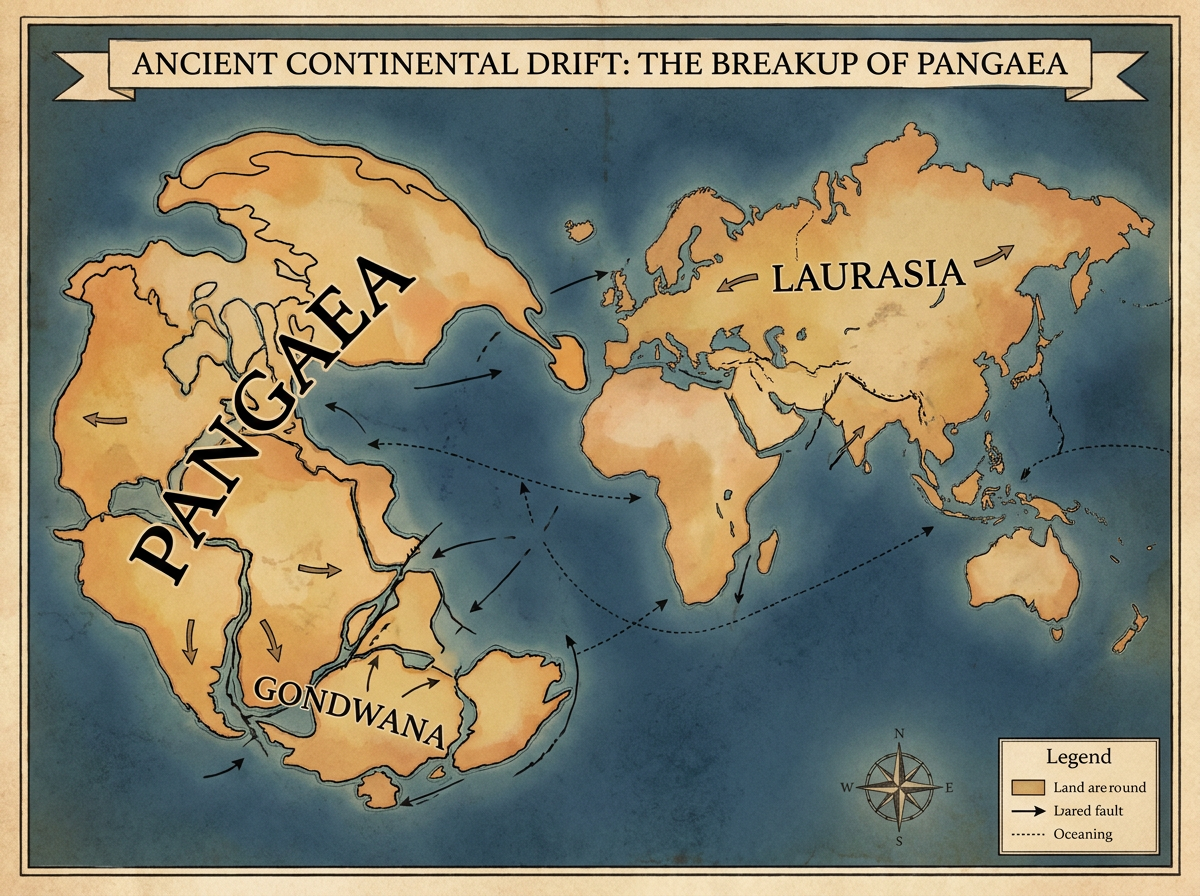
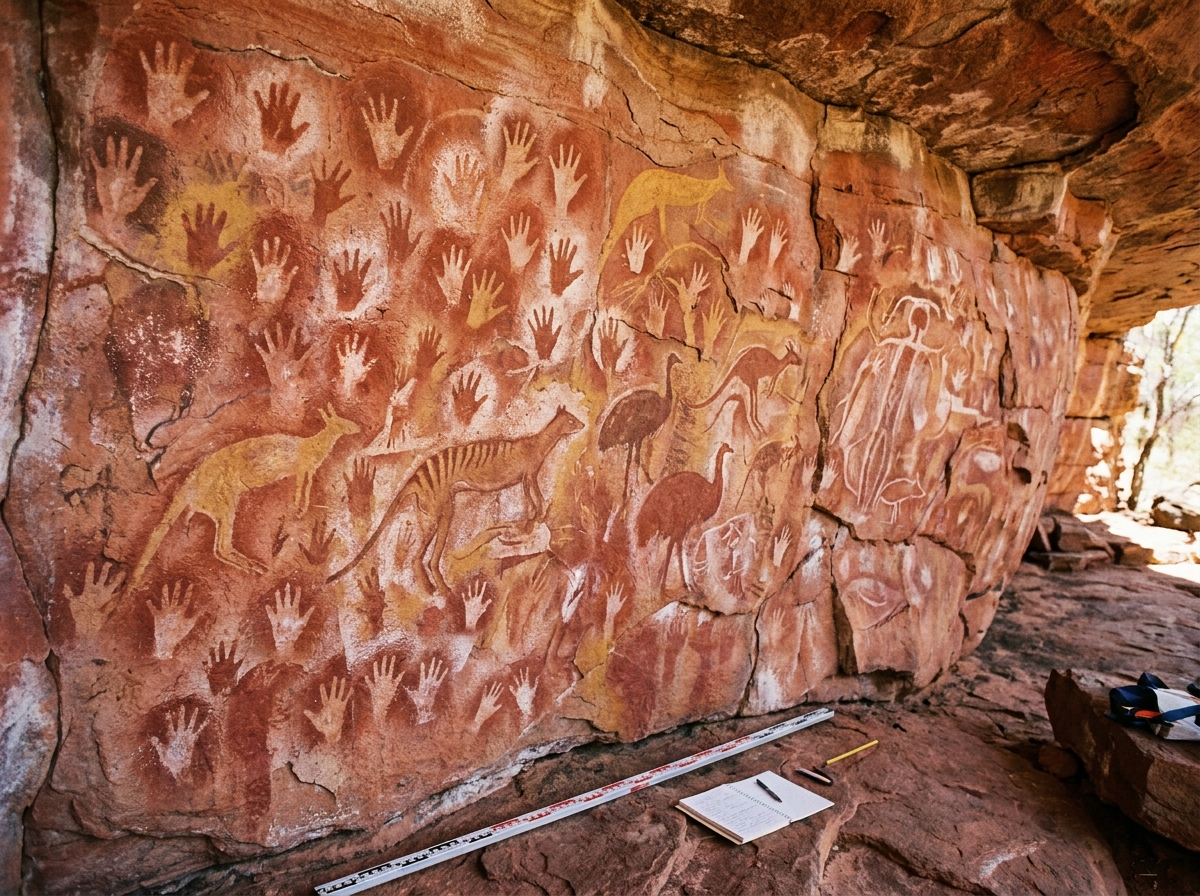

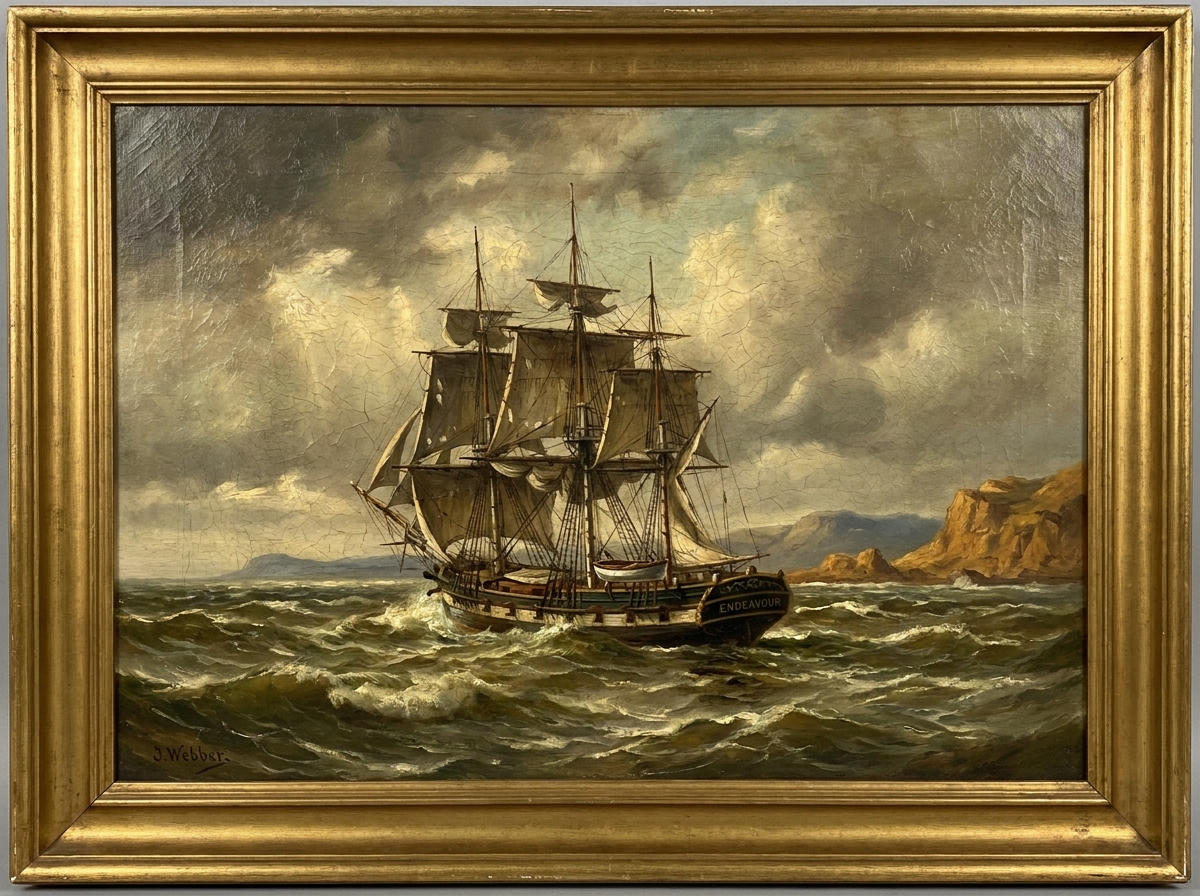
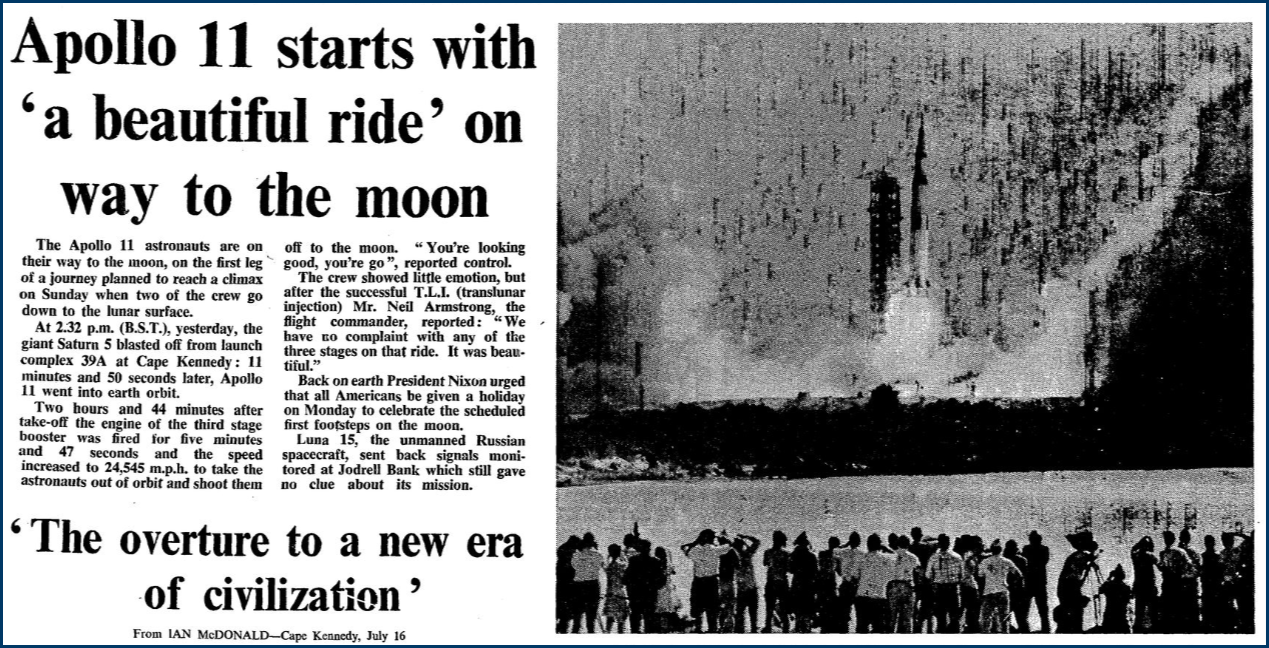




 \
\



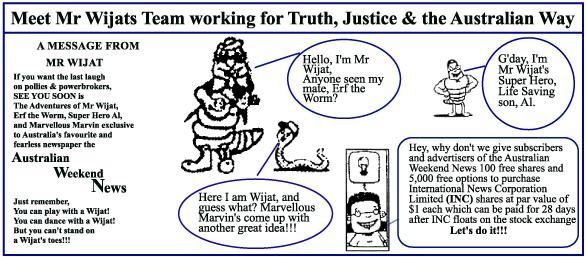

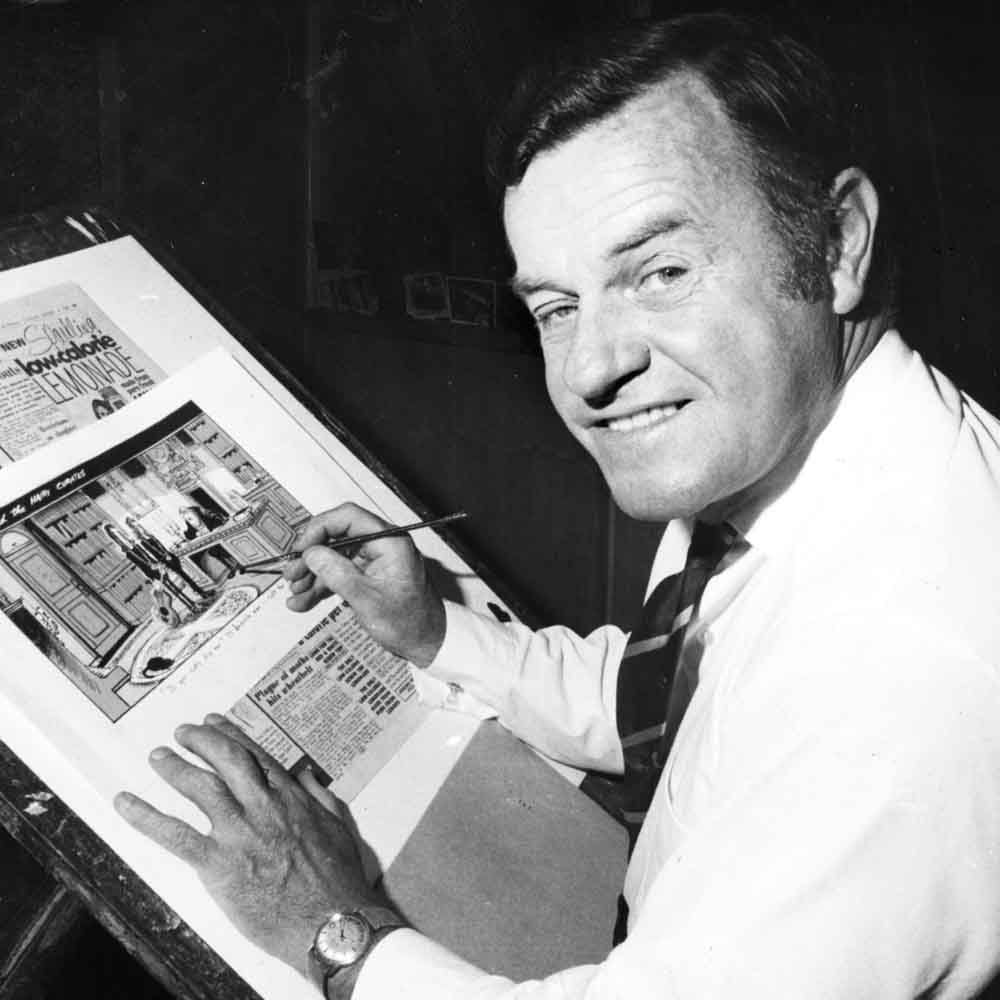




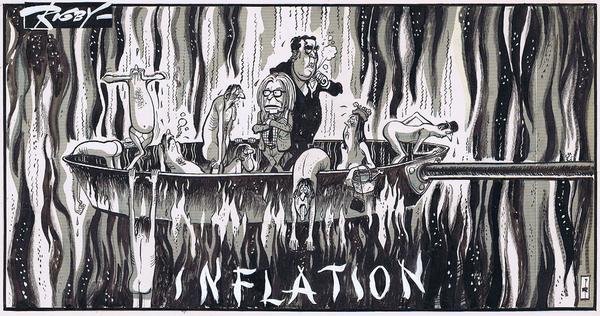
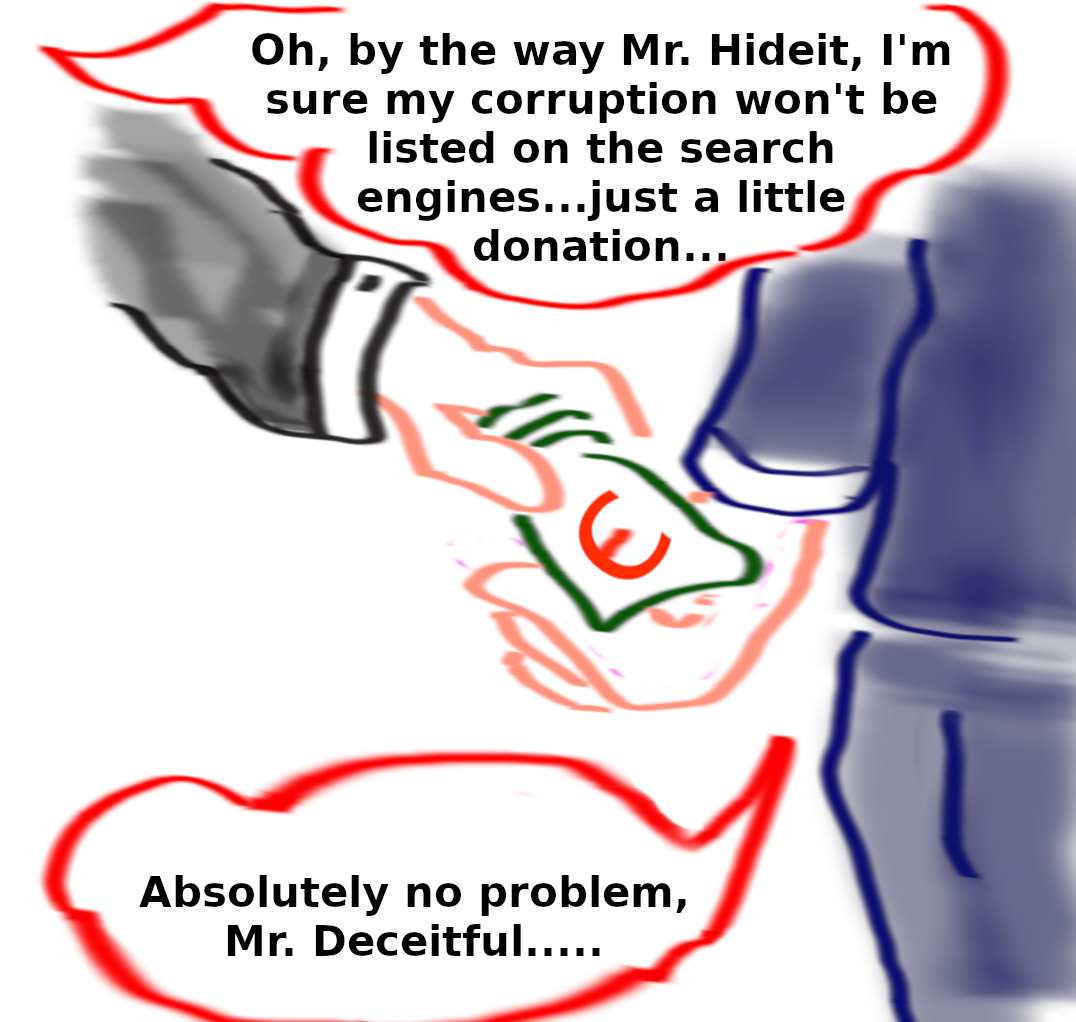


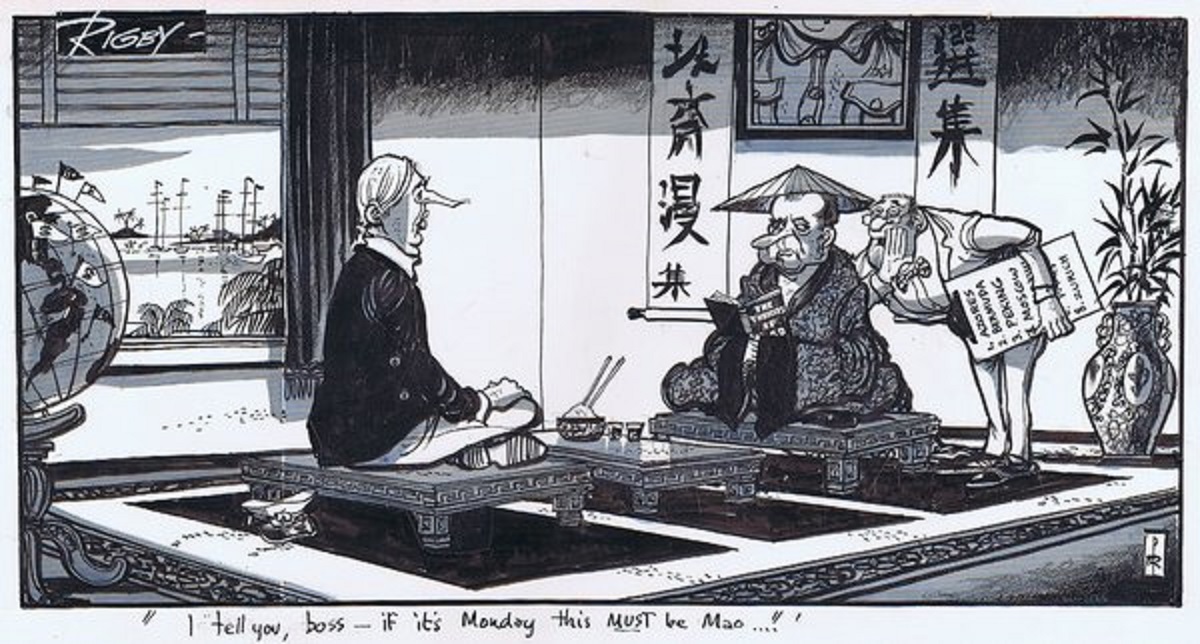
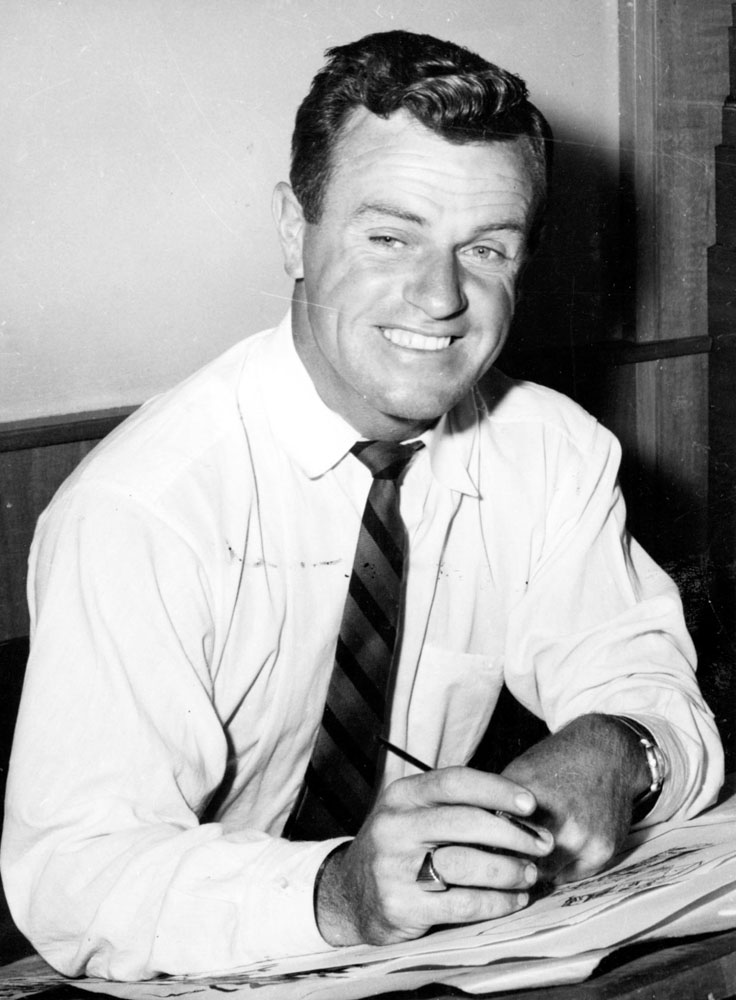
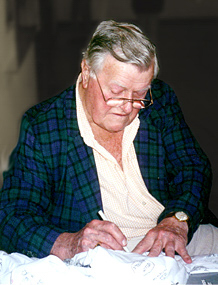

 Wikipedia
 Facebook


 North Removals
 Study.com
 Ignite Recruitment
 Babbel

 ABC News
 Realestate
 Reddit
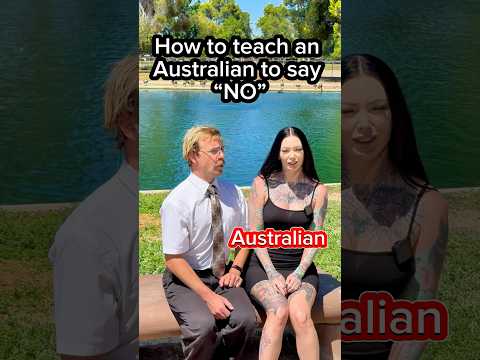

 Migaku
 Grammarly
 Study in Australia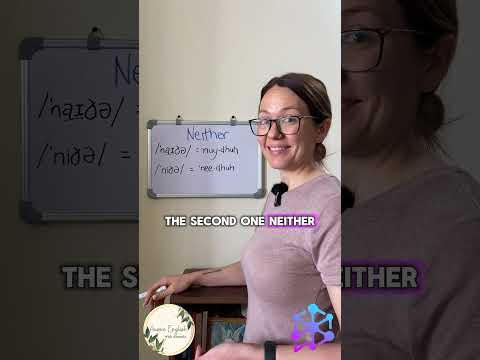


 McCrindle
  Office of Drug Control
 Total Moving Solutions
 Tourism Australia